

Key Takeaways
- Gluten triggers autoimmune intestinal damage in roughly 1% of the global population with celiac disease, and causes real but non-autoimmune symptoms in an estimated 6-10% with non-celiac gluten sensitivity (Sapone et al., BMC Medicine, 2012).
- Lactose intolerance affects 60-65% of adults globally, with rates reaching 80-95% among South Asian populations — making dairy-free the more inclusive default for Indian consumers (NIH, 2022).
- Both gliadin (the soluble fraction of gluten) and casein (a dairy protein) are linked to increased intestinal permeability in sensitive individuals, a mechanism associated with systemic inflammation (Fasano, Annals of the New York Academy of Sciences, 2012).
- Every Amritatva product is gluten-free and dairy-free by formulation — not as a post-production substitution — which eliminates cross-contamination risk from shared equipment.
When we started formulating Amritatva products, we didn't set out specifically to make gluten-free and dairy-free items. We set out to make products that wouldn't cause the problems our early customers kept describing. Bloating after pasta. Skin flare-ups after protein drinks. That familiar post-meal heaviness people had been told was just how they felt after eating. When we looked at what those customers had in common, two ingredients kept appearing: gluten and dairy. Removing them wasn't ideological. It was the practical outcome of paying attention to what people were actually experiencing.
What Gluten Does in Sensitive Digestive Systems
Gluten is the protein network in wheat, barley, and rye that gives dough its elasticity. In people with celiac disease, the immune system attacks the small intestinal lining when gluten is present, causing villous atrophy and malabsorption. Celiac disease affects roughly 1% of the global population and is significantly underdiagnosed in India, where awareness is low and testing isn't routine.
Non-celiac gluten sensitivity is a separate, more common condition. Estimates range from 6-10% of the population (BMC Medicine, 2012). People with NCGS experience real symptoms — bloating, abdominal pain, brain fog, fatigue — without the autoimmune damage of celiac. The mechanism isn't fully understood, but the symptoms are documented and relief from gluten removal is consistent enough that multiple peer-reviewed studies have confirmed NCGS as a distinct clinical entity.
Beyond these two conditions, research suggests that gliadin can increase intestinal permeability in healthy individuals through its interaction with zonulin, a tight-junction regulator. This is more contested territory scientifically, but the pathway is biologically plausible and actively studied. We don't need the research to be fully settled to know that removing gluten eliminates a potential inflammatory input for a broad range of people.
Why Dairy Is the Other Half of the Decision
Lactose intolerance rates in India range from 60-80% depending on the study and population sampled. South Asian populations generally have lower rates of lactase persistence than European populations — meaning most Indian adults have a digestive response to large amounts of dairy that isn't intolerance in the clinical sense, it's simply the normal response of a population that didn't historically consume liquid dairy into adulthood in large quantities.
Dairy protein sensitivity is a separate issue from lactose intolerance. Casein, the main protein in cow's milk, has been linked to increased mucus production, skin conditions in some individuals, and IgE-mediated allergic responses in a subset of people. Whey protein can cause digestive discomfort even when lactose has been partially removed. We chose plant-based binders, coconut-derived emulsifiers, and legume proteins not because they're trendy, but because they don't carry these risks for the populations we're trying to serve.
The Formulation Decision in Practice
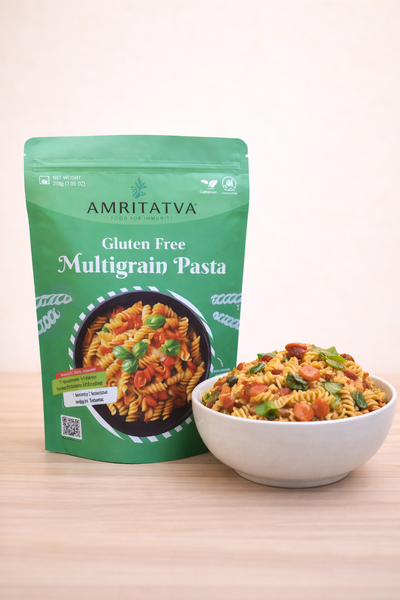
Removing gluten and dairy means rethinking every functional role those ingredients play. Gluten provides structure in pasta and noodles. Without it, you need a blend of alternative starches and proteins that mimics that binding. Our millet-and-amaranth blend uses amaranth's protein structure as a partial functional replacement for gluten's binding properties — the result holds together, cooks properly, and has a lower glycaemic index than maida-based equivalents.
For dairy, the emulsification and richness it provides in seasoning blends and protein mixes comes from different sources in our products: coconut milk solids for fat content, mushroom powder for the umami depth that dairy's glutamates would otherwise contribute. These aren't compromises. The finished products work because the replacements were chosen for function, not just for allergen avoidance.
What This Means for You Practically
If you've experienced unexplained bloating, skin flare-ups, persistent fatigue, or digestive discomfort after meals, and haven't identified the cause, a trial elimination of gluten and dairy for 3-4 weeks is worth doing under the guidance of a doctor or dietitian. Improvement in symptoms, if there's a sensitivity, is usually noticeable within two weeks. Reintroduction can then identify which of the two is the driver.
For people without any diagnosed sensitivity, gluten-free and dairy-free products aren't necessary. But for the large proportion of Indian consumers with lactose intolerance, and for those with undiagnosed or mild gluten sensitivity, formulating without these ingredients from the start isn't niche. It's the right default for most of the population we're actually serving.
Frequently Asked Questions
Is a gluten-free diet healthy for people without celiac disease?
It depends on what replaces the gluten. A diet that swaps wheat for refined rice flour and potato starch isn't necessarily healthier — it may be lower in fibre and B vitamins. A diet that replaces wheat with whole millet, amaranth, and legumes is nutritionally superior for most people: lower glycaemic index, more dietary fibre, comparable or better protein. The grain choice matters more than the gluten-free label. Check the first ingredient on any gluten-free product to see which direction it goes.
What's the difference between lactose intolerance and a dairy allergy?
Lactose intolerance is a digestive issue: the body doesn't produce enough lactase to break down lactose, causing gas, bloating, and cramping. It's not immune-mediated. Dairy allergy is an IgE-mediated immune response to dairy proteins (casein or whey), with symptoms including hives, swelling, and in severe cases, anaphylaxis. Dairy allergy is far less common than lactose intolerance but significantly more dangerous. Both improve with dairy removal — the treatment is the same, but the mechanism and severity differ considerably.
Does removing gluten and dairy affect taste?
Sometimes, and not always negatively. Gluten-free millet pasta has a nuttier, earthier flavour than maida pasta — most people stop noticing after 2-3 preparations. The absence of dairy pushes products toward other flavour sources: mushroom umami, natural spices, coconut-derived fats. These can produce more complex, interesting flavour profiles than dairy-heavy equivalents. The honest answer is that initial adjustment takes a week or two, and many people find they prefer the cleaner taste of gluten-free and dairy-free foods once they've made the adjustment.
Try This Product
Amritatva Gluten-Free Millet Pasta
Millet pasta + mushroom seasoning. No maida, no MSG. Ready in 15 min.
Shop Now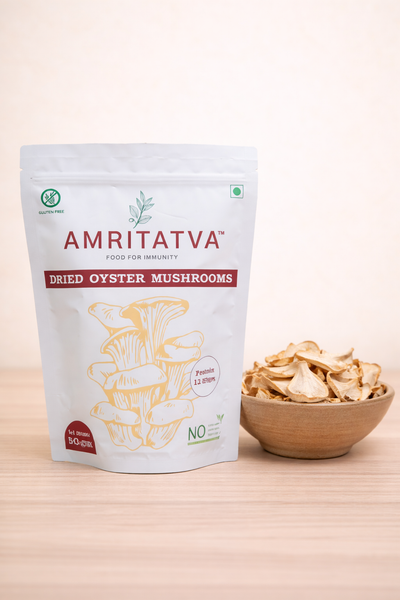


0 comments