

Can one week really change the way you eat?
A 7-day clean eating challenge is unlikely to transform your health overnight, but it can help you notice how often you eat packaged foods, how much variety is on your plate, and which simple habits are easy to maintain.
Rather than treating “clean eating” as a strict diet, think of it as a short period of paying closer attention to food quality, variety and balance.
The World Health Organization describes a healthy diet around four principles: adequacy, balance, moderation and diversity. It recommends building meals around a variety of foods such as whole grains, vegetables, fruits, pulses and other nutritious protein sources, while limiting foods high in free sugars, unhealthy fats and sodium.
So instead of asking, “What foods should I completely eliminate?”, a better question may be:
“What nutritious foods can I include more often?”
That is the idea behind this 7-day challenge.
What does “clean eating” actually mean?
There is no single scientific definition of “clean eating.”
For this challenge, we can use the term simply to describe a pattern that gives more space to minimally processed and unprocessed foods, while reducing reliance on highly processed convenience foods.
That could mean:
- More dal, chana, rajma and other pulses
- More vegetables and seasonal fruits
- Whole grains and millets
- Nuts and seeds
- Simple home-cooked meals
- Adequate water
- Fewer sugary drinks
- Fewer packaged snacks eaten automatically
This does not mean that every packaged food is unhealthy or that every homemade food is automatically nutritious.
Food processing exists on a spectrum. Some processing—such as cooking, drying, fermenting or milling—can make food safer, more convenient or easier to use.
The goal is awareness, not fear.
Why try a 7-day challenge?
One week can work as a simple observation period.
You can notice:
- How often you reach for packaged snacks
- Whether your meals contain enough vegetables and pulses
- How frequently you drink sugary beverages
- Whether you read ingredient lists
- Whether you skip meals and then overeat later
- Which healthy meals are actually convenient for you
- Which habits feel realistic enough to continue
The World Health Organization recommends that people over 10 years of age aim for at least 400 g of fruits and vegetables per day and at least 25 g of naturally occurring dietary fibre per day. These are population-level recommendations, not a target that every individual must achieve perfectly every day.
A 7-day challenge can simply help you see where your current routine sits.
What should you do during the 7 days?
Day 1 — Read before you buy
Pick two or three packaged foods from your kitchen.
Read:
- Ingredient list
- Serving size
- Added/free sugars
- Sodium
- Type of fat
- Fibre, where provided
Don't judge the product immediately.
Just learn what is actually in it.
Day 2 — Build a more balanced Indian plate
Try making lunch or dinner around:
A staple + protein source + vegetables + optional fruit
For example:
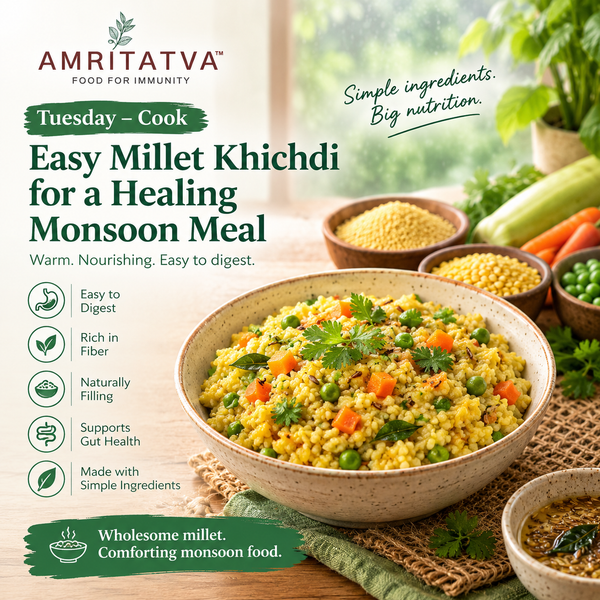
Millet khichdi + moong dal + vegetables
or
Rice + rajma + seasonal sabzi + salad
or
Roti + dal + mixed vegetable sabzi + curd/plant-based alternative
The exact combination can vary according to your dietary needs and preferences.
Day 3 — Upgrade your snack
Instead of automatically reaching for a packaged snack, try an Indian option such as:
- Roasted chana
- Chana chaat
- Fruit with nuts
- Makhana
- Homemade poha
- Sattu drink
- Vegetable chaat
- Homemade gluten-free snack, if needed
The aim isn't to make every snack “perfect.”
It is to create more choices.
Day 4 — Check your drinks
Look at what you drink between meals.
Tea and coffee can be part of a normal diet. Water is also important.
Pay particular attention to sugary beverages.
WHO recommends limiting free sugars to less than 10% of total daily energy intake, with a further reduction to 5% or less potentially providing additional health benefits.
You don't need to eliminate sweetness overnight.
Start by noticing how often it appears.
Day 5 — Add variety
Try adding a food you don't usually eat.
Maybe:
- A different millet
- A new dal
- Seasonal vegetables
- Sprouts
- Seeds
- A different bean or pulse
Variety matters because different foods provide different combinations of nutrients.
A healthy diet is not built around one “superfood.”
It is built around diversity over time.
Day 6 — Make convenience work for you
Healthy eating becomes difficult when every meal requires elaborate preparation.
So prepare something in advance.
You could:
- Roast chana for snacks
- Cook dal for two meals
- Chop vegetables
- Prepare millet or rice
- Make sattu mix ready for a quick drink
- Keep nuts and seeds portioned
- Prepare a simple homemade seasoning
The best habit is often the one that fits your actual schedule.
Day 7 — Review instead of judging
At the end of the week, ask yourself:
What was easy?
What was difficult?
Which meal worked well for my routine?
Which packaged foods did I actually enjoy and need?
Which ones did I eat simply out of habit?
Which one or two changes could I continue next week?
This is more useful than asking whether you completed the challenge “perfectly.”
Does reducing ultra-processed food automatically make your diet healthy?
Not necessarily.
This distinction matters.
A diet can contain fewer packaged foods but still lack protein, vegetables, fibre or overall variety.
At the same time, some packaged foods can be useful because they provide convenience, longer shelf life or easier preparation.
A 2024 BMJ umbrella review examined 45 pooled analyses involving about 9.9 million participants and found associations between higher ultra-processed food exposure and several adverse health outcomes. However, many of the evidence ratings were low or very low quality, and observational evidence cannot by itself prove that ultra-processed foods caused those outcomes.
So the practical takeaway isn't:
“Never eat processed food.”
It is:
“Pay attention to the overall pattern of your diet.”
What does a 7-day challenge look like compared with a restrictive diet?
| 7-Day Mindful Eating Challenge | Highly Restrictive Diet |
|---|---|
| Focuses on awareness | Focuses heavily on rules |
| Encourages nutritious foods | May focus on forbidden foods |
| Allows flexibility | Can be difficult to sustain |
| Uses familiar Indian foods | May require unfamiliar foods |
| Looks at overall eating patterns | Can focus heavily on individual foods |
| Encourages habits beyond 7 days | Often has a fixed short-term endpoint |
There is no need to turn seven days into a test of willpower.
The purpose is to learn from your routine.
How can you make clean eating practical in an Indian kitchen?
Clean eating doesn't need a separate “health food menu.”
Your regular kitchen already has many useful building blocks.
Think about:
Breakfast:
Poha with vegetables, idli with sambar, besan chilla, sattu drink or a millet-based breakfast.
Lunch:
Dal-rice, rajma-rice, roti with sabzi and dal, or millet khichdi.
Tiffin:
Homemade chilla, roasted chana, fruit, vegetable sandwich using suitable bread, or a simple homemade snack.
Chai-time:
Roasted makhana, chana, nuts, fruit or a homemade snack.
Dinner:
Dal, vegetables, millet or rice, along with another suitable protein source.
For people following a gluten-free diet, naturally gluten-free foods such as rice, millets, pulses, fruits and vegetables can provide many everyday options. Packaged foods still need careful label checking to avoid cross-contact and unsuitable ingredients.
Where can Amritatva fit into this routine?
At Amritatva, our approach is to make practical food choices easier without turning everyday eating into a complicated wellness routine.
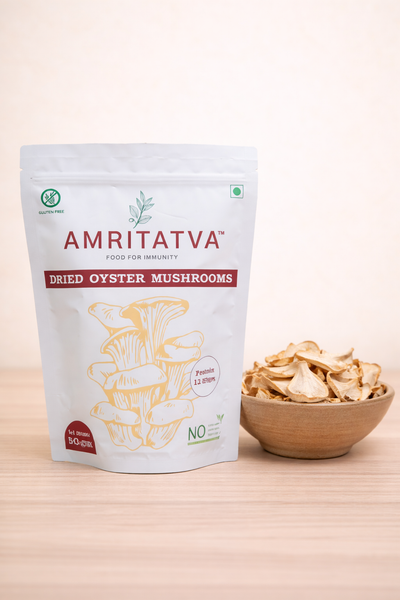
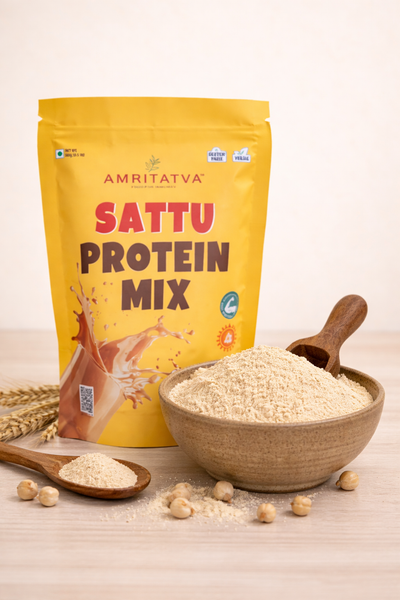
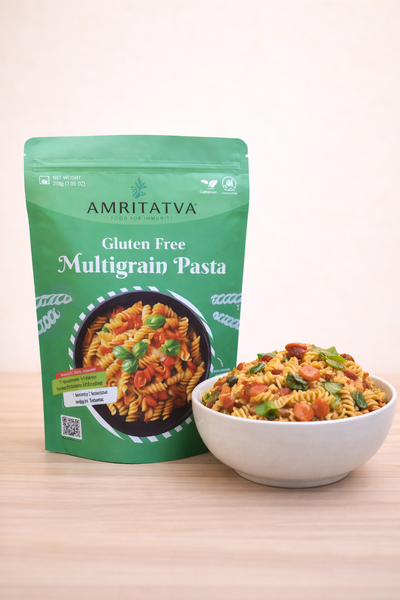
Our range includes oyster mushroom powder, gluten-free pasta, gluten-free noodles, sattu protein mix and seasonings, made in India.
For example, sattu can be used in a quick drink or incorporated into everyday Indian recipes, while gluten-free pasta and noodles can provide convenient meal options for people who choose or need gluten-free foods.
The idea is simple:
Useful food should still feel like food.
Not a punishment.
Not a complicated diet.
Not a promise of overnight transformation.
What should you expect after 7 days?
Don't measure the challenge only through weight, energy or digestion.
Instead, look for something more practical:
Did you become more aware of what you eat?
Maybe you started reading labels.
Maybe you added vegetables to lunch.
Maybe you replaced one sugary drink with water.
Maybe you discovered that sattu makes a convenient breakfast or snack.
Maybe you found a millet recipe your family actually enjoyed.
These small discoveries can be more useful than chasing dramatic “before and after” results.
A healthy eating pattern is built over time.
Seven days can simply be the beginning.
Frequently Asked Questions
Is clean eating the same as eating only unprocessed food?
No. “Clean eating” is not a formally defined medical diet. A practical approach is to eat a varied diet based largely on minimally processed and unprocessed foods while limiting foods high in free sugars, unhealthy fats and sodium. Processing itself is not automatically negative. Cooking, drying, fermenting and milling are all forms of food processing.
Can I eat packaged food during a 7-day clean eating challenge?
Yes. A realistic challenge does not need to ban every packaged food. Instead, read labels and consider the ingredient list, nutritional profile, portion size and how often you eat the product. Some packaged foods can be convenient and useful. The aim is to reduce automatic choices and build a more varied overall eating pattern.
Will I lose weight after seven days of clean eating?
There is no reliable reason to promise weight loss from a seven-day challenge. Body weight is influenced by energy intake, activity, sleep, medications, health conditions and many other factors. A short challenge is better viewed as an opportunity to develop eating habits and understand your routine rather than as a rapid weight-loss programme.
Can Indian food be part of clean eating?
Absolutely. Indian meals can include many nutritious foods such as dal, chana, rajma, vegetables, fruits, nuts, seeds, rice and millets. The overall meal pattern matters more than whether a dish is labelled “traditional” or “healthy.” Portion sizes, preparation methods, variety and the rest of the day's diet all contribute to nutritional quality.
What should I drink during a clean eating challenge?
Water is a simple everyday choice. You can also include unsweetened or lightly sweetened beverages according to your dietary preferences. The main point is to become more aware of frequent sugary drinks, because WHO recommends limiting free sugar intake to less than 10% of total daily energy intake for the general population.
What if I cannot follow the challenge for all seven days?
Nothing is lost. The purpose isn't perfection. If you manage three days, you have still learned something about your routine. You can continue with one or two habits that felt realistic. Sustainable eating is usually built through repeated choices rather than a perfect seven-day streak.
A healthier week doesn't need to be perfect
A 7-day clean eating challenge should not become another reason to feel guilty about food.
Use it as a reset in awareness, not a restriction in choice.
Read one label.
Add one more vegetable.
Try one new pulse or millet.
Choose water more often.
Prepare one snack at home.
And notice what actually works for you.
Because healthy eating becomes meaningful when it can move from a 7-day challenge into an everyday habit.
At Amritatva, we believe food should be practical, familiar and enjoyable—while making space for better everyday choices.
0 comments