

Key Takeaways
- AIIMS estimates 6–8 million Indians have celiac disease, yet most go undiagnosed for years because symptoms — bloating, fatigue, brain fog — are routinely mistaken for stress or poor sleep.
- India's celiac disease prevalence of 11.1% is higher than the global average, yet awareness remains low outside metro cities (PubMed, AIIMS research).
- Going gluten-free isn't about exotic products — India's traditional cuisine (dal, rice, millets, poha, idli, dosa) is almost entirely gluten-free by default.
- Cross-contamination — shared pans, utensils, and prep surfaces — is the most common reason people feel no improvement after switching, and the most commonly overlooked factor.
Nobody tells you how steep the learning curve is. You decide to go gluten-free, you stop eating bread and pasta, and then two weeks later you're still bloated. What went wrong? Almost certainly: hidden gluten in places you didn't think to look, cross-contamination at home or when eating out, and replacements that were no healthier than what you removed. These are the lessons most people figure out the hard way. Here's what would have saved a lot of time.
Lesson 1: Gluten Hides Everywhere You Wouldn't Expect
The obvious sources — bread, roti made from atta, biscuits, pasta — are the easy part. The harder part is everything else. Soy sauce is made from fermented wheat. Many processed masalas use wheat starch as a filler. Oats are naturally gluten-free but almost always contaminated during growing or processing in India. Some yoghurts, ice creams, and packaged soups contain modified wheat starch as a thickener. According to FSSAI Labelling Regulations, "edible starch" on a label can mean modified maida — and it's in more products than you'd expect. Reading the ingredient list becomes a non-negotiable habit, not an optional one.
Lesson 2: "Gluten-Free" on the Label Doesn't Mean Healthy
India's gluten-free food market reached $817.7 million in 2024 (IMARC Group) — and a significant portion of that is packaged products designed to look healthy without actually being so. Rice starch, potato starch, and tapioca replace wheat flour in most packaged gluten-free products. All three have higher glycaemic indices than whole wheat. Replacing maida pasta with rice-starch gluten-free pasta gives you a lateral move, not an upgrade. The right substitutes are whole-grain: ragi (finger millet), jowar, bajra, amaranth, and millet-blend products that bring down the glycaemic load and increase fibre alongside removing gluten.
Lesson 3: Cross-Contamination Matters More Than You Think
A dal cooked in a pot that was used for wheat-based dough without thorough washing carries gluten. A gluten-free roti rolled on a surface dusted with regular atta isn't gluten-free anymore. For people with celiac disease — where even 20 parts per million of gluten triggers an immune response — this isn't paranoia, it's biochemistry. When eating out, asking if something is "gluten-free" isn't enough. The question is whether it's prepared on a clean surface, with clean utensils, by someone who understands cross-contamination. Most restaurant kitchens, even well-meaning ones, can't guarantee this.
Lesson 4: Your Gut Needs Weeks, Not Days, to Respond
For people with celiac disease, AIIMS research shows intestinal healing begins within weeks of elimination but takes 6–18 months for full mucosal recovery in adults. For non-celiac gluten sensitivity, noticeable changes in bloating and energy typically appear in 4–6 weeks. If you try gluten-free for five days and feel nothing different, that's not enough time to draw conclusions. The timeline is longer because the gut lining, once damaged, doesn't repair overnight — and the gut microbiome takes 3–5 weeks to begin meaningfully shifting after dietary changes (Stanford University, 2021).
Lesson 5: Indian Traditional Food Is Your Greatest Asset
The easiest gluten-free diet in the world is the one your grandparents ate. Dal, sabzi, rice, poha, idli, dosa, upma made with millet rava, khichdi, sattu — these are the backbone of Indian cuisine, and they're all naturally gluten-free. The post-Green Revolution shift toward maida and atta as dietary staples is historically recent — just 50–60 years old. Going gluten-free, done right, is less about adopting a Western trend and more about returning to a dietary pattern that predates wheat dominance in Indian kitchens. Millet pasta, ragi rotis, jowar bhakri — the substitutes already exist in traditional Indian cooking. They just need rediscovering.
Frequently Asked Questions
How do I know if I have celiac disease or just gluten sensitivity?
Celiac disease is diagnosed through a blood test (tTG-IgA antibodies) confirmed by small intestine biopsy — the only reliable method. Non-celiac gluten sensitivity has no definitive blood test; it's identified through elimination (remove gluten for 6 weeks, observe, reintroduce). Don't self-diagnose — a gastroenterologist can distinguish between the two, which matters because treatment and monitoring differ significantly.
Is gluten-free eating expensive in India?
It doesn't have to be. The most affordable gluten-free diet in India is built around staples: rice, jowar, bajra, ragi, dal, and vegetables — all inexpensive and widely available. Packaged gluten-free products (GF pasta, GF bread) do cost more than conventional equivalents, but they're optional. The premium is on convenience, not necessity.
Can I eat out gluten-free in India?
In Indian restaurants, dal makhani, plain rice, sabzi, tandoori dishes (without marinades containing soy or wheat), and South Indian meals (idli, dosa, sambhar) are generally safe. The risk is in sauces, gravies thickened with maida, and shared cooking surfaces. Calling ahead and speaking directly with the kitchen gives you better information than just asking a waiter.
How long before I see results from going gluten-free?
For celiac disease: digestive symptoms typically begin improving within 2–6 weeks, but full healing takes months to over a year. For gluten sensitivity: most people notice meaningful changes in energy and digestion within 4–6 weeks. Give it at least 60 days before evaluating whether it's working for you.
Try This Product
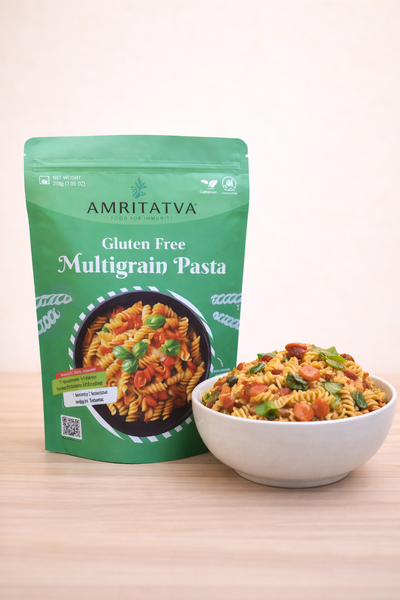
Amritatva Gluten-Free Millet Pasta
Millet pasta + mushroom seasoning. No maida, no MSG. Ready in 15 min.
Shop Now


0 comments