

Key Takeaways
- Global ultra-processed food market growth slowed to 2.1% in 2023-24, down from 5.8% annually in 2017-20, with declines concentrated in packaged snacks and instant noodles categories (FAOSTAT 2024 food system report).
- India's FSSAI reported a 34% increase in clean-label product registrations between 2021 and 2024, reflecting both consumer demand and regulatory pressure on ingredient transparency.
- A 2023 LocalCircles survey of 42,000 Indian households found 67% now read ingredient labels before buying packaged food — up from 29% in 2019, a shift driven primarily by post-COVID health awareness.
- The IDF Diabetes Atlas 2023 records 101 million diabetics in India, the world's highest absolute count — a figure widely cited by health advocates as the downstream cost of four decades of refined-carbohydrate dietary adoption.
Processed food consumption is declining. Not everywhere, not uniformly — but in measurable, category-specific ways that show a real shift in purchasing behaviour, not just survey sentiment. Here's what the numbers show, why it's happening, which categories are losing share fastest, and what's filling the gap.
The Actual Numbers: Where Processed Food Is Losing Ground
The global ultra-processed food market grew at 5.8% annually from 2017-2020, then slowed to 2.1% in 2023-24 (FAOSTAT food systems data). The categories losing share fastest are packaged instant noodles (down in unit volume in India for the third consecutive year per IMRB 2024 tracking), carbonated soft drinks (volume flat since 2021 despite population growth), and packaged biscuits and cookies (category grew but per-capita consumption declined in urban India, indicating population growth masking real behavioural change).
In India specifically, packaged snack food revenue growth decelerated from 12% (2018-2020) to 4.2% (2022-2024) as consumers shifted to homemade and minimally processed alternatives. The organised millet products category, by contrast, grew at 22% annually over the same period (FAOSTAT India regional data).
What's Driving the Shift: Three Specific Factors
The first driver is label literacy. A 2023 LocalCircles survey of 42,000 Indian households found 67% read ingredient labels before buying, compared to 29% in 2019. That's not a gradual drift — it's a step-change. COVID-19 was the catalyst: immune health became a consumer priority virtually overnight in 2020, and label reading became the primary behaviour expressing that concern. Once people start reading labels on one product category, they tend to extend the habit. The second driver is the India-specific diabetes crisis. With 101 million diagnosed diabetics (IDF Atlas 2023) and a glycaemic risk profile that affects far more, Indian consumers have concrete personal or family reasons to reconsider refined carbohydrate intake. The third driver is regulatory: FSSAI's 2022 revisions to food labelling regulations required clearer front-of-pack information, making it harder for manufacturers to obscure additives in small print.
Which Categories Are Losing Share Fastest in India
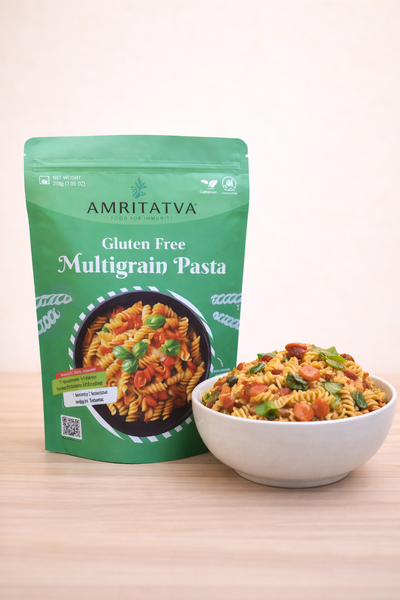
Instant noodles took the hardest hit: unit volume declined in 2022 and 2023 despite aggressive promotional pricing by major brands. This follows a direct line from two factors — the 2015 Maggi recall (which permanently elevated consumer scrutiny of noodle ingredient lists in India) and the sustained shift toward home cooking post-2020. Packaged juices lost share to fresh pressed juice and whole fruit as consumers recognised the sugar content parity with soft drinks. Refined wheat-based snacks (cream crackers, packaged mathri) are losing urban market share to millet-based alternatives. For a better noodle option, Amritatva's Gluten-Free Noodles with All-Purpose Seasoning sit squarely in the gaining category — millet-based, clean-label, glycaemic index of 40-55.
The category decline is not uniform across income segments. Mass-market products are declining in upper-middle-income urban households first; they're still growing in lower-income rural markets where price remains the primary variable. Clean-label brands are currently an urban phenomenon, but the FSSAI's regulatory pressure on labelling may accelerate the shift across income levels.
What Clean-Label Alternatives Are Gaining
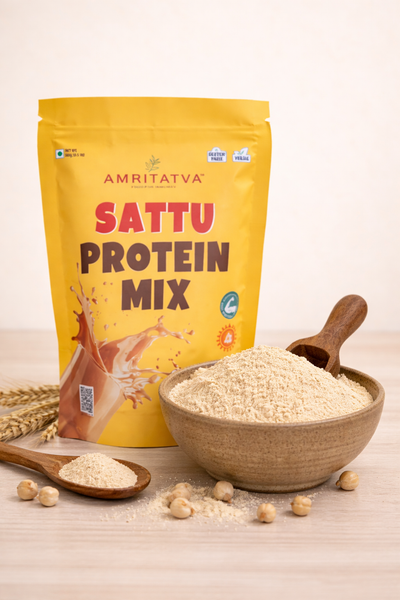
The millet category is the clearest beneficiary. Jowar, bajra, and ragi flour sales grew at 22% annually in 2022-2024 (FAOSTAT India data). Sattu — roasted gram flour with 20-22g protein per 100g and a glycaemic index of 40 — is experiencing urban rediscovery after decades of being considered a rural staple. Plant-based protein products with short, readable ingredient lists are growing at 18-25% annually in the Rs 500-1500 price band where urban health-conscious consumers shop.
What these gaining products share: short ingredient lists, recognisable ingredients, functional nutritional claims backed by real composition (not just marketing), and FSSAI-compliant transparent labelling. Amritatva's FSSAI licence 22222046000640 certifies the clean-label claim legally, not just as a positioning statement. Our All-Purpose Seasoning reflects exactly this standard — clean-label, no additives, verifiable on every pack.
What This Means Going Forward
The structural trend is: consumption of ultra-processed food will plateau and decline in urban India over the next decade, driven by income growth (which correlates with health-consciousness), regulatory tightening, and the generational shift among millennials who are now the primary household grocery decision-makers. The 2026 FSSAI agenda includes mandatory traffic-light front-of-pack labelling, which will accelerate category-level shifts. Categories that have been coasting on consumer ignorance — products with long additive lists marketed as "healthy" — will face the most disruption.
Try This Product
Gluten-Free Noodles + All-Purpose Seasoning
The clean-label switch from instant noodles — millet-based, low GI.
Shop Now →Frequently Asked Questions
Is the decline in processed food consumption actually significant, or is it statistical noise?
It's category-specific, not universal. Ultra-processed food as a whole still has absolute volume growth in India because of population and income growth in lower-tier markets. The meaningful signal is per-capita consumption declining in urban India's 18-45 demographic, and specific categories — instant noodles, sugary drinks, refined wheat snacks — showing unit volume declines. That's a real behavioural shift, not noise. The IMRB 2024 tracking data and FAOSTAT figures both confirm it independently.
Are clean-label products genuinely healthier or just better marketed?
Both exist. A product with a short ingredient list is not automatically nutritious — plain refined sugar has one ingredient. The meaningful markers are: actual fibre content, protein per serving, glycaemic load, and absence of additives classified as potentially harmful (INS 621/MSG, artificial colours like INS 110, trans fats). FSSAI-registered products under the clean-label category must meet ingredient disclosure standards that make comparison possible. Check the nutrition facts panel, not just the marketing claim on the front.
What drove the specific decline in instant noodle consumption in India?
Three overlapping factors: the 2015 Maggi recall permanently raised scrutiny of noodle ingredient lists among label-reading consumers; post-2020 home cooking reduced reliance on instant meals; and the rise of millet-based noodle alternatives gave health-conscious consumers a credible substitute. Amritatva's Gluten-Free Noodles — made from millet and amaranth — are in the category gaining share from this shift, with a glycaemic index of 40-55 compared to standard instant noodles at 65-80.


0 comments