

Key Takeaways
- FSSAI tested 42,556 food samples in 2022-23; approximately 8,200 failed quality and labelling standards — nearly 1 in 5 products (FSSAI Annual Report 2022-23).
- Hidden additives commonly appear as INS codes: INS 211 is sodium benzoate, INS 621 is MSG, INS 954 is saccharin — names most consumers cannot identify from a label alone.
- Food transparency means disclosing ingredients, sourcing, and processing methods, not just printing an ingredient list — and using plain names, not additive codes, wherever possible.
- Amritatva lists every ingredient by plain name, uses no hidden additives under INS codes where simpler names apply, and holds FSSAI licence 22222046000640 under Indian food safety regulations.
One in five packaged food products tested by FSSAI in 2022-23 failed to meet quality standards. Some failed on adulteration. Some on mislabelling. Some contained additives not disclosed on the ingredient list at all. For a country where most consumers make food decisions based on what's printed on the front of a pack — not the fine print on the back — this is a serious problem.
Transparency isn't a bonus feature good food brands offer. It's the minimum a consumer should expect, and increasingly something regulators are requiring. At Amritatva, it's a commitment we made at the start and haven't walked back from.
What Food Transparency Actually Means
The term gets used loosely. In practice, it covers four things: full ingredient disclosure (no "natural flavours" or "spice extracts" where the actual ingredient could be named), sourcing honesty (where key ingredients come from and how they're processed), nutritional accuracy (serving sizes that reflect how people actually eat), and allergen disclosure beyond the legal minimum.
The INS code system is where Indian food labelling most visibly fails the transparency test. A product can legally list "INS 211" without naming sodium benzoate. "INS 621" without naming MSG. "INS 954" without naming saccharin. These codes are FSSAI-compliant but functionally opaque to anyone who hasn't memorised an additive reference table. True transparency uses plain names. Many brands don't, because plain names invite questions and questions slow down purchases.
Why Indian Food Labels Have a Trust Problem
In a 2022 LocalCircles survey, 68% of Indian consumers said they don't fully trust nutritional claims on food packaging. They're not wrong. FSSAI enforcement data shows repeated instances of products claiming "no added sugar" while containing artificial sweeteners, "whole grain" products using less than 30% whole grain content, and "natural" ingredient claims on products containing synthetic preservatives.
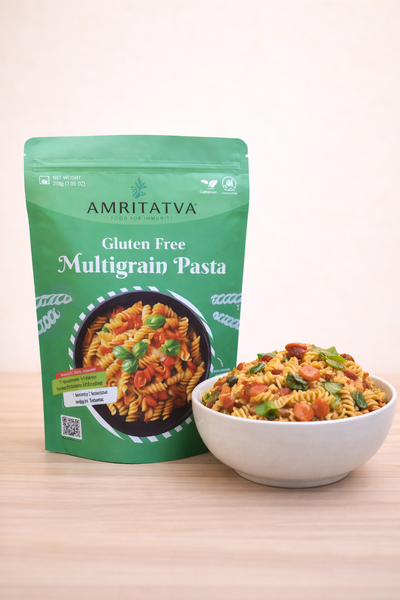
The bigger issue isn't outright fraud. It's the grey zone of technically-legal-but-misleading claims. A product with 12g of sugar per 100g can be labelled "low sugar" if the comparison benchmark is set conveniently. A "multigrain" pasta can contain mostly maida with token amounts of two other grains. The regulations permit this. Consumer trust can't survive it long-term.
What We Do Differently
Our ingredient lists use names, not codes, wherever the law permits plain language. If a product contains rock salt, it says rock salt — not "INS 508." If it contains black pepper, it says black pepper — not "spice extract." This sounds obvious. It's not standard practice in the Indian packaged food industry. Our All-Purpose Seasoning is the clearest example of this approach — every ingredient a name you recognise, every claim a fact you can verify.
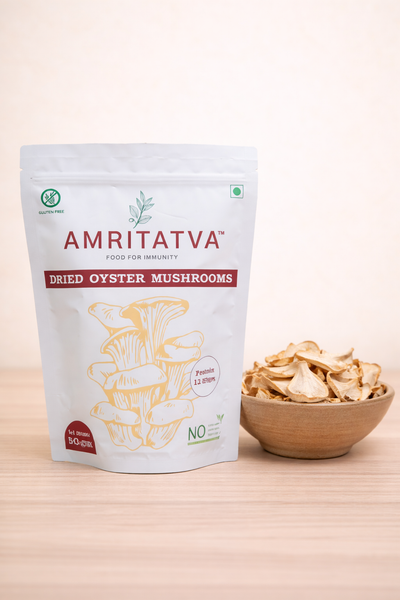
We use a single FSSAI-licensed manufacturing facility (licence 22222046000640) that doesn't run allergen cross-contamination lines for products we label allergen-free. Our oyster mushroom powder comes from farms we've visited directly, not commodity suppliers whose sourcing we'd have to take on trust. When we launched our millet pasta, millet is the primary grain in the blend — not a minority additive in a mostly-maida product repositioned for health marketing.
None of this is heroic. It's what transparency requires.
How to Read an Indian Food Label Honestly
Start with the ingredient list, not the front of the pack. Ingredients are listed in descending order by weight — the first three or four make up most of the product. If a multigrain pasta leads with wheat flour (maida) before any millet, it's a maida pasta with marketing. If a "protein bar" lists glucose syrup before any protein source, the protein content is cosmetic.
Look for INS codes and check what they are. INS 211 is sodium benzoate, a preservative with restricted daily intake levels. INS 110 is Sunset Yellow, an artificial dye banned in Norway and Finland. INS 1422 is acetylated distarch adipate, a modified starch used to replace natural thickeners. You don't need to memorise these — but knowing they exist shifts the balance between brand and buyer.
Check serving sizes against how much you'd actually eat. A serving size of 30g on a 100g snack pack is meaningful only if you stop after 30g. Most people don't.
Transparency Is a Short-Term Competitive Disadvantage
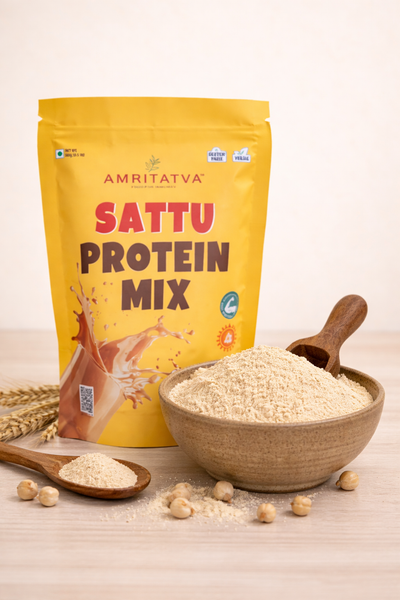
Here's the honest part: transparent labelling sometimes costs sales. Using the actual ingredient name instead of an INS code invites questions. Accurately representing what a product does and doesn't contain means it can't be positioned broadly. A sattu product that lists only roasted chana, rock salt, and oyster mushroom powder won't win most-ingredients comparisons with commercial protein blends that pack 15 items into a serving.
But it attracts consumers who've learned to read labels carefully. And those consumers tend to become loyal ones — because what they found on the label is what they found in the product.
That's the only version of the food business we're interested in building.
Try This Product
Amritatva All-Purpose Seasoning 100g
Every ingredient named. Every claim verifiable.
Shop Now →Frequently Asked Questions
What does "clean label" mean in Indian food regulations?
There's no legal definition under FSSAI for "clean label" — it's a marketing term, not a regulatory category. In practice, it describes products with short ingredient lists, no artificial preservatives or colours, and no ingredients listed only by INS code when a plain-language name exists. Since it's unregulated, the claim can be made by almost anyone. The ingredient list is a more reliable indicator than the "clean label" claim on the front of a pack.
Are INS codes safe?
Most are, at the levels used in food. But "safe at regulated levels" and "something you'd choose to eat if you knew what it was" aren't the same thing. INS 621 (MSG) is safe for most adults but something many people prefer to avoid. INS 110 (Sunset Yellow) is permitted in India but restricted in the EU. The codes make it easier to include these additives without consumer scrutiny. Transparency means using plain names and letting the consumer decide.
How do I know Amritatva's sourcing claims are accurate?
Our FSSAI licence (22222046000640) is verifiable on the FSSAI public database. For sourcing, we work with a limited number of verified suppliers rather than commodity markets, which makes traceability possible. If you have a specific question about any ingredient in any Amritatva product, email us directly — we'll answer with specifics, not a press release.

0 comments