

Key Takeaways
- FSSAI received over 7,700 food adulteration complaints in 2024–25 — nearly double the 4,330 filed in 2022–23 — signalling a sharp rise in consumer vigilance around food safety (NewsGram, 2026).
- Out of 1.7 lakh food samples tested by FSSAI in 2024, more than 33,000 were found to be non-compliant or adulterated — roughly 1 in 5 products.
- Indian food labelling law (FSSAI Labelling Regulations, 2020) mandates ingredient lists, allergen declarations, and FSSAI licence numbers — but enforcement gaps mean many products still carry misleading claims.
- Clean-label food — defined as products with short, recognisable ingredient lists and no synthetic additives — is among the fastest-growing categories in India's food market in 2024–2026.
FSSAI tested 1.7 lakh food samples in 2024 and found over 33,000 to be faulty, adulterated, or non-compliant — roughly 1 in every 5 products. That number sits quietly in a government report while most consumers continue reading the front of the pack: the cheerful fonts, the "natural" claims, the green leaf. The back of the pack tells a different story, and most of us have never been taught to read it.
Food transparency isn't a trend. It's a consumer right that India's regulatory framework has codified but not yet enforced at scale. Understanding what's on the label — and what's being hidden by legal loopholes — is the most practical thing an Indian consumer can do for their health.
What Indian Food Labels Are Required to Show
Under the FSSAI Food Safety and Standards (Labelling and Display) Regulations, 2020, every packaged food product sold in India must declare: product name, complete ingredient list in descending order of weight, nutritional information per 100g, allergen declarations, net quantity, manufacturer's name and address, FSSAI licence number, date of manufacture and best before, and the vegetarian/non-vegetarian symbol. The problem is execution — small-font ingredient lists, vague terms like "permitted additives" and "nature-identical flavouring," and serving sizes set deliberately small to make calorie counts look acceptable.
The Language of Hidden Ingredients
Ingredient lists are written for regulatory compliance, not consumer understanding. Here's what some common label terms actually mean:
- "Permitted food colour": One of 32 synthetic dyes permitted by FSSAI — includes tartrazine (Yellow 5), which is banned in Norway and linked to hyperactivity in children by the European Food Safety Authority.
- "Nature-identical flavouring": Chemically synthesised to mimic natural flavour — not derived from the source food it names.
- "Added flavours": Can include MSG, disodium inosinate, and disodium guanylate — flavour enhancers that don't need to be named individually.
- "Antioxidant (INS 319)": TBHQ — tertiary butylhydroquinone, a petroleum-derived preservative flagged for safety concerns at high doses by the US FDA.
- "Edible starch": Typically modified maida — added as a filler to increase volume cheaply without nutritional value.
Why "Natural" and "No Preservatives" Are Often Misleading
FSSAI Labelling Regulations prohibit absolute claims like "100% natural" unless the product meets specific criteria — but "natural flavours," "naturally sourced," and imagery of farms and herbs carry no legal definition and face no enforcement. A product can legally say "no added preservatives" while containing pH adjusters, humectants, and water activity suppressants that perform identical preservation functions under different chemical names.
What Clean Labelling Actually Means
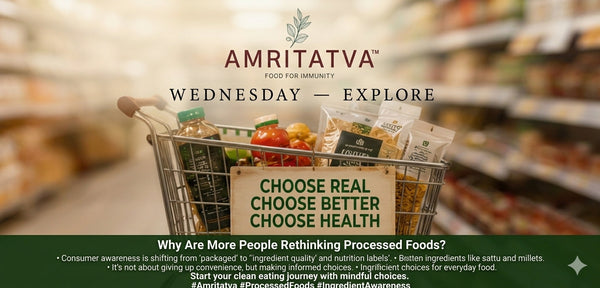
A clean-label product has a short, recognisable ingredient list where every item is something a consumer could buy in a kitchen or market. The clean-label test is simple: read the ingredient list and ask whether you recognise every item as a real food. Clean labelling isn't a certification — it's a philosophy. It means the manufacturer has chosen not to use anything that requires consumer deception to sell.
How to Read the Back of the Pack in 60 Seconds
- Check the ingredient list length: Under 5 ingredients is clean. Over 15 warrants scrutiny.
- Look for the first three ingredients: Products are required to list ingredients by weight — the first three items make up the majority of the product.
- Search for hidden sugars: Sugar can appear as dextrose, maltose, corn syrup, fructose, sucrose, or any of 56 other names — count how many appear.
- Verify the FSSAI number: Every legally sold packaged food must have a 14-digit FSSAI licence number. Absence means the product is unregistered.
- Check the serving size: Compare the stated serving size to what you'd actually eat. If a packet of chips lists 20g as a serving but the pack contains 80g, multiply every value by four.
Amritatva's Commitment to Label Transparency
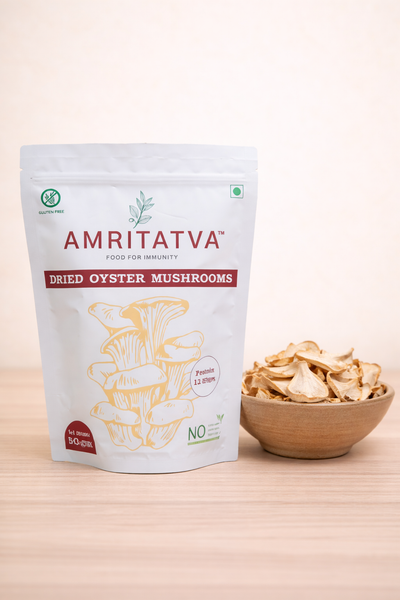
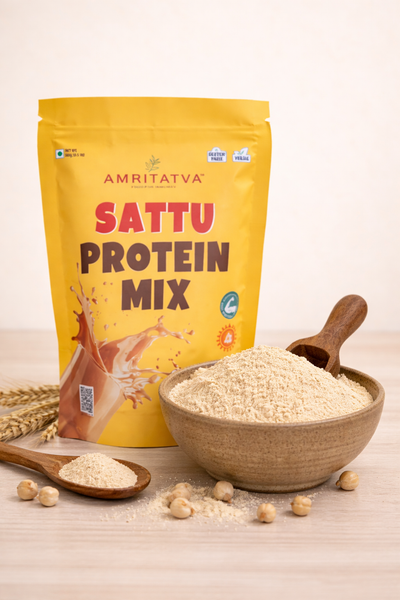
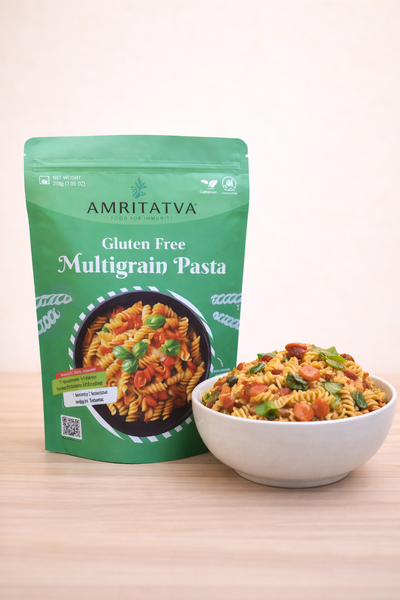
Every Amritatva product carries a complete ingredient list with no ambiguous terms, no "permitted additives" catch-alls, and no synthetic flavourings. The FSSAI licence number (22222046000640) appears on every pack — verifiable on the FSSAI portal. Ingredients are listed in plain language: mushroom powder, millet flour, spices, salt. Nothing that requires a dictionary. Our All-Purpose Seasoning is a good example of what clean labelling looks like in practice — every ingredient named, no INS codes, no catch-alls.
Try This Product
Amritatva All-Purpose Seasoning
Clean-label spice blend — no INS codes, no additives.
Shop Now →Frequently Asked Questions
Is all packaged food in India regulated by FSSAI?
Yes — all packaged food products sold in India require FSSAI registration or licensing. However, enforcement is uneven, particularly for smaller local manufacturers and e-commerce sellers. FSSAI's 2024 data showing 33,000 non-compliant samples from 1.7 lakh tested reflects ongoing gaps between regulation and compliance at scale.
What does "gluten-free" mean on an Indian food label?
Under FSSAI Labelling Regulations, a product can claim "gluten-free" only if it contains less than 20 parts per million (ppm) of gluten — the internationally accepted threshold for celiac safety.
How do I verify if a product is genuinely FSSAI certified?
Every FSSAI-registered product carries a 14-digit licence number. You can verify any FSSAI number on the official portal at fssai.gov.in. If the number doesn't appear on the portal, the product's certification claim is false.
Are natural flavours safer than artificial ones?
Not necessarily. "Natural flavour" means the flavouring compound was originally derived from a natural source — but it undergoes the same chemical extraction and processing as synthetic flavours. The distinction matters for marketing, not safety.

0 comments