

Key Takeaways
- Research from Cornell's Food and Brand Lab (2006-2015) consistently found that kitchen organisation affects food choices: visible healthy foods were eaten more frequently, hidden unhealthy foods less, without deliberate effort from individuals studied.
- A minimalist kitchen isn't about owning fewer things — it's about owning things that earn their space through regular use, which redirects cooking attention toward whole-food staples and away from the processed convenience products that typically crowd urban Indian kitchens.
- Six equipment items cover 90% of what enables consistent whole food cooking: a cast iron or ceramic pan, a pressure cooker, a high-speed blender, glass storage containers, one quality knife, and a herb corner.
- The pantry determines most food choices more reliably than willpower does. A pantry stocked with whole grains, legumes, and clean seasonings produces a higher variety of meals than a pantry full of processed convenience products, because whole ingredients are combinatorially flexible.
Kitchens are environments. Like any environment, they influence behaviour. A kitchen stocked with biscuits on the counter, instant noodles in the front of the cupboard, and a fridge containing mostly condiments produces different food choices than a kitchen with jowar flour in an accessible jar, whole lentils in visible storage, and fruit within easy reach. Not because you suddenly have more willpower in the second kitchen, but because the path of least resistance changed.
This is what a minimalist clean eating kitchen actually does: it makes the better choice the easy choice, consistently, without requiring daily decisions.
Start With What You Remove
The most effective first step is clearing what you're replacing, not adding new things on top of existing clutter. Remove — not just hide — the packaged snacks, instant noodles, refined flour products, and refined cooking oils. Removing them from the kitchen makes the choice genuinely absent rather than just slightly harder to access. Cornell Food and Brand Lab research found that simply placing unhealthy foods out of direct sight reduced consumption by 54% in controlled settings, but removing them entirely was more effective than concealment.
Clear the spice rack of blended masalas that contain MSG (listed as INS 621), artificial colour (INS 110, INS 129), and large amounts of salt as the first ingredient. Replace with whole spices that you grind as needed, or quality clean-label blends where the ingredient list is herbs and spices only, with no INS codes for additives.
Six Equipment Items That Actually Matter
A cast iron or ceramic pan. Stable at high heat, non-toxic at any temperature, works on all heat sources, and lasts decades with basic maintenance. Teflon coatings begin releasing compounds at 260°C, a temperature easily reached when tempering spices in an Indian kitchen. A 25cm cast iron skillet covers most daily cooking needs and develops better non-stick properties over time with regular seasoning.
A stainless steel pressure cooker. Standard in Indian kitchens already, but worth naming: it's one of the most efficient tools for whole food cooking, reducing lentil and grain cooking times from 30-40 minutes to 8-12 minutes. A 3-litre model handles single or two-person portions efficiently; 5 litres for families.
A high-speed blender. Essential for fresh chutneys, smooth dal textures, nut milks, and smoothies. Blending also significantly reduces food prep time — a whole tomato pureed rather than peeled, blanched, and chopped saves 10-15 minutes per curry base. This single tool reduces the activation energy for making fresh, whole-food preparations daily.
Glass or stainless steel storage containers. For all food storage. Plastic containers leach plasticizers into food, particularly when heated or when storing acidic foods like tomato-based curries and tamarind preparations. Borosilicate glass containers are oven, freezer, and microwave safe and last indefinitely. Three or four sizes covers most storage needs.
One quality knife. A single high-quality 20cm chef's knife and a sharpening steel is more useful than a block of six mediocre knives. Sharp knives make vegetable prep faster and significantly safer. Dull knives require more force and cause more accidents. A good knife maintained with a sharpening steel every few uses stays effective with minimal effort.
A herb corner. Mint, coriander, and tulsi grown in small pots on a windowsill provide fresh herbs year-round at essentially zero ongoing cost after the initial investment. Fresh herbs add significant flavour to whole food cooking and replace many commercially prepared flavour additions. Home-grown coriander tastes noticeably different from bundled supermarket coriander stored for several days.
The Clean Pantry: What to Actually Stock
A whole-food pantry is more flexible than a processed-food pantry. Whole grains and legumes combine with any vegetables and any flavour profile. Processed foods are mostly single-use: the instant noodle masala packet serves one purpose. The following covers most meal types without redundancy:
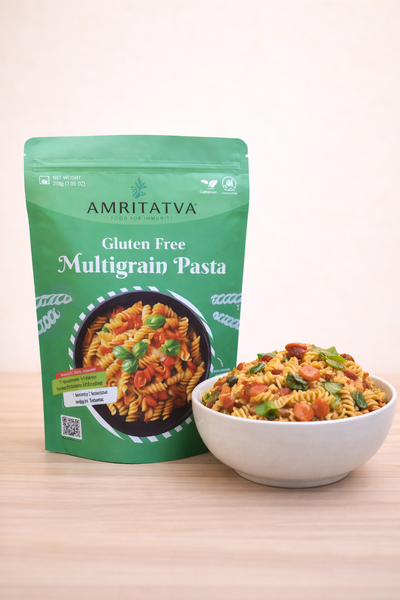
Grains: Jowar flour, ragi flour, short-grain rice, rolled oats, and poha. These five cover breakfast, lunch, and dinner options across most Indian regional cuisines. Add millet pasta or noodles (Amritatva's multigrain formats work here) for pasta and noodle-format meals.
Legumes: Whole masoor, toor dal, chana dal, and dried kabuli chana. Each has a distinct texture and protein profile. Batch-cook lentils twice a week and vary the preparation — tadka, sambar, dal makhani base, chana masala — to keep meals different without starting from scratch daily.
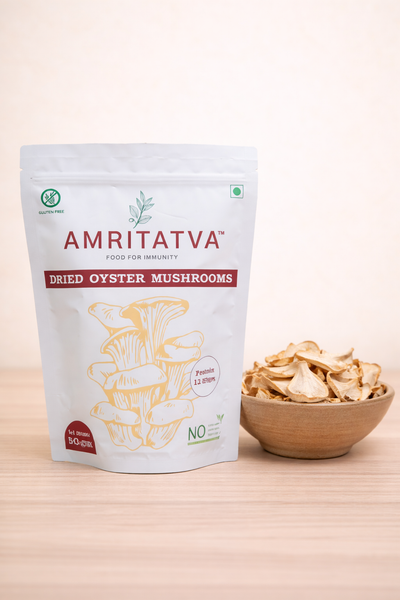
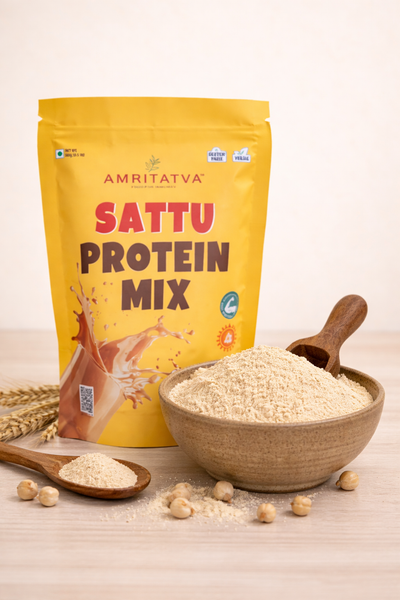
Protein additions: Amritatva Sattu Protein Mix for quick high-protein drinks (chana sattu with oyster mushroom powder: 20-22g protein per 100g, GI of 40). Dried oyster mushrooms for adding protein, beta-glucans, and umami to any dal, soup, or rice dish without changing the recipe's character or adding cooking time beyond a 15-minute rehydration soak.
Oils: Cold-pressed mustard oil for tempering and moderate-heat cooking. Ghee for high-heat preparations. These two cover all heat ranges with stable fats rather than refined vegetable oils that oxidise and degrade at Indian cooking temperatures.
Seasonings: Whole cumin, coriander seeds, mustard seeds, dried red chilli, turmeric, and black pepper. Ground fresh in a spice grinder or small mixer in under 30 seconds, whole spices produce significantly more flavour than pre-ground versions that have been sitting in their jar for months. Amritatva All-Purpose Seasoning or Italian Seasoning adds the mushroom-umami layer where a quick flavour addition is needed without reaching for MSG-based blends.
Try This Product
Amritatva All-Purpose Seasoning
Clean pantry staple. Mushroom umami, zero MSG.
Shop Now →Frequently Asked Questions
How do I transition a full Indian family kitchen without disruption?
Replace, don't eliminate everything at once. When the current bottle of refined oil runs out, replace it with cold-pressed mustard. When the packet of instant noodles is finished, replace it with millet pasta. Run down existing packaged staples rather than discarding them — this reduces the transition cost and makes the change feel gradual. The pantry shift takes 2-3 weeks of natural turnover. Meanwhile, add rather than subtract: bring in fresh herbs, add a jar of jowar flour alongside the wheat flour. Additions shift the cooking baseline before the removals need to happen.
Is ceramic cookware as good as cast iron?
For non-toxic cooking at high temperatures, both are significantly better than Teflon. Cast iron heats unevenly but retains heat excellently and adds trace dietary iron to food — relevant for vegetarians with low iron intake. Ceramic is lighter, heats more evenly, and doesn't require the seasoning maintenance that cast iron needs. For Indian cooking with high-heat tempering and frequent stir-frying, well-seasoned cast iron has durability advantages. For moderate-heat cooking, ceramic performs comparably and needs less upkeep. Both are good choices. Teflon, particularly older Teflon exposed to high heat repeatedly, is the thing to replace.
What's the single most important change to make first?
Stock the pantry with whole grains and legumes and let the processed staples run out naturally. The pantry determines most food choices more reliably than meal plans or willpower. When jowar flour is on hand, you'll use it for rotis. When dried masoor dal is soaked from the morning, dal is the path of least resistance for dinner. The kitchen environment shapes choices before you've made a conscious decision. Fix the pantry, and many other food choices follow without requiring daily effort.

0 comments