

Key Takeaways
- Research on household dietary change shows that adult food preferences take 3-4 weeks to shift, children take 8-12 weeks of repeated exposure to new foods, and elderly family members show the most resistance to texture and flavour changes (Journal of Nutrition Education and Behavior, 2019).
- Families that replace processed snacks with whole-food alternatives (nuts, fruit, sattu drinks) reduce total daily added sugar intake by an estimated 35-50% without any explicit restriction, according to a 2021 Frontiers in Nutrition household dietary study.
- The single most effective change for families transitioning to clean eating: replacing the snack drawer. It affects 3-5 eating occasions per day without requiring any cooking skill change (IMRB food habits survey, 2022).
- Children aged 6-12 accept new foods more readily when they participate in preparation — a finding consistent across 11 studies reviewed in a 2020 Appetite journal meta-analysis, with 60% higher acceptance rates for foods children helped make.
We are four people: myself, my husband, our two kids (ages 8 and 11), and my mother-in-law who has strong opinions about food and has been cooking for 50 years. Three months ago, I decided to change how we eat. This is what happened, what worked, what took forever, and what we actually look like now at month three.
What the Kitchen Looked Like Before
Packaged biscuits in three varieties. Instant noodles for when anyone was hungry between meals. White bread because the kids preferred it. Refined wheat atta for rotis. Two types of packaged masala with ingredient lists I'd never read. Energy drinks for my husband's afternoon desk work. The snack drawer was the problem. It wasn't that we were eating badly at mealtimes — dinner was usually home-cooked and reasonable. The snack drawer was where the diet actually lived, and it was entirely packaged and processed.
The trigger was my mother-in-law's diabetes diagnosis. Her doctor mentioned that her post-meal glucose spikes were coming from refined carbohydrate intake, not total calories. She was eating carefully by her own standards, but "carefully" was based on habits from the 1980s when packaged food didn't exist in her kitchen. Now it was everywhere and she'd adapted without noticing.
Month 1: The Snack Drawer First
I started with the thing most likely to succeed: I replaced the snack drawer without announcing a "clean eating" plan to anyone. Packaged biscuits came out. In went: roasted makhana (fox nuts), mixed nuts in a jar, dark chocolate (70%+), fresh fruit on the counter. I made sattu sharbat one morning without saying anything specific about it — just "trying something." My husband liked it. The kids were suspicious but drank it once they confirmed it tasted okay.
Resistance came from my mother-in-law on this front. She wanted her tea biscuits. The compromise was whole-grain khakhra instead of refined biscuits — same crunch, same tea accompaniment, lower GI, more fibre. She accepted it after three days. The research backs this: elderly family members often object to texture or format changes more than flavour changes. Match the format, change the ingredients, and acceptance improves significantly.
Month 1-2: The Noodle and Pasta Problem
The kids ate instant noodles twice a week. This was non-negotiable to them, or so they said. I switched to Amritatva Multigrain Noodles and said nothing different — just cooked them the same way. My 11-year-old noticed the colour difference immediately (millet noodles are slightly darker). He was suspicious for a week, then stopped caring. My 8-year-old never noticed.
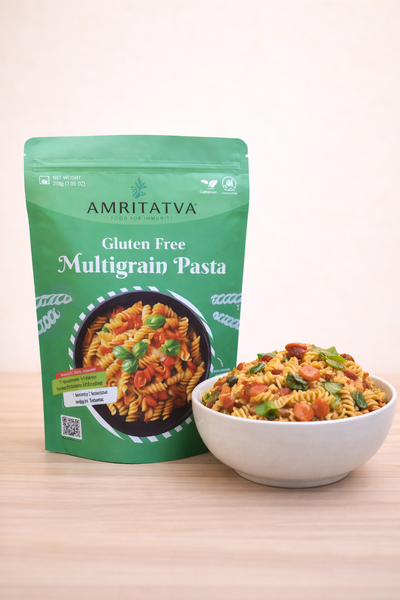
The pasta transition was easier. Amritatva Multigrain Pasta in a tomato-based sauce with vegetables was indistinguishable to both kids from what they'd had before. The glycaemic index of 40-55 versus the 65-75 of the refined pasta we'd been buying means they're not in a sugar-crash state 90 minutes after eating. I noticed they were less irritable and hungry before dinner on pasta days. That was the practical confirmation I needed.
Month 2: The Adults' Breakfast
My husband's morning routine was: wake up, coffee immediately, no food until 9am when he arrived at office. Then a packaged snack because he was starving by then. Classic cortisol-and-glucose mismanagement. I put a jar of sattu on the kitchen counter with the instruction "drink this before coffee." He resisted for two weeks, then tried it after I explained the cortisol-coffee interaction. He noticed the difference in focus by the third day.
By week three, the sattu sharbat was his own habit, not something I was tracking. That's the test of whether a food change has stuck: when the other person starts doing it without prompting. My mother-in-law switched her roti atta from 100% wheat to a 50-50 blend of jowar and wheat as a first step. Her post-meal glucose readings improved by month two — not a cure, but a measurable dietary contribution to her management.
What Three Months Actually Looks Like
The household's food buying changed more than I expected. We spend more on produce and nuts, less on packaged snacks. Total grocery spending is roughly the same because good-quality whole foods substitute on both volume and cost for the packaged items they replaced. We eat out about the same frequency but order differently — less fried and bread-heavy, more dal, grilled, or grain-based dishes.
The hardest thing wasn't resistance from anyone. It was my own cooking fatigue. Whole-food cooking takes more time than opening packets. The solution was Sunday meal prep: cooked grains and dal in the fridge, cut vegetables ready to go, Amritatva All-Purpose Seasoning as the shortcut that makes a quick stir-fry or pasta dish actually fast. Without the seasoning shortcut, I don't think the change would have lasted.
Try This Product
Amritatva Gluten-Free Pasta + All-Purpose Seasoning
Family dinner sorted in 10 minutes. Clean label, millet-based.
Shop Now →Frequently Asked Questions
How do you handle school lunches when the kids want what their friends are eating?
This is real and ongoing. My approach: the tiffin box is non-negotiable on weekdays, but I involve both kids in choosing what goes in it. They pick from a list of options I've pre-approved — which means they have agency without me losing control of the ingredients. On Fridays they choose one "fun" item that I buy from the store, but I read the label with them and explain what's in it. The 11-year-old has started reading labels independently. The 8-year-old asks "does this have numbers in it?" which is close enough for now.
What was the single most impactful change for the whole family?
Replacing the snack drawer, without question. It touches the most eating occasions per day — at least 3-5 across all four family members. It requires no cooking. It doesn't force anyone to change what they eat at mealtimes, which reduces the sense of restriction. And because snacking is often mindless (people reach for whatever is there), changing what's there changes behaviour with minimal willpower expenditure. If you can only change one thing, start there.
Is it realistic to do this with an elderly family member who has strong food preferences?
Yes, but the strategy has to be format-matching rather than substitution framing. Don't say "I'm replacing your biscuits with something healthier." Say "I found something similar you might like." The texture and format need to approximate what they're familiar with. Khakhra instead of biscuits, jowar roti alongside wheat roti rather than replacing it entirely, millet-based dishes with familiar spicing rather than unfamiliar flavour profiles. Changes that require adapting to new textures or flavours from scratch take 8-12 weeks of repeated exposure for elderly family members — budget the time and don't interpret initial resistance as permanent rejection.




0 comments