

Key Takeaways
- Adults who meal prep spend an average of 2.5 hours cooking per week versus 6 hours for non-preppers, with no measurable difference in dietary quality (International Journal of Behavioral Nutrition and Physical Activity, 2017).
- Sunday prep of 90 minutes can cover 5 weekday lunches and 5 dinners using batch-cooked dal, rehydrated mushrooms, millet, and sattu drinks — approximately 10-15 minutes of weekday assembly per meal.
- A LocalCircles 2023 survey found that 74% of urban Indians who eat unhealthy on weekdays cite "no time to cook" as the primary reason — a problem meal prep directly solves without requiring any additional cooking skill.
- Reheating cooked dal increases resistant starch content by 5-10% compared to freshly cooked dal, per a Journal of Food Science (2020) study — meaning batch-cooked legumes are nutritionally equivalent or slightly better than freshly cooked.
90 minutes on Sunday. That's the investment. In exchange, you get 5 weekday lunches and 5 dinners that require 10-15 minutes of assembly — no decisions, no scrambling, no defaulting to instant noodles because you couldn't think of anything else. Here's exactly how to do it.
The Sunday Prep Framework: What to Batch-Cook
Batch cooking works because certain foods hold well for 4-5 days refrigerated without quality loss. The foods that don't hold — leafy greens, crispy preparations, fried items — are left for weekday assembly. The Sunday list has four components, all of which can cook simultaneously with some planning.
Dal (45 minutes active, serves 5 days): 250g masoor or moong dal. Pressure cook with turmeric and ginger for 3 whistles. Make the tadka base — mustard, jeera, garlic, tomato — in a separate pan and mix in. Refrigerate in an airtight container. Reheats in 3 minutes. The Journal of Food Science (2020) found that cooked-and-cooled legumes have 5-10% higher resistant starch than freshly cooked — an actual nutritional advantage of batch cooking.
Millet (20 minutes, serves 5 days): 200g foxtail or pearl millet, rinsed and pressure-cooked or simmered in 400ml water for 15-20 minutes. Store plain, without seasoning — seasoning is added at assembly time based on what it's being paired with. Cooked millet holds in the refrigerator for 4 days without texture degradation.
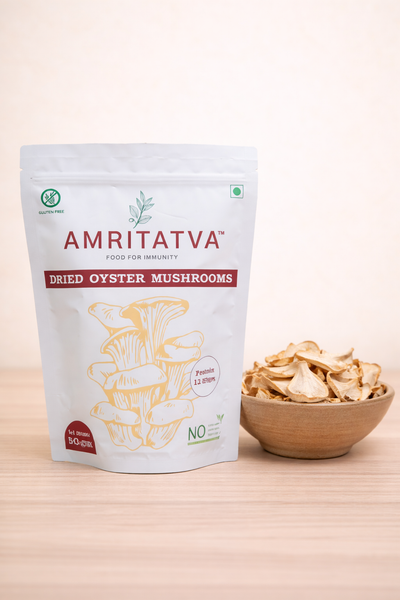
Rehydrated oyster mushrooms (5 minutes, serves 3-4 days): 30g dried oyster mushrooms in 300ml water for 30 minutes produces approximately 200g of rehydrated mushrooms. The soaking water is nutritionally valuable — beta-glucans leach into it during rehydration. Use it as the liquid base for cooking dal or soups. Pat mushrooms dry after draining and refrigerate separately.
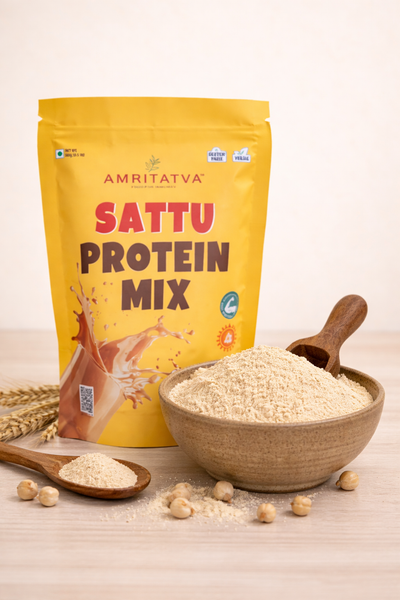
Sattu base (10 minutes, serves 5 days): Mix 150g Amritatva Sattu Protein Mix with 50g roasted peanuts (blended to rough powder), stored dry in a sealed jar. Each morning, 2-3 tablespoons of this base mixed with water or plant milk takes 2 minutes. Not technically cooking, but prepping the dry mix eliminates one decision from every morning.
Weekday Assembly: What Lunch and Dinner Look Like
Assembly is not cooking. It's combining what's already done.
Weekday lunch template (10-12 minutes): 1 cup prepped millet + 1 ladle reheated dal + sautéed or raw seasonal vegetable (onion, cucumber, tomato, whatever's available) + a squeeze of lemon. If rehydrated mushrooms are in the fridge, add a handful with a teaspoon of Amritatva All-Purpose Seasoning and a minute on a hot pan. Total assembly time: 10-12 minutes from fridge to table.
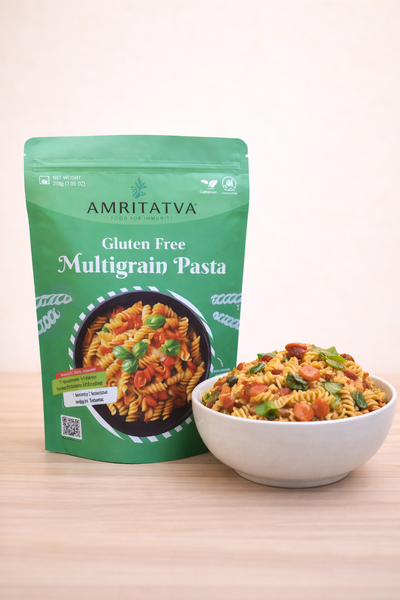
Weekday dinner template (12-15 minutes): The dal and millet combination covers lunch. Dinner can rotate between Amritatva Multigrain Pasta (cooks in 8-10 minutes) with a simple tomato-mushroom sauce built from the rehydrated mushrooms and soaking liquid, or a millet khichdi with whatever vegetables are available. Neither requires advance prep beyond what's already done on Sunday.
Breakfast (2-3 minutes): 2-3 tablespoons of the sattu-peanut base, 250ml water or cold plant milk, lemon, black salt, shake or stir. No cooking. Done.
The Mushroom Soaking Liquid: Don't Throw It Away
Rehydrating dried oyster mushrooms produces a brown liquid that most people discard. Don't. Beta-glucans are water-soluble and migrate from the mushroom cell walls into the soaking liquid during rehydration. Using this liquid as the base for dal cooking or soup adds the functional compounds to the dish without any additional ingredient cost. One 30g portion of dried mushrooms rehydrated in 300ml water produces liquid with measurable beta-glucan content, per USDA FoodData Central data on dried mushroom composition.
Filter the liquid through a fine strainer to remove any grit before using. It keeps in the refrigerator for 2-3 days. Its flavour is mild and umami-adjacent — it improves most savoury dishes without contributing a distinctively mushroom taste at the volumes used in home cooking.
Scaling for Two People vs One
The quantities above are for one person eating lunch and dinner from the prep for 5 days. For two people, double everything. The 90-minute timeline holds because pressure cooker capacity isn't the constraint — the active work (tadka, mixing, portioning) is. A second person in the kitchen reduces the timeline to 60-70 minutes.
For one person, some of the prep extends to 6 days if kept properly refrigerated. Dal at day 5-6 is fine if stored at or below 4°C. Rehydrated mushrooms should be used within 3-4 days. Cooked millet holds 4 days. The sattu dry mix has no refrigeration requirement and lasts 2-3 weeks sealed.
What Not to Prep in Advance
Some foods actively degrade with batch cooking and should stay as weekday fresh preparations. Leafy greens like spinach or methi lose texture and oxidise quickly — buy fresh and cook as needed, takes 5 minutes. Raitas with yoghurt separate after 24-48 hours. Fried or crisped preparations (anything with a texture you'd notice changing) are worth making fresh. The Sunday prep system only requires that you resist the temptation to over-prep. Four components done well covers 80% of weekday eating. The remaining 20% is weekday fresh prep that takes less than 10 minutes.
Try This Product
Amritatva Gluten-Free Pasta
8-minute weekday dinner. Millet-based, clean label, ready fast.
Shop Now →Frequently Asked Questions
Does reheating dal and millet multiple times reduce their nutritional value?
No significantly, and for dal there's a mild nutritional benefit. Reheating cooked legumes increases resistant starch content by 5-10% compared to the first cooking (Journal of Food Science, 2020) because cooling and reheating promotes starch retrogradation, converting digestible starch to the resistant form that acts as prebiotic fibre. Millet and other whole grains show similar though smaller effects. The only meaningful nutritional loss from reheating is Vitamin C, which is not present in meaningful amounts in dal or cooked millet anyway.
How do you prevent batch-cooked dal from going bad before the end of the week?
Three practices: store in an airtight container at or below 4°C within 2 hours of cooking, use a clean dry spoon each time you serve from the container (contamination from a used utensil is the most common cause of early spoilage), and do not add water or garnishes to the bulk container. Portion out what you need into a separate bowl before reheating. Properly stored batch dal lasts 5-6 days. If you see any surface mould or the smell has changed at day 4, discard it. Do not rely on taste alone to detect spoilage.
Is meal prep actually worth the Sunday time investment if you live alone?
Yes, specifically because the economic of decision fatigue are worse for one person. A 2019 study in Frontiers in Psychology found that food decision fatigue — the cognitive load of deciding what to eat at each meal — is a primary driver of unhealthy weekday eating choices. Having pre-decided, pre-cooked options removes that decision entirely. The International Journal of Behavioral Nutrition and Physical Activity (2017) found meal preppers consumed 2.4 fewer packaged snack portions per week on average, and spent less on food overall despite the time investment in the Sunday session.



0 comments