

Key Takeaways
- India's per-capita wheat flour consumption grew 340% between 1961 and 2000 as the Green Revolution made refined wheat cheap and widely available (FAOSTAT historical food balance sheets).
- The 1983-2000 period saw packaged food sales in India grow at 15% annually as rising urban incomes made convenience foods affordable for the middle class for the first time (IMRB historical FMCG data).
- India's diabetes prevalence grew from 1.2% of adults in 1975 to 11.4% in 2023 — a near-tenfold increase that closely tracks the adoption of refined grain and packaged food consumption across those five decades (IDF Diabetes Atlas, 2023).
- Millet cultivation in India declined from 37 million hectares in 1970 to 14 million hectares by 2015, before rebounding to 18 million hectares in 2023 as consumer demand and government policy reversed the trend (FAOSTAT 2024).
Three generations of Indian families ate very differently from each other. The shift wasn't accidental — it was driven by agricultural policy, economic change, and deliberate marketing. Understanding how it happened explains why we're now in a third shift, back toward millets and whole foods, and what the health data shows about the consequences of each era.
Generation 1: 1950s-1970s — Whole Grains, Fermentation, Seasonal Eating
For households through the 1950s and 60s, the food system was local by necessity. Most families ate what was grown regionally: millets (jowar, bajra, ragi) as the primary grain across large parts of Maharashtra, Rajasthan, Karnataka, and the south; rice in coastal and eastern regions; wheat in Punjab and UP. No single grain dominated nationally. Fermented foods were daily staples: idli, dosa, kanji, ambali, dhokla — all traditional fermentation processes that increased B-vitamin bioavailability, improved protein digestibility, and fed gut bacteria with lactic acid bacteria (Journal of Food Science, 2018).
Vegetables were seasonal. Mangoes in summer, root vegetables in winter, greens from the kitchen garden. Preserving excess produce through pickling, sun-drying, and fermenting was normal food management. Meals were cooked from identifiable ingredients. The concept of a packaged food with an ingredient list didn't exist in most households. This wasn't idealised health consciousness — it was simply how food worked before industrial supply chains.
The Green Revolution Shift: 1965-1985
The Green Revolution from the mid-1960s was a policy-driven agricultural transformation: high-yield wheat and rice varieties, subsidised fertilisers, irrigation infrastructure. It solved the immediate crisis of food insecurity. India went from food aid dependency to food surplus in 15 years — a genuine achievement that saved lives. The cost was grain monoculture: wheat and rice became cheap, government-supported, and universally available. Millets, which had no equivalent policy support, became economically marginal.
Per-capita wheat flour consumption grew 340% between 1961 and 2000 (FAOSTAT). Jowar and bajra consumption halved across the same period. The nutritional consequence was real: wheat and polished rice have lower fibre, lower iron, lower calcium, and higher glycaemic index than the millets they replaced. Dietary fibre intake dropped from an estimated 40g per day (ICMR recommended level) toward the 14g average recorded in modern surveys. This is the period when the infrastructure for India's current metabolic disease burden was laid.
The Maggi Generation: 1985-2010
Maggi noodles launched in India in 1983. The 2-minute noodle was not just a product — it was a delivery mechanism for the concept that food could be fast, packaged, and desirable. By the late 1990s, urban India had absorbed packaged biscuits, instant soups, refined wheat bread, and carbonated drinks as normal daily consumption. Packaged FMCG food grew at 15% annually through 1983-2000 as rising incomes made convenience affordable (IMRB historical data).
The school lunch changed. Children who had eaten dal-rice or roti-sabzi started eating biscuits, chips, and instant noodles. This generation — born roughly 1975-1995 — came of age with refined wheat and added sugar as daily defaults, not occasional treats. The health consequences show up in the data: India's diabetes prevalence grew from 1.2% of adults in 1975 to 5.9% in 2000 to 11.4% in 2023 (IDF Diabetes Atlas). The trajectory matches the dietary shift with a two-decade lag, which is consistent with the time required for chronic disease to develop from dietary patterns established in childhood and young adulthood.
The Third Shift: 2010s-Now — Return to Millets and Clean Labels
The reversal is real, though incomplete. Millet cultivation in India rebounded from 14 million hectares in 2015 to 18 million hectares in 2023 (FAOSTAT), driven partly by the UN's declaration of 2023 as the International Year of Millets and partly by consumer-led demand in urban markets. FSSAI's 2022 labelling revisions made ingredient transparency mandatory in new ways, accelerating the clean-label category. A 2023 LocalCircles survey found 67% of Indian urban households now read ingredient labels — up from 29% in 2019.
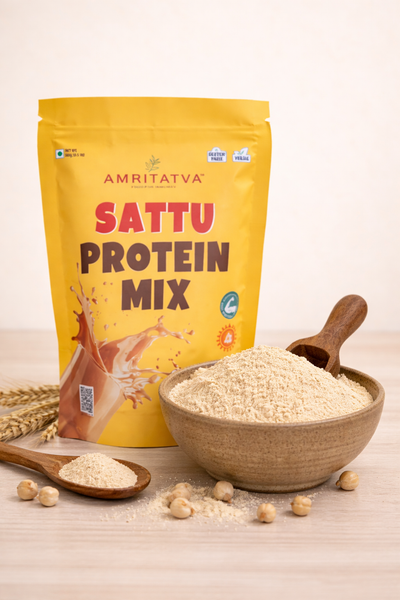
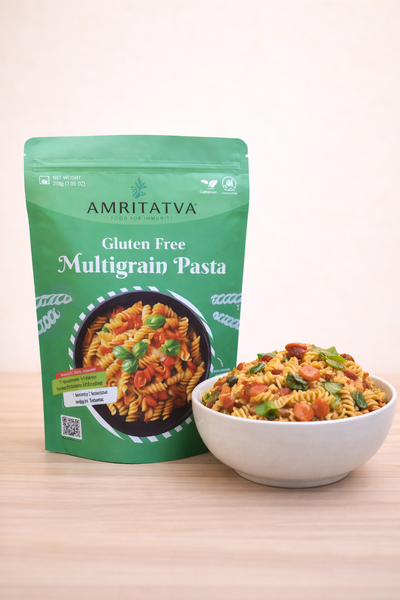
This isn't nostalgia. It's a data-informed correction. Consumers who understand that jowar has a GI of 55-70 versus maida's 70-85, that sattu provides 20-22g protein per 100g versus 10-12g in most packaged protein products, are making rational food switches. The generation that grew up eating Maggi is now feeding children of their own and choosing differently. Products like Amritatva's millet noodles represent that correction: same format as what that generation grew up with, none of the refined-flour, MSG-laden formulation.
Try This Product
Amritatva Gluten-Free Noodles
The clean version of what your generation grew up eating.
Shop Now →Frequently Asked Questions
Did traditional Indian diets actually prevent the diseases that are common now, or is that romanticised?
The correlation between dietary shift and disease prevalence is strong, but correlation isn't causation — urbanisation, sedentary work, stress, and environmental factors also changed across the same period. What the data shows clearly: India's diabetes rates grew fastest in urban populations that adopted Western dietary patterns earliest, and remained lower in rural areas where traditional grain consumption persisted longer. A 2018 Lancet study on the Global Burden of Disease found that low whole-grain intake was the largest single dietary risk factor for metabolic disease in India. Traditional diets had higher whole-grain intake. The connection is real, even if it's not the entire explanation.
Is the current millet revival just an urban trend, or is it changing farming patterns?
Both. The 4-million-hectare increase in millet cultivation from 2015 to 2023 (FAOSTAT) reflects actual farmer decisions, not just urban consumer sentiment. Millets are drought-resistant and require less irrigation and fertiliser than wheat and rice — economically attractive as input costs rise and water availability becomes less reliable. The POSHAN 2.0 programme includes millet promotion in midday meal schemes, which means institutional demand. Consumer demand from urban clean-label buyers is one vector; agricultural economics and government policy are others. The revival has multiple structural drivers, not just wellness culture.
What specifically changed in children's diets between 1980 and 2010?
The clearest change is breakfast and snacks. In 1980, a typical urban school-age child ate cooked breakfast at home (poha, upma, idli, or paratha) and a home-packed tiffin. By 2000, packaged biscuits and instant noodles were the dominant school snack in urban India. The National Family Health Survey tracks child nutrition data across this period: refined carbohydrate intake in children aged 5-14 roughly doubled in urban areas between 1992 and 2006. Micronutrient density of children's diets declined as calorie density from packaged foods increased. This is the cohort that is now India's working-age adults with the highest metabolic disease prevalence ever recorded.



0 comments