

Key Takeaways
- India's plant-based food market is growing at 12.7% CAGR through 2030 (IMARC Group, 2024), driven by consumers who want nutrition that is both clean and transparent — not just plant-based in name.
- The gut microbiome — which houses 70–80% of the immune system — responds directly to dietary fibre quality; millet-forward and mushroom-enriched diets actively shift microbiome composition toward immunity-supporting bacteria.
- Clean-label eating doesn't require expensive imported products — India's traditional pantry (millets, sattu, dried mushrooms, legumes) was already built on the nutritional principles now marketed as premium wellness.
- FSSAI licence verification (14-digit number, checkable at fssai.gov.in) is the single most reliable indicator of genuine food safety compliance in India.
The phrase "conscious eating" gets used constantly in wellness marketing. Most of the time it means very little. But when you trace it back to its roots — eating food that is honest about what it contains, grown without unnecessary intervention, and nutritionally intentional rather than designed for shelf life — it describes something India's traditional food culture has been doing for generations. What's changed is that modern food processing eroded those habits, and now people are working their way back. Amritatva's approach isn't a trend. It's a return.
What "Eating Better" Actually Means in Practice
India has a paradox at the centre of its nutrition crisis. The IMRB Protein Consumption Survey found that 73% of urban affluent Indians are protein deficient — not because food is unavailable, but because the foods that dominate modern Indian diets (refined wheat, polished rice, packaged snacks) are calorie-dense and nutrient-poor. "Eating better" in this context means three things: higher protein density per calorie, higher fibre to support the gut microbiome that controls immunity, and fewer synthetic additives that erode that microbiome over time. None of this requires imported products. It requires informed choices about what's already in the Indian pantry.
Why Plant-Based Doesn't Have to Mean Incomplete
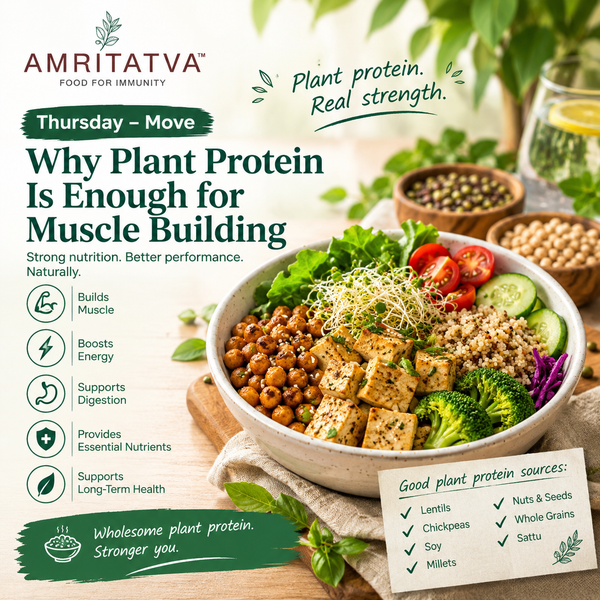
The most common critique of plant-based eating is protein completeness — the argument that plant proteins lack one or more essential amino acids, making them inferior. This is technically true of individual plant proteins in isolation. It is not true of traditional Indian eating patterns. Dal-chawal is a complete protein combination — the lysine in dal complements the methionine in rice. Sattu with milk provides all nine essential amino acids. Adding oyster mushroom powder (3.3g protein per 100g, all essential amino acids present in partial quantities) to a grain-legume base fills the gaps further. The system was always there. It just wasn't labelled as such.
Millets: The Original Clean Carbohydrate
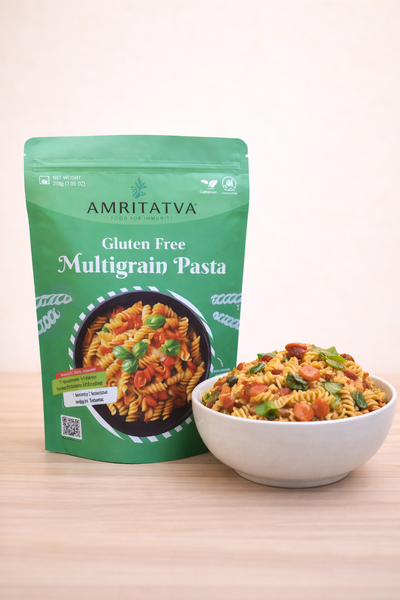
India grew millet long before wheat became dominant. Jowar, bajra, ragi, and foxtail millet fed this country for thousands of years — and they have the nutritional profile to justify why: lower glycaemic index than wheat or rice, higher fibre, more iron and calcium per serving, and naturally gluten-free. Ragi (finger millet) provides 344mg of calcium per 100g — higher than milk, from a plant source. Bajra provides 8mg of iron per 100g. Jowar provides 4.4g fibre per 100g. Amritatva's millet-based pasta and noodles bring these nutritional profiles into a modern format that takes 8 minutes to cook — removing the effort barrier that kept millets confined to traditional preparations.
Sun-Dried Mushrooms: Functional Nutrition Without a Supplement Label
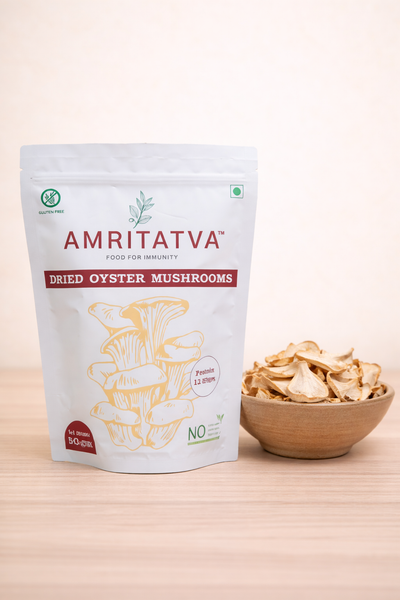
Mushrooms are the only plant food with meaningful Vitamin D content, and only when exposed to UV light during drying. Sun-dried oyster mushrooms deliver 10–450 IU of Vitamin D2 per 100g (USDA FoodData Central) — a significant contribution given that 70–90% of Indians are Vitamin D deficient (PMC, 2024). The same mushrooms provide beta-glucans (confirmed to drive trained immunity in a 2024 Frontiers in Nutrition study), ergothioneine (the tissue-protective antioxidant the body can't synthesise), and B vitamins scarce in Indian vegetarian diets. This is functional nutrition delivered through food, not a supplement capsule — which is a meaningful difference for bioavailability and sustainability of the habit.
What Clean Label Means and Why It Matters
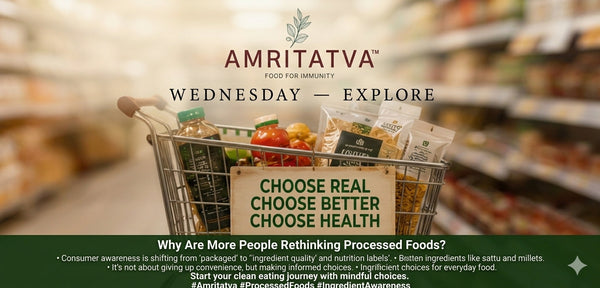
FSSAI tested 1.7 lakh food samples in 2024 and found more than 33,000 non-compliant or adulterated. Clean labelling — short ingredient lists in recognisable language, no "permitted additives" catch-alls, no "nature-identical flavouring" — is the consumer's most practical defence against this. Every Amritatva product carries a complete ingredient list and FSSAI Licence 22222046000640, verifiable on the official FSSAI portal. Ingredients are listed in plain language: millet flour, mushroom powder, spices, salt. This isn't a marketing choice. It's a minimum standard that every food brand should be held to, and that consumers deserve to demand.
Try This Product
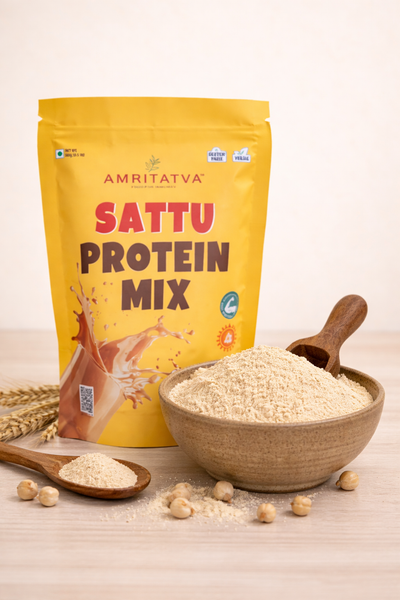
Amritatva Sattu Protein Mix
20g+ protein per 100g. GI 40. Clean Indian superfood.
Shop Now →Frequently Asked Questions
Is Amritatva food suitable for the whole family?
Yes. Amritatva products are free from gluten, preservatives, MSG, and artificial flavours — making them suitable for children over 2 years, adults, seniors, and people with dietary restrictions including celiac disease, lactose intolerance, and vegetarian or vegan lifestyles. The FSSAI certification applies across all products.
Can I eat Amritatva products if I'm managing blood sugar?
Millet-based products have a lower glycaemic index than wheat or rice equivalents, making them a better choice for blood sugar management. Sattu has a GI of 40 — one of the lowest of any high-protein Indian food. Consult your doctor or dietitian for personalised guidance if you're actively managing diabetes.
Where are Amritatva's ingredients sourced?
Amritatva sources from Indian farms and uses FSSAI-certified manufacturing. Oyster mushrooms are sun-dried (not oven-dried) to preserve Vitamin D content and beta-glucan activity. All products are produced without synthetic preservatives or anti-caking agents. Full ingredient transparency is available on every product label.
Is plant-based eating sustainable long-term?
Yes — provided the diet includes adequate protein (sattu, legumes, mushrooms), iron (ragi, legumes, sesame), and Vitamin B12 (which requires supplementation on strict vegan diets, as it's not available in plant foods). A plant-forward diet built around whole Indian staples is nutritionally complete for most people without supplementation beyond B12.

0 comments