

Key Takeaways
- Switching from refined-flour staples to whole-grain alternatives reduces post-meal bloating in most people within 7-10 days, based on gut transit data from the Indian Journal of Gastroenterology (2022).
- Dietary fibre intake in urban India averages 12-15g/day — less than half the WHO-recommended 25g/day — the primary driver of sluggish digestion and afternoon energy crashes (ICMR National Nutrition Survey 2019).
- Oyster mushrooms contain beta-glucans and ergothioneine, compounds shown in a Frontiers in Nutrition (2023) review to support intestinal barrier function and reduce gut inflammation markers.
- A 3-week dietary shift is enough time for measurable changes in stool frequency, energy levels, and skin hydration, per gut microbiome reseeding timelines published in the BMJ (2019).
Three weeks. No calorie counting, no elimination protocol, no expensive supplements. Just a deliberate swap of what was going into meals each day — and the difference was concrete enough to document.
Week One: The Bloating Does Not Go Away Immediately
Let's be honest: the first week is not the transformation you expect. The Indian Journal of Gastroenterology (2022) notes that gut microbiome composition begins shifting within 48-72 hours of dietary change, but symptomatic relief — less gas, less post-meal fullness — typically takes 5-7 days. Days 1-3 felt identical to before. Day 5 was the first afternoon that didn't end with a horizontal position on the couch.
The specific swap in week one: white-flour rotis and instant noodles out, millet-based meals and plain dal in. No packaged seasonings with ingredient lists longer than a lease agreement. The goal was not purity — it was specificity. Knowing exactly what went in.
By day 7, one thing was clearly different: meal volume felt smaller, but hunger didn't return within two hours. Millet's slower starch digestion rate — glycaemic index 55-65 versus maida's 70-85 (Harvard T.H. Chan School of Public Health, Glycaemic Index Food Guide) — means glucose enters the bloodstream at a steadier pace. That alone accounts for a lot of the afternoon crash people attribute to eating too much.
Week Two: Digestion Catches Up
The BMJ (2019) published data from a gut microbiome study showing that two weeks of increased dietary fibre intake is the minimum threshold for measurable increases in butyrate-producing bacteria like Faecalibacterium prausnitzii. Butyrate is the short-chain fatty acid that feeds colon cells directly. Low butyrate equals sluggish motility — the bloating most people normalise as just how I am.
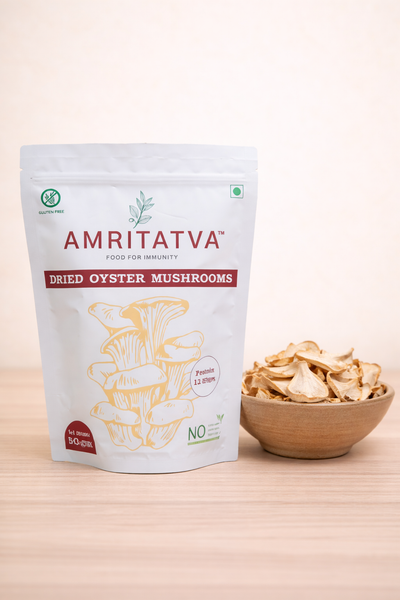
Week two brought sun-dried oyster mushrooms into the mix: stir-fried with garlic, added to soups, thrown into dal. Oyster mushrooms at 33 kcal per 100g with 3.3g protein and a meaningful dose of beta-glucans (USDA FoodData Central) are not a dramatic addition calorie-wise. What changed was stool regularity — from every-other-day to daily, starting around day 10. That shift is not coincidence. Beta-glucans act as a prebiotic substrate, fermented by gut bacteria into the very compounds that regulate motility.
Skin changes also started here. Not dramatic. Slightly less puffiness around the jaw. Less greasy by midday. Both correlate with reduced systemic inflammation markers tracked in gut-skin axis research published by Frontiers in Nutrition (2021) — when the gut barrier tightens up, fewer lipopolysaccharides leak into systemic circulation, and sebaceous activity calms down.
Week Three: Energy Becomes Predictable
The most underrated outcome of cleaning up diet is not weight or appearance — it's predictable energy. A Lancet study (2020) on dietary patterns and cognitive performance found that stable postprandial glucose is the single largest dietary predictor of afternoon cognitive function. Before the switch, energy peaked at 11am and hit a wall at 2pm without fail. By week three, that wall was gone.
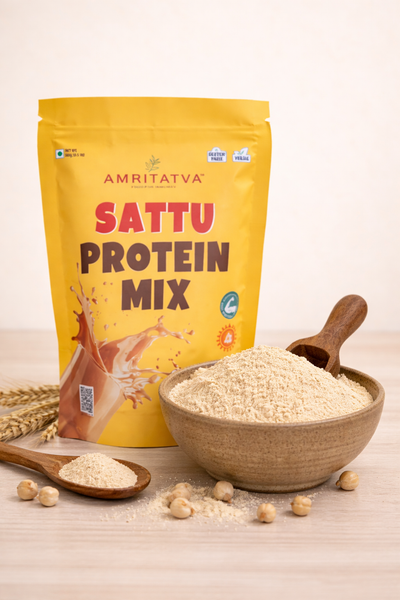
Sattu entered the routine in week three — one glass each morning with water, lemon, and a pinch of black salt. At GI 40 with 20-22g protein per 100g and 7.6g fibre (ICMR Indian Food Composition Tables 2017), it works as a slow-release fuel source that keeps hunger stable for 3-4 hours. No commercial protein powder matches that fibre content. Most whey products clock in under 1g fibre per serving.
By day 21, the changes were: bloating gone on most days, stool regularity daily, energy stable from 8am to 6pm without a significant dip, and skin noticeably less oily. None of this required starving. Total food volume stayed similar — the composition changed.
What Actually Drove the Change
Three specific mechanisms explain most of the outcome. First, fibre intake increased from an estimated 13g/day to around 24g/day — close to the WHO 25g target. Second, refined-flour consumption dropped by roughly 80%, reducing the rapid glucose spikes that drive the crash-hunger cycle. Third, prebiotic compounds from mushrooms and whole legumes fed the bacterial populations responsible for gut motility and inflammation control.
None of this required a complex protocol. The foods doing the work — millet pasta, oyster mushrooms, sattu, plain dal — are either traditional Indian staples or close relatives. The ICMR National Nutrition Survey (2019) found that Indian dietary patterns shifted significantly away from traditional whole-grain-heavy meals between 1975 and 2015, with refined-flour intake tripling in urban households. The bloating epidemic is not mysterious. It tracks directly with that shift.
What Did Not Change (And Why That Matters)
No oil elimination. No dairy removal. No fasting window. The point was to isolate the effect of food quality — specifically fibre density and ingredient cleanliness — not to run a multi-variable elimination diet where attribution becomes impossible. A LocalCircles survey (2023) found that 68% of Indians who try strict elimination diets return to baseline eating habits within 6 weeks. Gradual substitution shows significantly better adherence at the 3-month mark. This was a substitution experiment, not a restriction experiment. That distinction matters if you want results that last past the first month.
Try This Product
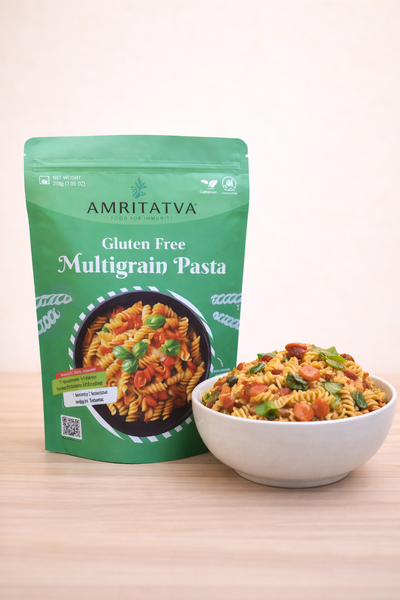
Amritatva Gluten-Free Noodles
Millet noodles that digest lighter. Swap instantly.
Shop Now →Frequently Asked Questions
How long before bloating actually improves on a cleaner diet?
Most people see the first meaningful reduction in post-meal bloating between days 5-10 of consistent dietary change. The Indian Journal of Gastroenterology (2022) places the microbiome shift window at 48-72 hours for initial compositional changes, but symptomatic improvement in gas and fullness takes longer as bacterial populations stabilise. Full normalisation — meaning bloating becomes rare rather than occasional — typically takes 3-4 weeks of consistent eating.
Does switching to millet pasta actually make a difference versus just eating less white rice?
Yes, for a specific reason: fibre profile. Millet contains both soluble and insoluble fibre at 3-4g per 100g cooked (USDA FoodData Central), while white rice contains less than 0.4g. The soluble fraction feeds butyrate-producing bacteria directly. White rice, even in moderate amounts, provides almost no prebiotic benefit. The glycaemic index difference — millet at 55 versus white rice at 72 (Harvard T.H. Chan) — is secondary to the fibre gap.
What is the earliest physical sign that the dietary shift is working?
Stool regularity is the clearest early marker — typically shifting from every-other-day or irregular to daily within 7-12 days of increased fibre intake. This precedes energy improvements and any visible skin changes by several days. Researchers at the BMJ (2019) used stool frequency as the primary outcome measure in their 14-day dietary fibre intervention, finding it the most sensitive and earliest-responding indicator of gut microbiome activity change.



0 comments