

Key Takeaways
- Approximately 70-80% of immune cells are located in the gut-associated lymphoid tissue (GALT), making gut health the most directly diet-modifiable determinant of immune function (Vighi et al., Clinical & Experimental Immunology, 2008).
- Gut microbiome diversity is one of the strongest predictors of immune response quality. A 2022 Cell study found high-fibre diets significantly increased microbiome diversity while ultra-processed food diets reduced it.
- Regular consumption of fermented foods (curd, kanji, idli/dosa batter) increases Lactobacillus and Bifidobacterium populations, associated with reduced upper respiratory infection rates and shorter illness duration (meta-analysis, British Journal of Nutrition, 2020).
- The practical minimum for gut-immune support: 25g of dietary fibre daily (WHO guideline) from varied sources, including at least one serving of fermented food and one source of prebiotic fibre such as legumes, millets, or mushrooms.
When you catch a cold, your gut is involved. When you recover from an infection faster than someone nearby eating a similar diet, your gut is part of the reason. The immune system and the digestive system aren't separate departments. They share a very large workspace — the gut wall — and the health of that workspace determines how well both systems function. This isn't a wellness metaphor. It's anatomy.
The Gut Is Where Immunity Happens
The gut-associated lymphoid tissue (GALT) contains approximately 70-80% of the body's total immune cells. This makes intuitive sense: the gut is the body's largest interface with the external world, processing several kilograms of food daily and constantly making decisions about what should be absorbed and what should be treated as a threat. T cells, B cells, macrophages, and natural killer cells in the GALT are continuously being trained, activated, and calibrated based on what's passing through.
The gut microbiome plays the role of teacher. The 100 trillion microorganisms living in the large intestine produce metabolites, communicate directly with immune cells through the gut wall, and train the immune system to distinguish between harmless food proteins, beneficial bacteria, and genuine pathogens. When the microbiome is diverse and well-fed, this training is precise and effective. When it's depleted — by antibiotics, high-processed-food diets, chronic stress, or consistently low fibre intake — immune responses become less discriminating and less effective.
What Your Gut Bacteria Actually Need
Gut bacteria eat what you eat. Specifically, they ferment dietary fibre that the human digestive system can't break down. This fermentation produces short-chain fatty acids (SCFAs) including butyrate, propionate, and acetate. Butyrate is the primary fuel for colonocytes (the cells lining the gut wall) and is critical for maintaining the tight junctions between these cells that prevent bacteria and food proteins from crossing into the bloodstream.
Low fibre intake means low SCFA production, which means a less-maintained gut wall and a less-educated immune system. This is the practical connection between breakfast and whether you get sick next month. The WHO guideline of 25g of dietary fibre daily exists partly for digestive health and partly because the evidence on gut microbiome support makes that level the minimum for adequate SCFA production. Most Indian urban adults eating processed or restaurant food regularly get 10-15g per day — well below this threshold.
Three Foods That Do the Most Work
Whole grains and millets. Jowar, bajra, ragi, and foxtail millet provide 6-10g of fibre per 100g, significantly more than refined wheat or rice. They also contain arabinoxylan, a type of prebiotic fibre that preferentially feeds Bifidobacterium species associated with immune regulation. Switching even two meals a week from maida-based foods to millet-based ones makes a measurable difference in fibre intake and, over time, gut microbiome composition.
Fermented foods. Curd, kanji, idli/dosa batter, and naturally fermented pickles introduce live cultures that compete with pathogenic bacteria and directly increase gut microbiome diversity. A 2020 meta-analysis in the British Journal of Nutrition found that regular probiotic food consumption (including curd) reduced upper respiratory tract infection incidence by 42% and illness duration by 1.9 days on average. These numbers justify making curd a daily food rather than an occasional condiment.
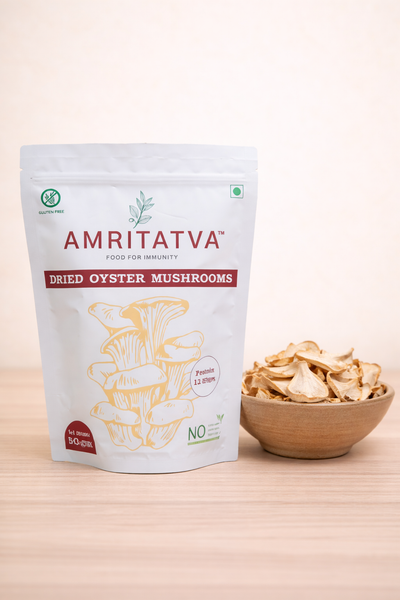
Beta-glucan-rich foods. Oyster mushrooms, oats, and barley contain beta-glucans that activate macrophages and natural killer cells through Dectin-1 receptors — a direct pathway from food to immune cell function. Dried oyster mushrooms concentrate this effect: 10g of dried mushrooms (equivalent to roughly 80g fresh) delivers a meaningful dose of beta-glucans and can be added to any dal, soup, or rice dish without changing the character of the meal.
Signs Your Gut-Immune Connection Needs Attention
Frequent minor infections (three to four colds per year when most people around you have one or two) can indicate a depleted gut immune system. Persistent bloating, irregular bowel patterns, skin conditions that cycle with diet, and slow recovery from illness are other signals worth taking seriously. These aren't diagnostic criteria — they're patterns that warrant a conversation with a doctor rather than waiting out.
One practical metric: how long your gut takes to recover after a course of antibiotics. Antibiotics disrupt the microbiome significantly. Most people's gut microbiome doesn't fully return to its pre-antibiotic composition for 1-2 months. A gut that recovers faster, with normal digestion returning within 2-3 weeks, is generally a more resilient, diverse one. Active effort to support recovery through fermented foods and fibre-rich meals during and after antibiotic courses is well-supported by the research.
Try This Product
Amritatva Dried Oyster Mushrooms
Beta-glucans + Vitamin D. Add to dal, soups, or rice dishes.
Shop Now →Frequently Asked Questions
Do probiotic supplements work as well as fermented foods?
Supplements provide specific strains in high doses, which is useful in specific clinical contexts — post-antibiotic recovery, certain digestive conditions. Fermented foods provide a broader range of strains in lower doses, alongside the prebiotic fibre and nutrients that feed them. For general gut-immune maintenance in a healthy adult, fermented foods have a stronger evidence base than supplements. If you're managing a specific condition or recovering from antibiotics, a supplement alongside fermented foods provides more comprehensive support.
How long does it take to see a difference after changing diet?
Gut microbiome composition begins shifting measurably within 3-4 days of significant dietary change. Immune effects follow more gradually — studies tracking immune markers after dietary changes typically show meaningful improvements in 4-8 weeks of consistent eating. Digestive improvements (reduced bloating, better regularity) usually come first, within 1-2 weeks. Most people notice digestive changes before immune changes, but the two are connected — the gut is improving on both fronts simultaneously.
Can you eat too much fibre?
Yes, and the symptoms are clear: gas, bloating, and cramping when intake increases too quickly. The solution is gradual increase over 2-3 weeks, giving gut bacteria time to adapt to the increased fermentation substrate. Starting at 15g per day and adding 3-5g per week toward 25g prevents most discomfort. Drinking adequate water alongside high-fibre foods also helps — fibre absorbs water and needs it to move through the digestive tract efficiently.


0 comments