

Key Takeaways
- Between 70% and 80% of the human immune system is housed in the gut — specifically in gut-associated lymphoid tissue (GALT) that lines the intestine and coordinates most immune activity in the body.
- Dietary fibre is fermented by gut bacteria to produce short-chain fatty acids (SCFAs) — particularly butyrate — which directly modulate T-cell function and inflammatory response, creating a measurable immune effect.
- A 2025 ScienceDirect review confirmed that diverse dietary fibre intake correlates with microbiome diversity, which in turn reduces rates of autoimmune disease, allergy, and infection susceptibility.
- Mushroom beta-glucans function as both prebiotic fibre (feeding beneficial gut bacteria) and direct immune activators (binding Dectin-1 receptors on macrophages) — making them one of the few foods that support gut immunity through two independent pathways simultaneously.
The phrase "boost your immunity" appears on so many products that it has become nearly meaningless. But the underlying biology is specific and interesting. Your immune system doesn't function in isolation from your gut — it functions largely through it. 70–80% of immune activity is coordinated through gut-associated lymphoid tissue. The cells that decide whether to mount an immune response, stand down, or attack the body's own tissue are responding — in real time — to signals from the gut microbiome. Those signals are shaped by what you eat. Fibre is the most direct dietary lever you have on that system.
How the Gut Trains the Immune System
The gut microbiome produces short-chain fatty acids (SCFAs) — particularly butyrate, propionate, and acetate — when fermenting dietary fibre. These molecules don't stay in the gut. They cross into the bloodstream and interact directly with immune cells throughout the body. Butyrate, specifically, has been shown to promote the differentiation of regulatory T-cells (Tregs) — the cells that prevent excessive inflammatory response. Too few Tregs is associated with autoimmunity and chronic inflammation. This is why a low-fibre diet doesn't just cause digestive problems — it changes the calibration of the entire immune system. The connection isn't metaphorical. It's biochemical.
What Happens to Immunity When Fibre Is Low
India's shift toward refined grain diets has measurable immune consequences. Refined wheat (maida), polished rice, and ultra-processed snacks provide almost no fermentable fibre. With no fermentable substrate, the bacteria that produce butyrate decline in the microbiome. Research from multiple cohorts (PMC, 2024) shows that urban Indian adults eating high-refined-grain diets have significantly less microbiome diversity than rural populations eating traditional mixed-grain diets. Lower microbiome diversity correlates with higher inflammatory markers, higher rates of allergic disease, and impaired T-cell function — all immune outcomes that show up quietly over years, not overnight.
Which Fibres Work Best for Gut Immunity
Not all dietary fibre has equal effect on the microbiome. Fermentable prebiotic fibres — those that can actually be fermented by gut bacteria — drive the most meaningful immune effects. The best sources in Indian diets:
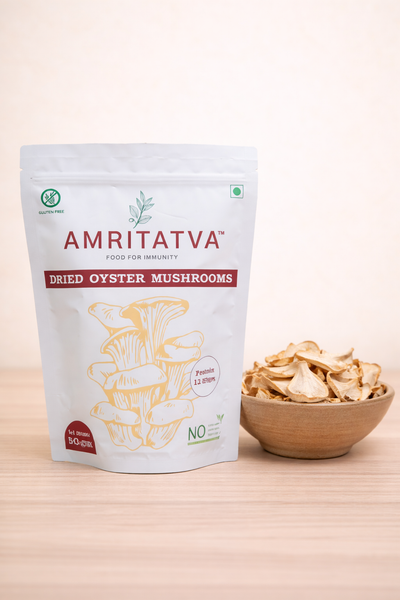
- Beta-glucans from mushrooms: Activate macrophages directly via Dectin-1 receptors AND feed beneficial gut bacteria — two immune mechanisms from one ingredient. Dried oyster mushrooms are an easy way to add beta-glucans to dal, soups, and broths. For a concentrated daily dose, oyster mushroom powder stirs seamlessly into any cooked dish.
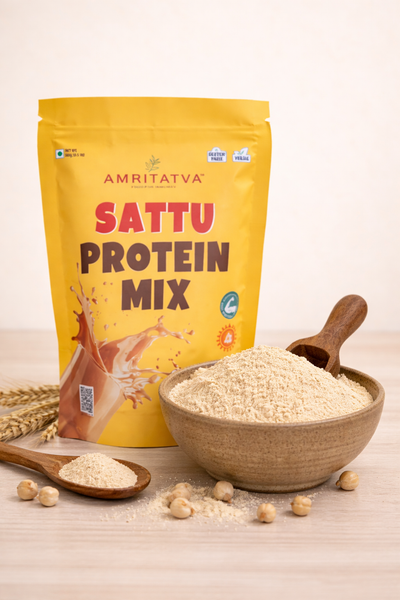
- Sattu (roasted chana flour): Contains oligosaccharides that feed Bifidobacterium and Lactobacillus, the bacteria most associated with immune regulation and allergy prevention.
- Millet (jowar, bajra, ragi): Arabinoxylan fibre from millet is highly fermentable and selectively feeds Faecalibacterium prausnitzii, a bacterium strongly associated with reduced gut inflammation.
- Dal and legumes: Provide resistant starch and galacto-oligosaccharides (GOS) — among the most studied prebiotics for immune-modulating SCFA production.
How Amritatva's Products Support This System
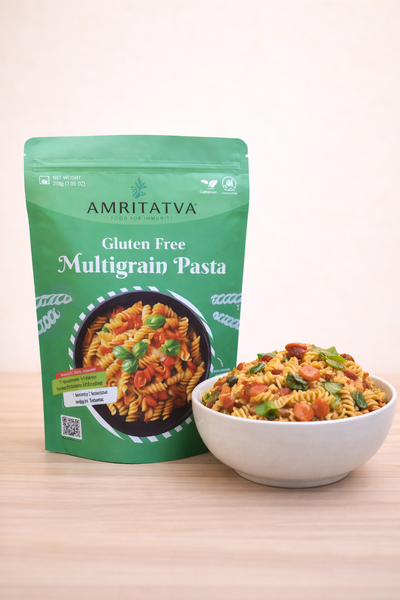
Amritatva's product line is built around exactly this nutritional framework. Millet-based pasta and noodles (jowar, bajra, amaranth) provide arabinoxylan and resistant starch to feed immunity-supporting gut bacteria. Sun-dried oyster and shiitake mushrooms provide beta-glucans that activate macrophages directly via Dectin-1 receptors AND function as prebiotic fibre for Lactobacillus. Sattu Protein Mix provides both protein and the oligosaccharides that feed the microbiome strains most associated with immune resilience. Each product is free from synthetic preservatives and artificial additives that research shows disrupt the gut microbiome over time. This isn't incidental — it's the nutritional logic behind the entire range.
Try This Product
Amritatva Dried Oyster Mushrooms
Beta-glucans via two immune pathways. Add to any dal or soup.
Shop Now →Frequently Asked Questions
How quickly does dietary fibre change gut immunity?
Gut microbiome composition begins shifting measurably within 3–5 days of significant dietary changes (Stanford University, 2021). However, immune-relevant changes in SCFA production and Treg cell function take 3–6 weeks to become clinically measurable. Give dietary changes at least 6–8 weeks before evaluating outcomes — the immune system's calibration changes slowly, even when the microbiome responds faster.
Are probiotic supplements better than fibre-rich food for gut immunity?
Probiotics and prebiotic fibre work through different mechanisms. Probiotics add specific strains of bacteria temporarily; prebiotic fibre feeds and sustains the bacteria that are already there. Research consistently finds that prebiotic fibre (from whole foods) produces more durable microbiome changes than probiotics alone. The most effective approach is both: fermented foods (idli, dosa, kanji, curd) for probiotics, and fibre-rich whole foods for prebiotics.
Does cooking destroy fibre's prebiotic properties?
Most fermentable fibres survive standard cooking temperatures. Beta-glucans from mushrooms are stable at 100°C. Resistant starch in cooked-and-cooled legumes and grains actually increases when food is refrigerated after cooking — reheating leftover dal or rice delivers more resistant starch than eating it fresh. Arabinoxylan from millet is stable through normal cooking. The prebiotic value of food is not destroyed by cooking it in the way you would at home.
What is the minimum amount of fibre needed to support gut immunity?
ICMR recommends 40g of dietary fibre per day for Indian adults — most Indians consume approximately 15–20g. The immune-relevant threshold is less about a specific number and more about diversity: research shows that 30+ different plant foods per week produces meaningfully better microbiome diversity than eating fewer, even if total fibre grams are similar. Variety of fibre sources matters as much as quantity.



0 comments