

Key Takeaways
- India's immune health supplement market is projected to reach $3,971.1 million by 2030, growing at 11.4% CAGR — yet food-based immune support delivers the same key nutrients (Vitamin C, D, zinc, beta-glucans) at a fraction of the cost (Grand View Research, 2024).
- 70–90% of Indians are Vitamin D deficient, a nutrient directly involved in the production of antimicrobial peptides — the front-line proteins your immune system uses against bacteria and viruses (PMC, NIH, 2024).
- Zinc deficiency impairs the development of T-cells and B-cells — the white blood cells responsible for adaptive immunity — according to research published by the NIH Office of Dietary Supplements.
- Mushroom beta-glucans, fermented foods, and fibre-rich legumes address the gut-immunity axis — where 70–80% of immune activity is coordinated — without supplementation.
India's immune supplement market is on track to surpass $3.9 billion by 2030. That's a remarkable number for a country where immunity-supporting foods — mushrooms, sattu, legumes, fermented rice, tamarind — have been part of the diet for thousands of years. The science hasn't changed. What's changed is that modern Indian diets have drifted far enough from traditional eating patterns that supplementing has started to feel necessary. The better solution is to understand what actually supports immunity and eat it consistently.
What the Immune System Actually Needs From Food
Immune function isn't supported by one nutrient — it requires a coordinated supply of several. The most evidence-backed dietary immune factors, per the NIH Office of Dietary Supplements and WHO nutrition guidance:
- Vitamin D: Regulates the production of antimicrobial peptides (cathelicidin and defensins) that kill bacteria and viruses on contact. With 70–90% of Indians deficient (PMC, 2024), this is the single largest immune-nutrition gap in the Indian population.
- Zinc: Required for the development and signalling of T-lymphocytes, Natural Killer cells, and neutrophils. Deficiency directly impairs adaptive immune response.
- Vitamin C: Acts as an antioxidant that protects immune cells from oxidative damage during active infection. Also supports collagen production in mucosal barriers.
- Beta-glucans: Polysaccharides found in mushrooms and oats that activate macrophages and drive trained immunity, as confirmed by a 2024 Frontiers in Nutrition study.
- Probiotics and prebiotic fibre: Feed beneficial gut bacteria that produce short-chain fatty acids (SCFAs) — the metabolites that regulate immune cell activity in the gut-associated lymphoid tissue (GALT).
The Best Indian Foods for Each Immune Nutrient
Every key immune nutrient has a whole-food source that fits naturally into Indian cooking:
- Vitamin D: Sun-dried oyster mushrooms (10–450 IU per 100g), egg yolk (40 IU per egg), fortified milk. India's outdoor lifestyle should theoretically provide Vitamin D through sun exposure, but urban air pollution and indoor work patterns have broken that mechanism for most city dwellers.
- Zinc: Pumpkin seeds (7.6mg/100g), sesame seeds (7.8mg/100g), roasted chana (2.9mg/100g), oyster mushrooms (0.77mg/100g). Zinc from plant sources is less bioavailable than from meat — pairing zinc-rich plants with Vitamin C (lemon, amla) improves absorption.
- Vitamin C: Amla (600–700mg/100g — one of the highest concentrations of any food), guava (228mg/100g), capsicum (140mg/100g), lemon (53mg/100g).
- Beta-glucans: Oyster mushroom powder and shiitake mushrooms, oats. These survive cooking temperatures and remain biologically active in curries, soups, and broths.
- Prebiotic fibre: Dal, sattu, onion, garlic, banana, jowar, bajra. Traditional Indian dal-based diets naturally provide robust prebiotic fibre when diversity is maintained.
The Gut-Immunity Connection
Between 70% and 80% of the immune system is housed in the gut — specifically in gut-associated lymphoid tissue (GALT) that lines the small and large intestine. The gut microbiome regulates immune signalling by producing short-chain fatty acids (butyrate, propionate, acetate) that directly modulate T-cell activity and inflammatory response. A 2025 ScienceDirect review confirmed that diverse dietary fibre intake supports microbiome diversity, which in turn correlates with lower rates of autoimmune disease, allergies, and infection susceptibility.
Why India's Immunity Gap Is a Diet Problem, Not a Supplement Problem
The same foods that built India's traditional diet immunity — amla, turmeric, mushrooms, fermented rice, legumes, sesame — remain available, affordable, and clinically validated. The gap opened when diets shifted toward refined grains, ultra-processed snacks, and high-sugar beverages that displace these foods without providing their immune-supporting nutrients.
Try This Product
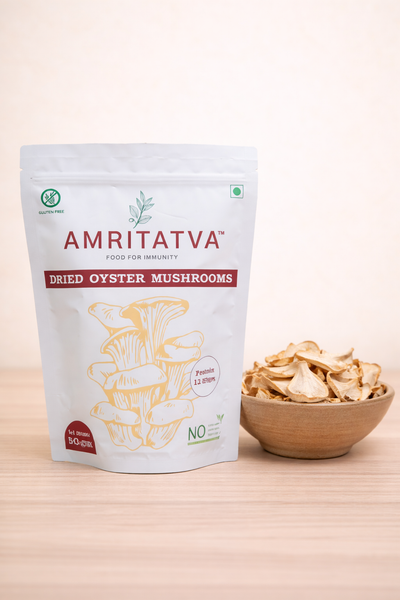
Amritatva Oyster Mushroom Powder
Beta-glucans for gut immunity. Pure mushroom, nothing added.
Shop Now →Frequently Asked Questions
What are the most important foods for immunity in India?
The highest-impact immune foods for Indian diets: amla (Vitamin C), sun-dried mushrooms (Vitamin D and beta-glucans), pumpkin seeds (zinc), dal and sattu (protein and prebiotic fibre), and fermented foods like idli, dosa, and kanji (probiotic bacteria for gut immunity).
Does turmeric actually boost immunity?
Curcumin (turmeric's active compound) has anti-inflammatory properties confirmed in peer-reviewed research. It modulates NF-κB, a key inflammatory signalling pathway. However, curcumin has very low bioavailability on its own — it absorbs significantly better when combined with piperine (black pepper) and fat. Traditional Indian cooking, which uses turmeric with black pepper and ghee, was already optimising for this.
How long does it take to see immune benefits from dietary changes?
Gut microbiome composition begins shifting within 3–5 days of meaningful dietary changes (Stanford University research, 2021). Vitamin D levels take 4–8 weeks of consistent dietary or sun exposure to show measurable change. Commit to dietary improvements for 60–90 days before evaluating outcomes.
Are immunity supplements necessary if I eat well?
For most people eating a diverse, whole-food diet with adequate Vitamin D and zinc sources, supplements aren't necessary. The exception is Vitamin D — India's epidemic-level deficiency makes supplementation reasonable for most urban adults, particularly those who work indoors.

0 comments