

Key Takeaways
- India's functional food and nutraceuticals market was valued at USD 4.8 billion in 2023 and is projected to reach USD 10.7 billion by 2028 at a CAGR of 17.4% (IMARC Group, 2023).
- A 2023 LocalCircles survey found that 71% of urban Indian consumers now actively read ingredient labels before buying packaged food — up from 42% in 2019.
- Post-COVID-19, searches for "immunity-boosting foods" on Google India increased by 400% between March 2020 and December 2022, per Google Trends analysis cited in FSSAI's 2023 Annual Report.
- The global beta-glucan market, driven largely by functional food demand, is forecast to grow from USD 573 million in 2022 to USD 1.1 billion by 2030 (Frontiers in Nutrition meta-analysis, 2023).
Functional foods are not a trend born in a Silicon Valley wellness startup. In India, the concept is centuries old: turmeric in milk, sattu before a harvest-day march, amla in the morning. What's new is the data behind it, the market scale behind the demand, and the consumer sophistication driving both.
What the Market Numbers Actually Show
India's functional food sector grew at 17.4% CAGR between 2018 and 2023 — faster than the overall packaged food market's 9.8% growth over the same period (IMARC Group, 2023). That gap matters. It signals not just growing interest but a structural preference shift: consumers are choosing foods with a declared health purpose over foods that simply taste good. FSSAI's 2023 State of Food Safety report noted a 38% increase in functional food product registrations in the three years following the pandemic, the largest three-year spike since the category was formally defined.
The categories driving this growth are specific: immunity-support products, digestive health foods, and high-protein alternatives to traditional snacks. These three account for over 60% of new functional food product launches in India between 2021 and 2023 (Euromonitor International, 2023). Gut health is the single fastest-growing sub-category, growing at over 22% annually.
What Indian Consumers Say They Want
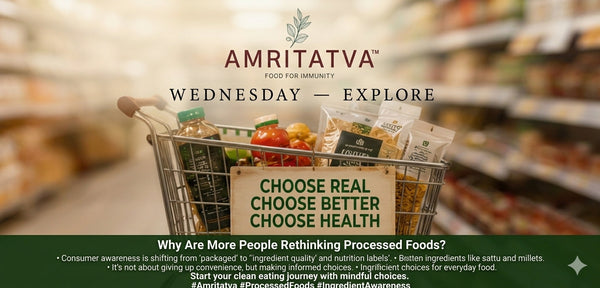
The 2023 LocalCircles survey polled 45,000 consumers across 291 Indian districts. Results were specific: 71% read ingredient labels before purchase (versus 42% in 2019), 64% said they distrust products with more than 8 ingredients listed, and 58% said they would pay a 15-20% premium for a product with verifiable clean-label credentials. These are not niche preferences. They reflect a mainstream shift in purchasing calculus.
What Indian consumers want in functional foods breaks down into three consistent signals. First: fewer, recognisable ingredients. Not "natural flavours" or "fortified with," but ingredients they can look up. Second: a declared function that connects to a real health concern — gut health, protein, energy, immunity. Third: Indian-origin ingredients they trust from cultural familiarity — amla, sattu, millet, mushrooms — rather than imported superfoods they associate with premium pricing and uncertain provenance.
Why This Is Not a Passing Fad
India's non-communicable disease burden explains the structural permanence of this demand. According to the IDF Diabetes Atlas (2023), 101 million Indians are living with type 2 diabetes, and another 136 million are prediabetic. The WHO estimates that 54% of Indian adult deaths in 2022 were attributable to NCDs. When a country's dominant health crisis is diet-linked, demand for foods that actively support metabolic health isn't a lifestyle trend. It's a rational response to a public health reality.
The fastest-growing consumer segment for functional foods in India is not the urban millennial. It's the 35-55 age group, typically managing the first signs of metabolic change: blood sugar fluctuations, cholesterol elevation, digestive irregularity. IMRB's 2022 Health and Wellness Consumer Survey found this group accounts for 48% of functional food spend despite representing only 31% of the adult population. They're not buying into a wellness aesthetic. They're managing a health situation with food as their first intervention.
What Consumers Are Specifically Asking Brands to Do
The gap between what consumers want and what most brands offer is measurable. A 2022 FSSAI consumer survey found that 67% of functional food buyers felt that front-of-pack health claims were exaggerated or unverifiable. This scepticism is not naivety — it tracks with actual regulatory data: FSSAI issued 1,847 label violation notices in FY2022-23, the majority for unsupported health claims.
What consumers specifically want from brands: exact ingredient quantities (not just "contains beta-glucans" but how much per serving), a legible nutritional basis for every health claim, and FSSAI licensing clearly displayed. These requests are not unreasonable. They're the minimum standard a functional food brand should meet. FSSAI licence 22222046000640 is one specific instance of what that transparency looks like in practice: a public, verifiable credential attached to every product.
The Ingredients Driving Functional Demand in India
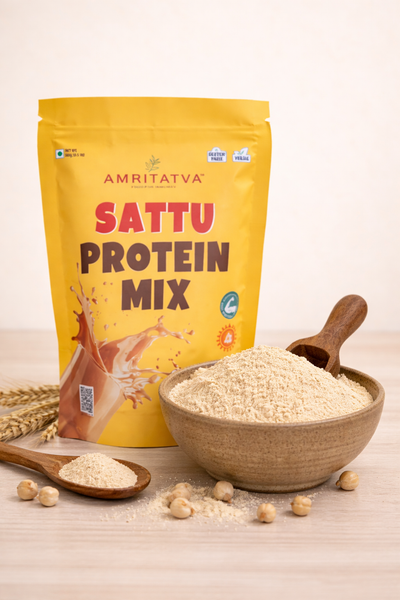
Three ingredient categories dominate Indian consumer interest in functional foods right now. Millet — ragi, foxtail, pearl — saw a 340% increase in Google Search volume in India between 2020 and 2023, coinciding with India's designation of 2023 as the International Year of Millets (FAOSTAT, 2023). Mushrooms, particularly oyster and shiitake varieties, are seeing accelerating demand driven by awareness of beta-glucan research and their protein density relative to most plant sources. Sattu, historically a Bihar-UP regional staple, is now searched and purchased across 22 Indian states, per Flipkart's 2023 consumer category report.
The common thread: these are Indian-origin foods backed by both traditional use and modern nutritional research. At USDA FoodData Central data, oyster mushrooms deliver 3.3g protein and meaningful beta-glucan content at 33 kcal per 100g. ICMR's Indian Food Composition Tables (2017) document sattu's 20-22g protein per 100g with a glycaemic index of 40. These are not marketing claims. They're government-grade food composition data driving real consumer purchase decisions.
Try This Product
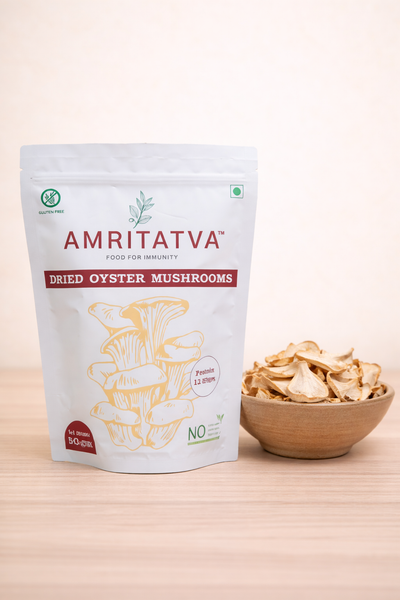
Amritatva Dried Oyster Mushrooms
Real beta-glucans. Sun-dried. No additives, no guesswork.
Shop Now →Frequently Asked Questions
How is a functional food defined differently from a health food or a supplement?
FSSAI defines functional foods as those which, when consumed as part of a normal diet, deliver physiological benefits beyond basic nutrition — specifically, benefits backed by scientific evidence. The key distinction from supplements: functional foods are whole foods or minimally processed foods consumed in normal dietary quantities, not concentrated extracts in capsule form. A supplement delivers an isolated compound; a functional food delivers a food matrix with multiple interacting components.
Why are Indian consumers suddenly interested in functional foods now, rather than 10 years ago?
Three concurrent shifts explain the timing. First, smartphone-enabled label reading — consumers can photograph an ingredient list and search every term instantly. Second, the post-COVID-19 visibility of immunity and gut health as concrete health priorities, not abstract wellness concepts. Third, India's NCD burden becoming personally relevant to the 35-55 demographic at scale: when someone in a household is managing diabetes or high cholesterol, the entire family's food purchasing changes. IMRB's 2022 data shows household-level behaviour change when one member receives a metabolic diagnosis.
What does clean-label actually mean in regulatory terms for Indian consumers?
FSSAI does not have a formal "clean label" certification, but their 2022 Labelling and Display Regulations require declaration of all additives by both INS number and common name, allergen highlighting, and country of origin for each ingredient. In practice, clean label in the Indian market means: no artificial preservatives (INS 200-series), no artificial colours (INS 100-series), no added MSG or yeast extract, and ingredient lists short enough to read without a food science degree. The 64% of consumers who distrust products with more than 8 ingredients are applying a practical proxy for this standard.

0 comments