

Key Takeaways
- India's immune health supplement market is projected to reach $3.97 billion by 2030 at 11.4% CAGR (Grand View Research, 2024) — yet the same nutrients driving that market exist in whole foods that cost a fraction of the supplement price.
- Oyster mushroom beta-glucans bind directly to Dectin-1 receptors on macrophages and Natural Killer cells, activating them within hours of consumption — a mechanism confirmed across multiple peer-reviewed clinical trials.
- India's celiac prevalence of 11.1% and the fact that 70–90% of Indians are Vitamin D deficient make functional food choices more consequential in India than in most other countries.
- A diet built on five specific functional food categories covers the five most clinically documented immune-support pathways: beta-glucan immune training, Vitamin D regulation, zinc for T-cell production, Vitamin C for mucosal barriers, and prebiotic fibre for gut-based immunity.
India spends billions on immunity supplements every year while sitting on some of the world's most clinically validated immune-supporting whole foods. The disconnect isn't ignorance — it's marketing. Supplement brands have research teams, advertising budgets, and retail shelf space. Sattu, oyster mushrooms, and amla don't have PR campaigns. But they have decades of clinical validation, lower cost, and better bioavailability than most isolated supplement compounds. Here are five foods with real immune evidence behind them.
1. Oyster and Shiitake Mushrooms: Beta-Glucan Immune Training
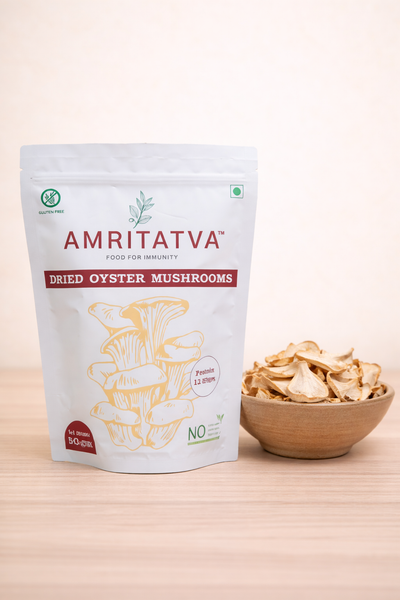
A 2024 Frontiers in Nutrition study confirmed that mushroom beta-glucans drive "trained immunity" — an epigenetic reprogramming of monocytes and macrophages that keeps them in a state of heightened readiness for weeks after each exposure. This isn't temporary immune stimulation; it's conditioning. Oyster mushrooms provide pleuran (a specific beta-glucan studied in human trials for immune modulation), and shiitake mushrooms provide lentinan — one of the most studied beta-glucan compounds in the world, used as an adjunct in oncology protocols in Japan since the 1980s. Sun-dried oyster mushrooms also provide 10–450 IU of Vitamin D2 per 100g (USDA FoodData Central) — addressing India's 70–90% Vitamin D deficiency through food rather than a capsule. For a concentrated dose of beta-glucans, oyster mushroom powder can be stirred into dal, soups, or broths daily.
2. Sattu: Protein, Iron, and Prebiotic Fibre Together
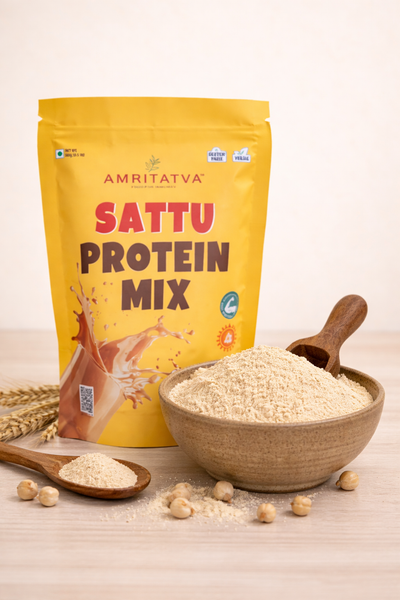
Chana sattu delivers 20–22g of protein per 100g alongside 7.6g dietary fibre, 8–9mg iron, and 172µg folate (ICMR Indian Food Composition Tables, 2017). The fibre component — oligosaccharides — functions as a prebiotic, feeding Bifidobacterium and Lactobacillus strains associated with immune regulation. The iron content supports the production of immune cells (red blood cell synthesis and haemoglobin function, both iron-dependent). The combination of protein, prebiotic fibre, and iron in a single ingredient — at a fraction of the cost of a supplement stack — makes sattu one of the most complete immune-support foods available in India.
3. Millets: Fibre Diversity for Microbiome Health
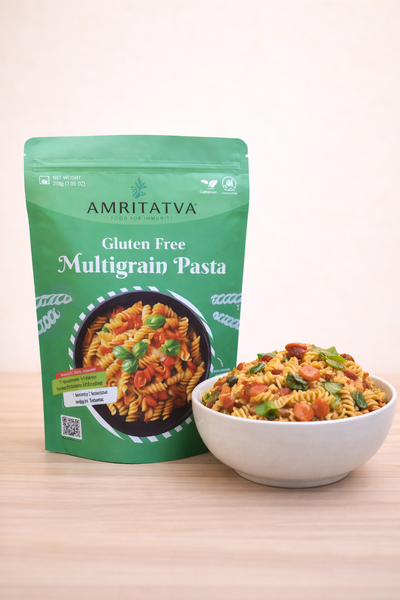
Jowar, bajra, ragi, and foxtail millet provide arabinoxylan fibre — one of the most effective fermentable fibres for feeding Faecalibacterium prausnitzii, a gut bacterium strongly associated with reduced intestinal inflammation. With 70–80% of the immune system housed in gut-associated lymphoid tissue (GALT), microbiome health directly determines immune calibration. Ragi (finger millet) also provides 344mg of calcium per 100g — higher than milk — and bajra provides 8mg of iron per 100g, both critical for immune cell production. Amritatva's millet-based pasta and noodles deliver these benefits in a format that takes 8–10 minutes to prepare.
4. Amla: The Highest Natural Vitamin C Source
Amla (Indian gooseberry) provides 600–700mg of Vitamin C per 100g — one of the highest concentrations of any food on earth, and roughly 10x the Vitamin C in an orange. Vitamin C has two immune functions: it acts as an antioxidant protecting immune cells from oxidative damage during active infections, and it supports collagen synthesis in mucosal barriers — the skin and gut lining that prevent pathogens from entering the body. Unlike supplement Vitamin C (typically isolated ascorbic acid), amla provides Vitamin C in a bioflavonoid-rich food matrix that research shows improves bioavailability and tissue uptake.
5. Fermented Foods: Probiotic Bacteria for the Gut Immune Axis
Idli, dosa, kanji, curd, and homemade pickles all provide live probiotic bacteria that colonise the gut and shift immune signalling toward a more regulated, less inflammatory baseline. A 2021 Stanford University study found that a high-fermented-food diet increased microbiome diversity and reduced inflammatory markers within 10 weeks — more effectively than a high-fibre diet alone (though the combination performed best). India's culinary tradition built fermented food into multiple daily meals — the breakfast idli, the dinner curd, the preserved pickle. When these get displaced by processed convenience foods, the immune consequences accumulate over years.
Try This Product
Amritatva Oyster Mushroom Powder
Pure beta-glucans for daily immune support. Nothing added.
Shop Now →Frequently Asked Questions
Which of these five foods has the strongest immune evidence?
Mushroom beta-glucans (oyster and shiitake) have the most mechanistically specific immune evidence — direct receptor binding on macrophages and NK cells, confirmed in multiple human and in vitro trials. Fermented foods have the most comprehensive population-level evidence for microbiome-mediated immune outcomes. The most practical approach combines both categories in your daily diet.
Can I get enough Vitamin D from food in India without supplements?
Sun-dried oyster mushrooms (10–450 IU/100g) and egg yolk (40 IU per egg) are the main dietary Vitamin D sources. For most urban Indians working indoors, these provide a meaningful contribution but not full sufficiency if you're clinically deficient. A blood test (25-hydroxyvitamin D) is the only way to know your actual level. Supplement if below 30 ng/mL.
Is sattu good for children?
Yes — sattu is an excellent complementary food for children over 6 months and suitable for all ages. The iron and folate content support cognitive development; the protein supports growth. Mixed with milk, jaggery, and a pinch of cardamom, it makes a nutritionally complete drink that children accept readily.
How many of these foods should I eat daily for immune benefit?
Daily exposure to diverse sources matters more than quantity of any single food. Practical daily immune nutrition: 5–10g dried mushrooms in dal or soup, 30g sattu in a morning drink, one millet-based meal per day, amla chutney or a fresh amla, and fermented foods at one or two meals. This pattern covers all five immune pathways consistently.

0 comments