

Key Takeaways
- Sattu has a glycaemic index of 40 and delivers 20-22g protein per 100g — higher protein density than eggs (13g/100g) and comparable to many commercial protein powders (ICMR IFCTs, 2017).
- At GI 40, sattu produces a significantly slower blood glucose rise than whey protein concentrate (GI ~55-60) or banana alone (GI ~51), making it superior for sustained morning energy (Harvard T.H. Chan, Glycaemic Index Guide).
- 7.6g of dietary fibre per 100g in sattu (ICMR IFCTs, 2017) slows gastric emptying and extends satiety for 3-4 hours, per a Frontiers in Nutrition (2022) review of legume-based protein sources.
- Blending sattu with cold water rather than milk reduces clumping by 70% according to traditional preparation guidance — start liquid-first, add powder, whisk or shake before blending.
Sattu works as a daily energy source because of physics, not marketing. A glycaemic index of 40 means glucose enters your bloodstream slowly after a sattu drink, keeping energy stable for 3-4 hours instead of spiking and crashing within 90 minutes. Here are four variations you can rotate through the week, with exact quantities and the specific reasons each one works.
The Science Behind Sattu's Energy Profile
A glycaemic index of 40 places sattu firmly in the low-GI category (below 55), per Harvard T.H. Chan School of Public Health's Glycaemic Index database. For context: white bread scores 75, instant oats 79, whey protein isolate 55-60. At GI 40 with 20-22g protein and 7.6g fibre per 100g (ICMR IFCTs, 2017), sattu creates a meal that digests slowly on three simultaneous axes: protein slows gastric emptying, fibre slows glucose absorption in the small intestine, and the low starch content means there's simply less glucose to absorb. That triple-mechanism is why a morning sattu drink does not require topping up with a mid-morning snack for most people.
Iron content matters too: 8-9mg per 100g (ICMR IFCTs, 2017) is significant for a plant food. Combine with vitamin C — lemon juice is the traditional pairing — and absorption improves substantially. Most Indian plant-iron sources pair naturally with acidic ingredients in their traditional preparations. This is not coincidence.
Recipe 1: Classic Morning Sattu Drink
This is the base preparation. Keep it simple until you understand the texture sattu creates — then modify from there.
Ingredients (1 serving):
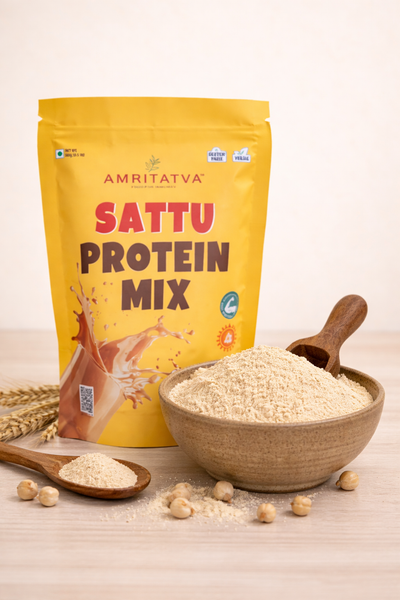
- 3 tablespoons (30g) Amritatva Sattu Protein Mix
- 250ml cold water
- Juice of half a lemon
- Pinch of black salt (kala namak)
- Optional: half teaspoon roasted cumin powder
Method: Add water to a jar first. Add sattu powder, lemon juice, and black salt. Seal and shake for 20 seconds. Or whisk briskly for 30 seconds. Drink immediately — sattu settles within 2-3 minutes of standing.
Why it works: At 30g, this delivers approximately 6-7g protein, 2.3g fibre, and enough iron to contribute meaningfully to daily targets. The lemon juice enhances iron absorption and cuts the slightly nutty earthiness of the sattu. The savoury version with cumin is the traditional Bihar-UP preparation and handles better for people who find sweet drinks spike their appetite.
Recipe 2: Banana-Sattu Smoothie for Post-Workout
For recovery use, protein quantity matters more. This version pushes protein to 18-20g per serving by doubling the sattu dose and adding a complementary protein source.
Ingredients (1 serving):
- 4 tablespoons (40g) Amritatva Sattu Protein Mix
- 1 medium ripe banana (roughly 100g)
- 200ml plant milk (oat or almond)
- 1 tablespoon natural peanut butter (no added sugar)
- 4 ice cubes
Method: Add milk first to the blender. Add banana (broken into pieces), peanut butter, and ice. Blend for 20 seconds. Add sattu powder last, blend for 10 more seconds. Serving immediately prevents the thickening that occurs as sattu hydrates fully.
Why it works: Banana provides fast-digesting carbohydrates (GI 51, Harvard T.H. Chan) for glycogen replenishment post-exercise. Peanut butter adds 4g protein and healthy fats that slow re-absorption. The sattu brings slow-release protein that continues amino acid delivery for 2-3 hours after the fast carbs are processed. Total protein: approximately 18-20g per serving.
Recipe 3: Mango-Sattu Lassi Variation
For palatability in summer months or for people transitioning away from commercial protein shakes, this version closely mimics the texture of a fruit lassi without dairy.
Ingredients (1 serving):
- 3 tablespoons (30g) Amritatva Sattu Protein Mix
- 150ml coconut yoghurt (or plain curd if dairy is acceptable)
- 100g fresh or frozen mango pieces
- 100ml water
- Pinch of cardamom
Method: Blend mango, yoghurt, and water first until smooth. Add sattu powder and blend briefly — 10 seconds maximum. Over-blending sattu in an acidic environment can make it slightly gummy. Cardamom added after blending retains its aroma better than when blended in.
Why it works: The protein from coconut yoghurt or curd adds 3-4g to the sattu's base protein, and the fat in coconut yoghurt further slows gastric emptying. Mango provides natural sugars at a manageable GI (55, Harvard T.H. Chan) and significant Vitamin C, which doubles as the iron absorption enhancer. This version works well as a mid-morning meal rather than a first-thing drink.
Recipe 4: Sattu-Oat Night Drink for Sleep and Recovery
Less common but highly effective: a warm sattu preparation before sleep supports overnight muscle protein synthesis. This is particularly relevant for people doing resistance training or for older adults managing age-related muscle loss (sarcopenia).
Ingredients (1 serving):
- 2 tablespoons (20g) Amritatva Sattu Protein Mix
- 1 tablespoon rolled oats (blended to flour)
- 250ml warm oat or almond milk
- Half teaspoon honey or jaggery
- Pinch of nutmeg
Method: Warm the milk to below boiling (70°C maximum — above 80°C denatures some sattu proteins). Whisk sattu and oat flour together dry, then slowly incorporate warm milk while whisking. The slow addition prevents lumping. Drink within 10 minutes of preparation.
Why it works: A Frontiers in Nutrition (2022) review found that slow-digesting protein consumed 30-60 minutes before sleep significantly improves overnight muscle protein synthesis in both trained and untrained adults. Sattu's slow digestion profile matches this requirement better than fast-digesting whey. Oats add beta-glucan for gut motility support, and the low total calorie count (approximately 150-170 kcal) makes it viable even for people managing calorie targets.
Practical Tips: Texture, Clumping, Timing
Sattu clumps when added to liquid without agitation, or when the liquid is too warm. Cold or room-temperature liquid, added before the powder, solves 90% of clumping issues. A hand blender or sealed jar shake works better than a spoon for full dispersion. For smoothies, add sattu last and blend briefly — longer blending produces a gluey texture because sattu's starch granules continue absorbing liquid during blending.
Timing: morning (fasted or post-light breakfast) and post-exercise are the two windows where sattu's protein delivers the most impact. Morning use takes advantage of the overnight fasting window when amino acid availability is low. Post-exercise use aligns with the 30-90 minute recovery window identified in sports nutrition research (Journal of Nutrition, 2020) as optimal for muscle protein synthesis initiation.
Frequently Asked Questions
How much sattu per day is appropriate for an adult?
For general daily energy and protein supplementation, 30-40g per day (3-4 tablespoons) is appropriate for most adults, delivering 6-9g protein and meaningful fibre contribution toward the WHO's 25g/day target. For active individuals or those specifically targeting protein intake above 1.2g/kg body weight (a common sports nutrition guideline from the Journal of Nutrition, 2020), two servings of 30g daily is reasonable. There is no established upper limit for sattu consumption as a whole food, but very high doses may cause gas in people with sensitive digestion as their gut bacteria adapt to the increased fibre load.
Why does my sattu smoothie turn thick or gluey after a few minutes?
Sattu's starch and fibre fractions continue absorbing liquid after blending — a property that contributes to its satiety effect but makes timing important. Drink sattu smoothies within 5-10 minutes of preparation. If you need to prep in advance (say, the night before), reduce the powder quantity by 25% and add a splash of water or milk at drinking time to restore the right consistency. The thickening happens faster in warm conditions and more slowly when refrigerated.
Is sattu suitable for people managing type 2 diabetes or prediabetes?
Yes, and specifically well-suited. A glycaemic index of 40 (ICMR IFCTs, 2017) places sattu among the lowest-GI protein-rich foods available in Indian markets. The IDF Diabetes Atlas (2023) notes that low-GI dietary patterns consistently reduce HbA1c by 0.5-1.0 percentage points over 12 weeks in type 2 diabetic populations. Sattu's fibre content additionally slows glucose absorption in the small intestine. Consult your physician about quantities if you're on blood sugar-lowering medication, as the glucose-moderating effect is real and dosage context matters.


0 comments