

Key Takeaways
- Plain chana sattu delivers 20-22g protein and 7.6g fibre per 100g (ICMR IFCTs, 2017). Amritatva's Mushroom Sattu adds oyster mushroom powder, contributing beta-glucans at 25-35% of mushroom dry weight — a compound absent entirely from commercial whey protein.
- Whey protein concentrate typically delivers 70-80g protein per 100g but contains less than 1g fibre and zero beta-glucans. Sattu's lower protein density is offset by fibre, iron (8-9mg/100g), and immune-active polysaccharides that whey doesn't carry.
- The combination of chana protein (rich in lysine, low in methionine) with oyster mushroom protein (which has a more complete amino acid profile) produces a better amino acid complement than either ingredient alone, per USDA FoodData Central amino acid composition data.
- Beta-glucans bind to Dectin-1 receptors on macrophages and NK cells. This mechanism is specific to beta-glucan structure and is not replicated by protein supplementation of any kind — it's a separate, additive function (Frontiers in Nutrition, 2023).
Plain sattu is already one of the most nutritionally complete whole foods in the Indian pantry. Adding oyster mushroom powder to it doesn't replace what sattu does — it adds a second, separate function that protein alone can't deliver. Here is the nutritional case for why the combination works, what makes it different from commercial protein alternatives, and why this blend is specifically Indian in its design logic.
What Plain Chana Sattu Actually Delivers
ICMR's Indian Food Composition Tables (2017) document chana sattu's composition at 20-22g protein, 7.6g dietary fibre, 8-9mg iron, and a glycaemic index of 40 per 100g. That GI of 40 matters significantly: it places sattu below oats (GI 55), below most dals (GI 25-40 depending on preparation), and far below commercial protein powders that use maltodextrin as a carrier (GI 95-136). A protein drink that spikes blood sugar is a metabolic contradiction; sattu avoids it structurally because the protein comes embedded in a whole legume matrix with fibre and low starch.
The iron content of 8-9mg per 100g deserves attention. India's National Family Health Survey (NFHS-5, 2021) found that 57% of women aged 15-49 and 67% of children under 5 in India are anaemic. For a plant-based protein source to carry this level of iron — comparable to red meat at 2.6mg per 100g when adjusted for bioavailability with Vitamin C enhancement — is nutritionally significant for the Indian dietary context.
What the Mushroom Powder Addition Does
Oyster mushroom powder brings three compounds that are structurally absent from chana sattu: beta-glucans, ergothioneine, and Vitamin D2 (in UV-exposed mushrooms). These aren't nutritional redundancies. They're additions to a different biological system.
Beta-glucans at 25-35% of oyster mushroom dry weight (Frontiers in Nutrition, 2023) activate the innate immune system via Dectin-1 receptor binding on macrophages and natural killer cells. This mechanism operates entirely independently of protein metabolism. It does not require a high-protein diet to function, and it is not enhanced by higher protein intake. Adding beta-glucans to a protein source doesn't make the protein work better — it adds a parallel function that the protein was never doing.
Ergothioneine is a sulphur-containing antioxidant produced only by fungi (humans cannot synthesise it). It concentrates in mitochondria, where it protects against oxidative stress during high metabolic activity. This is relevant for active people: ergothioneine's cellular protective role is additive to protein's muscle-building role, not duplicative of it.
Head-to-Head: Mushroom Sattu vs Plain Sattu vs Commercial Whey
A direct comparison across the three makes the functional profile clear.
- Plain chana sattu (100g): 20-22g protein, 7.6g fibre, 8-9mg iron, GI 40. No beta-glucans. No ergothioneine. Cost per 100g: approximately Rs 15-25.
- Amritatva Mushroom Sattu (100g): 20-22g protein base (chana), plus beta-glucans and ergothioneine from oyster mushroom powder, 7.6g+ fibre, GI approximately 40. The mushroom fraction adds immune-active polysaccharides and antioxidant compounds that the plain version doesn't carry. FSSAI licence 22222046000640.
- Commercial whey protein concentrate (100g): 70-80g protein, less than 1g fibre, no beta-glucans, no ergothioneine, GI 55-60 (often higher with added maltodextrin), typically contains artificial sweeteners, emulsifiers, or flavouring agents. Cost per 100g: Rs 80-200 depending on brand.
Whey wins on raw protein density. That's the right choice for someone specifically targeting maximum protein per gram — post-surgery recovery, aggressive muscle-building phases, clinical protein deficiency. For everyday functional use — steady energy, digestive support, immune function, iron intake, low-GI metabolic profile — the sattu formulation is superior in most parameters. The two serve different purposes and aren't direct substitutes.
Why This Combination Is Specifically Indian in Its Design
The pairing of legume protein with fungal bioactives is not a novel invention. Traditional Indian and Chinese medicine both used mushroom preparations alongside protein-rich grain and legume foods for centuries. What's new is the food composition science that explains why the combination works. Chana is high in lysine but relatively low in methionine and cysteine (sulphur amino acids). Oyster mushrooms have a more balanced amino acid profile including higher methionine relative to most plant proteins (USDA FoodData Central). The two together produce a better amino acid complement than either alone.
The sattu-as-base also matters culturally: it's a food Indians are already familiar with, already know how to prepare, and already trust. The functional upgrade doesn't require adopting a foreign dietary convention or buying a product that requires refrigeration and a scoop and a shaker bottle. It fits into a steel glass with water and lemon, which is how your grandmother drank it.
How to Use Mushroom Sattu for Maximum Effect
The daily dose for general use: 30-40g of Amritatva Sattu Protein Mix in 250ml cold water with lemon juice and black salt. This delivers approximately 6-9g protein, meaningful fibre, a serving of beta-glucans in the beta-glucan range associated with immune effects in the 2022 meta-analysis, and Vitamin D2 if the mushroom component is UV-exposed during drying. Morning on an empty stomach or post-exercise are both appropriate windows. For athletic recovery, pairing with a carbohydrate source (fruit, a small roti) maximises protein uptake by stimulating insulin-mediated amino acid transport.
Frequently Asked Questions
Does adding mushroom powder to sattu change its taste significantly?
Minimally. Oyster mushroom powder has a mild umami flavour at the quantities used in Amritatva's blend. In the savoury sattu preparation (water, lemon, black salt), the mushroom note is subtle and works with the existing flavour profile rather than against it. In sweet preparations (with jaggery or banana), it's largely undetectable. People who are sensitive to mushroom flavour notice it more in the plain-water preparation than in smoothie-format drinks where other flavours dominate.
Is the protein quality of chana sattu plus mushroom comparable to whey for muscle building?
For general fitness and moderate training, yes — with the qualification that total daily protein intake matters more than the specific source. The leucine content of chana sattu (approximately 1.4g per 100g, USDA FoodData Central) is lower than whey's approximately 8-10g per 100g, and leucine is the primary trigger for muscle protein synthesis. For people doing serious resistance training and targeting maximum hypertrophy, whey's leucine density gives it an advantage specifically in post-workout windows. For general daily protein needs, the sattu-mushroom combination provides excellent quality protein with functional additions that whey doesn't offer.
Can diabetic or prediabetic individuals use Mushroom Sattu without concern about blood sugar?
Sattu's GI of 40 (ICMR IFCTs, 2017) makes it one of the most appropriate protein sources for blood-sugar management. The IDF Diabetes Atlas (2023) notes that low-GI dietary patterns reduce HbA1c by 0.5-1.0 percentage points over 12 weeks in type 2 diabetic populations. The beta-glucans in the mushroom component additionally slow glucose absorption. In savoury preparation with water and lemon (no added jaggery or fruit), the total glycaemic load is very low. Diabetic individuals on medication should consult their physician before significantly increasing sattu intake, as the glucose-moderating effect is real and can interact with medication timing.
Try This Product
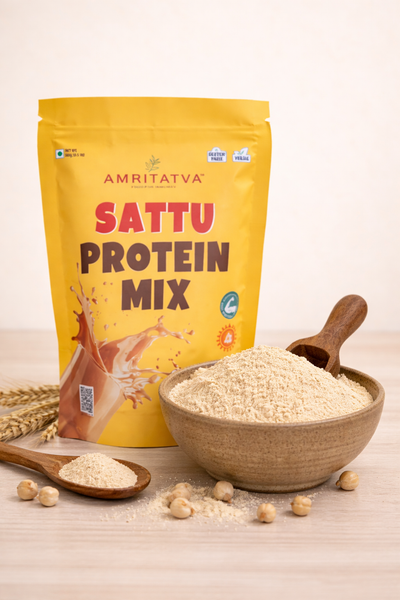
Amritatva Sattu Protein Mix
Roasted chana protein. No artificial isolates. The OG Indian protein.
Shop Now


0 comments