

Key Takeaways
- 73% of urban Indians are protein deficient, and only 10% of the population meets daily protein requirements — despite the fact that food is not scarce (IMRB Protein Consumption Survey).
- ICMR recommends 0.8–1g of protein per kilogram of body weight per day for adults; most Indian vegetarian diets deliver roughly half that amount.
- Chana sattu delivers 20–22g protein per 100g — comparable to many animal protein sources — along with 7.6g dietary fibre and a glycaemic index of just 40 (ICMR Indian Food Composition Tables, 2017).
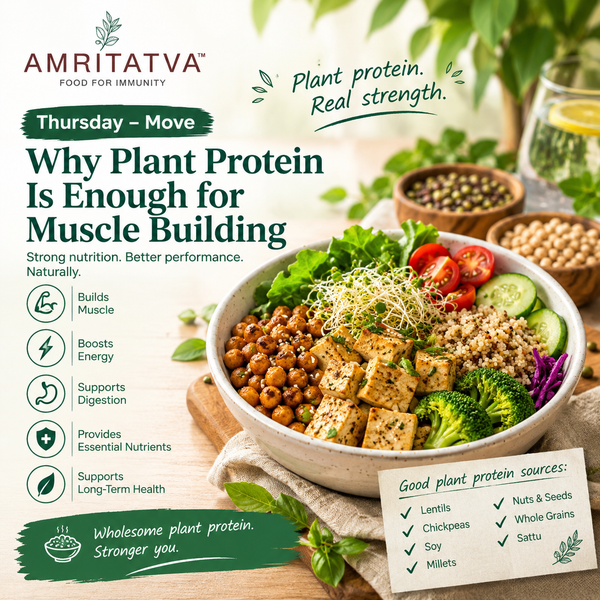
- Plant proteins from traditional Indian foods like sattu, mushrooms, and millets provide complete amino acid coverage when combined — no supplements needed.
The IMRB Protein Consumption Survey found that 73% of urban affluent Indians are protein deficient — and only 10% of the population meets their daily protein requirement. These aren't people who can't afford food. They're people who've grown up on a carbohydrate-heavy diet without realising how little protein it contains. India has a protein gap that looks less like poverty and more like a cultural blind spot.
The good news: India already has protein-rich traditional foods that have been quietly feeding this country for generations. They just got overshadowed by processed carbs and imported supplement culture.
Why India's Diet Is Protein-Poor Despite Being Food-Rich
The IMRB survey reveals a striking pattern: the protein problem is worst not among the food-insecure, but in cities — where 84% of Chennai and Ahmedabad residents were found protein deficient, and 90% in Lucknow. Indian diets typically centre on rice, roti, and vegetables, with dal as the main protein source. A standard dal serving provides just 7–9g of protein per bowl. To hit the ICMR's recommended 50–60g daily for an average adult, you'd need six to eight bowls of dal. Nobody eats six bowls of dal.
What Happens When You Don't Get Enough Protein
Protein isn't just for athletes building muscle. It's the raw material for enzymes, hormones, antibodies, and the structural tissue of every organ in the body. Research published in PMC (2024) links long-term protein inadequacy in India to delayed wound healing, reduced immune response, hair and nail deterioration, persistent fatigue, and poor muscle retention after 40. India's rising rates of sarcopenia (muscle loss with age) in vegetarian adults track directly with lifelong protein under-consumption. The problem doesn't show up as acute malnutrition — it shows up decades later, quietly, as accelerated ageing.
The Indian Vegetarian Protein Gap
For non-vegetarians, meeting protein targets is relatively straightforward. For the 30–40% of Indians who follow vegetarian or vegan diets, the challenge is real. Common vegetarian protein sources per 100g (USDA FoodData Central, 2024): cooked dal — 9g, paneer — 18g, whole milk — 3.4g, almonds — 21g, chana sattu — 20–22g. Paneer and nuts are protein-dense but calorie-heavy. Dal requires large volumes. Sattu delivers 20–22g of protein per 100g with a glycaemic index of just 40, 7.6g dietary fibre, and 8–9mg of iron — making it one of the most nutritionally efficient plant proteins in India (ICMR Indian Food Composition Tables, 2017).
Why Traditional Indian Foods Solve This Problem
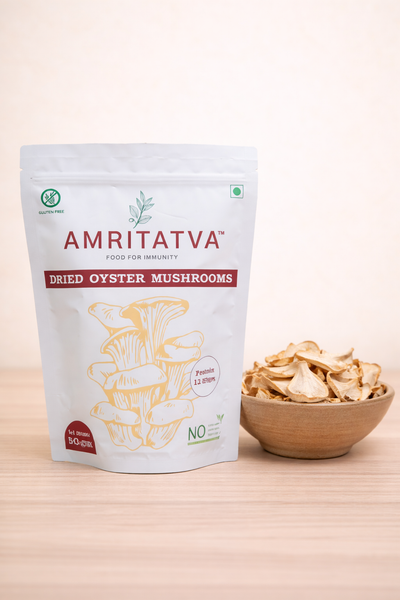
India had protein-rich functional foods long before supplements arrived. Sattu (roasted chana flour) has been a staple of Bihar, UP, and Bengal for centuries — consumed as a morning drink, flatbread, or laddoo. Mushrooms, particularly oyster varieties, provide 3.3g protein per 100g alongside beta-glucans and Vitamin D. Rajma, chana, moong, and urad — when eaten with grains — provide all nine essential amino acids through complementary protein combining. The issue isn't that Indian food lacks protein. The issue is that modern Indian eating habits have drifted away from the traditional diversity that made the diet nutritionally complete.
How Much Protein Do You Actually Need?
ICMR recommends 0.8–1g of protein per kilogram of body weight per day for sedentary to moderately active adults. For a 60kg adult, that's 48–60g of protein daily. For someone working out or above 50 (when muscle synthesis slows), requirements edge toward 1–1.2g/kg. A practical daily target for most Indian adults: 50–60g, spread across three meals. One sattu drink (30g sattu) provides 6–7g protein. Two eggs provide 12g. A bowl of rajma provides 8g. A handful of almonds provides 5g. These numbers add up — but only if you're deliberate about combining sources.
Practical Protein Strategies for Indian Households
- Start with sattu: A 30g sattu drink in the morning provides 6–7g protein, 2.3g fibre, and 3g iron before breakfast.
- Add mushrooms to dal and sabzi: Dried oyster mushrooms add 3g protein per 10g serving and beta-glucan fibre — invisible in the dish, impactful in nutrition.
- Swap refined flour partially: Replacing 30% of maida in rotis with chana flour or sattu increases protein content significantly without affecting taste.
- Eat legumes with grains: Dal-chawal and rajma-chawal are complete protein combinations — the amino acids in grains and legumes complement each other.
- Snack on roasted chana: 30g of roasted chana provides 9g protein and keeps blood sugar stable.
Try This Product
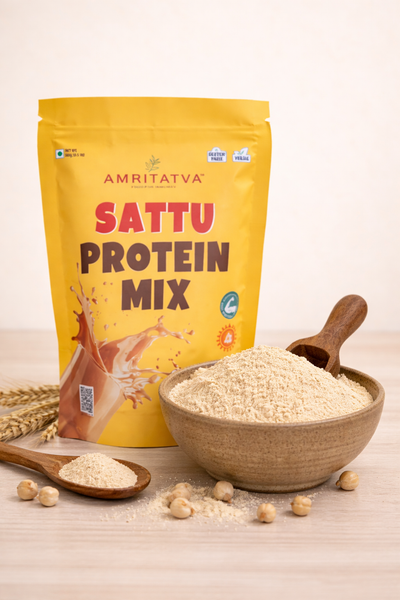
Amritatva Sattu Protein Mix
Roasted chana protein. No artificial isolates. The OG Indian protein.
Shop NowFrequently Asked Questions
How common is protein deficiency in India?
According to the IMRB Protein Consumption Survey, 73% of urban affluent Indians are protein deficient, and only 10% of the population overall meets daily protein requirements. The problem is most acute in vegetarian populations and among women, where 62% of lactating mothers show protein deficiency.
Is plant protein as good as animal protein?
Plant proteins are slightly lower in bioavailability individually, but combining complementary sources (legumes + grains) provides all nine essential amino acids at comparable absorption rates. Traditional Indian combinations like dal-chawal and rajma-roti are nutritionally well-designed protein combinations.
Is sattu a complete protein?
Chana sattu is high in most essential amino acids but relatively low in methionine — making it an incomplete protein on its own. Combining it with a grain or adding a small amount of sesame or dairy makes it complete.
Can I get enough protein on a vegetarian diet in India?
Yes, but it requires deliberate food choices. Target 50–60g daily from combined sources: sattu, legumes, dairy, nuts, and mushrooms. Track your intake for a week using a free app like MyFitnessPal to see where your gaps actually are.

0 comments