

Key Takeaways
- Chana sattu delivers 20–22g of protein per 100g, a glycaemic index of 40, and 7.6g dietary fibre — nutritional values comparable to commercial protein powders, at roughly 1/15th of the cost (ICMR Indian Food Composition Tables, 2017).
- Only 10% of Indians meet daily protein requirements, yet sattu has been providing 20+ grams of plant protein per 100g in Bihar and Eastern India for centuries, without a marketing campaign (IMRB Protein Consumption Survey).
- The roasting process that makes sattu reduces phytic acid — an anti-nutrient that inhibits mineral absorption — making sattu's iron and zinc more bioavailable than unroasted chana.
- Sattu's low GI of 40 means it releases glucose slowly, avoiding the energy spike-and-crash cycle that drives mid-morning fatigue after high-GI breakfasts like paratha, toast, or packaged cereals.
She didn't call it a protein shake. She didn't know about glycaemic indices, beta-glucans, or the IMRB Protein Consumption Survey that would one day confirm that 73% of urban Indians are protein deficient. She just knew that a glass of sattu in the morning kept you going until lunch, that it cooled the body in summer, and that it was what people ate when they needed to work hard. Your Dadi's sattu was, by every measure modern nutrition science now applies, genius. It just never got a rebrand.
What Sattu Is, and Why It Works
Sattu is roasted gram flour — most commonly made from Bengal gram (chana), though barley, mixed grain, and mushroom-enriched versions exist. Roasting the chana before grinding serves a precise nutritional function: it increases bioavailability, creates a shelf-stable product that requires no cooking, and reduces phytic acid, the anti-nutrient that binds iron and zinc and prevents their absorption. The result is a flour with 20–22g of protein per 100g, a glycaemic index of 40, 7.6g of dietary fibre, and 8–9mg of iron (ICMR Indian Food Composition Tables, 2017). Everything a modern functional food claims to be, in a format that predates the functional food marketing category by several centuries.
The Energy Advantage Most People Don't Know About
White rice has a glycaemic index of 72. Maida roti is around 85. Most packaged breakfast cereals range from 55 to 80. Sattu's GI of 40 is among the lowest of any high-protein Indian food. What this means in practice: the glucose from sattu enters the bloodstream slowly and steadily, providing sustained energy without the spike-and-crash cycle that causes mid-morning fatigue, hunger rebound two hours after breakfast, and the impulse to snack on something high-sugar. For anyone who has tried to work through a morning after a paratha breakfast and found themselves hungry and sluggish by 11am — the switch to sattu in the morning is a direct, measurable energy upgrade.
Why Sattu Got Forgotten — and Why It's Back
The post-Green Revolution period (1960s–80s) brought wheat flour and packaged foods to Indian markets at affordable prices. Sattu — associated with Bihar, UP, and agricultural workers — was quietly displaced by aspirational associations with bread, maida, and packaged snacks. What was lost wasn't just a food. It was a nutritional system. The IMRB Protein Consumption Survey eventually quantified the cost: 73% of urban affluent Indians protein deficient, only 10% meeting daily requirements. The protein solution had been in the kitchen all along. It just got rebranded as a rural, working-class food — which is a marketing failure, not a nutritional one.
How Amritatva Extends What Sattu Already Does
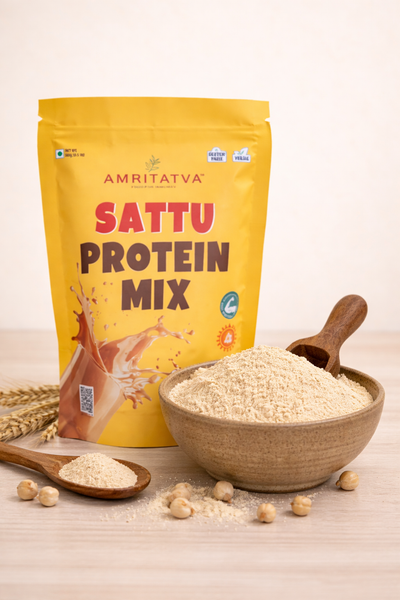
Chana sattu is nutritionally excellent but has two gaps: low Vitamin D (plant foods rarely provide it) and no beta-glucan content. Amritatva's Sattu Protein Mix adds oyster mushroom powder to the traditional chana sattu base. The mushroom powder provides Vitamin D2 (from UV-converted ergosterol), beta-glucans for immune training, and ergothioneine — the antioxidant that accumulates in tissues under oxidative stress. The result is sattu that covers protein, fibre, iron, and folate from chana, and Vitamin D, beta-glucans, and antioxidant protection from oyster mushroom powder. The base food is unchanged. The nutritional coverage is extended. Your Dadi would approve, even if she'd never heard of beta-glucans.
How to Drink Sattu the Way It Was Always Meant to Be Made
The classic sattu sharbat: 2 tbsp sattu in 250ml cold water, with lemon juice, black salt, and roasted cumin. Shake or stir until dissolved. Drink immediately. That's it. 6–7g of protein, 2.3g fibre, 3mg iron, and a GI that will keep your blood sugar stable for the next 3–4 hours. No blender, no protein tub, no shaker bottle with a logo on it. No 28-ingredient label. Just sattu, water, and things your Dadi already had in the kitchen.
Try This Product
Amritatva Sattu Protein Mix
Roasted chana protein. No artificial isolates. The OG Indian protein.
Shop NowFrequently Asked Questions
Is sattu as good as whey protein?
Sattu provides 20–22g of protein per 100g at roughly 1/15th the cost of commercial whey per gram of protein. Whey has a higher PDCAAS (protein digestibility and amino acid score) — it absorbs faster and is better suited for post-workout muscle synthesis. Sattu is better suited for sustained energy and daily protein adequacy, especially for people who don't exercise intensively. For most Indians seeking general protein sufficiency (not athletic performance), sattu is the more practical daily choice.
Can sattu be eaten in summer?
Yes — sattu has cooling properties in Ayurvedic tradition, and the science partially supports this: the high fibre content slows digestion and energy release, reducing metabolic heat. The traditional glass of cold sattu water with black salt is specifically a summer beverage in Bihar and UP. It's hydrating, cooling, and nutritious — a more functional summer drink than packaged juices or energy drinks.
Who should not eat sattu?
Sattu is appropriate for most adults and children over 6 months. The main caution is for people with kidney disease — the high protein load requires adequate kidney function for clearance. People with IBS or high FODMAP sensitivity may experience gas initially, as sattu contains oligosaccharides that can cause bloating before the gut microbiome adapts. Start with 1 tbsp and increase gradually over 2 weeks.
Is sattu the same as besan?
No. Besan is made from raw chana (Bengal gram), ground without roasting. Sattu is made from chana that has been roasted before grinding — this changes the flavour (nuttier, slightly smoky), reduces anti-nutrients, increases bioavailability, and makes it shelf-stable without cooking. They are made from the same base ingredient but are nutritionally and functionally different products.

0 comments