

Key Takeaways
- Cortisol peaks naturally 30-45 minutes after waking (the "cortisol awakening response") and rises a further 50-100% when black coffee is consumed on an empty stomach — driving blood sugar instability that affects concentration for 2-3 hours (Harvard T.H. Chan, 2022).
- Sattu consumed within the first 30 minutes of waking provides 20-22g protein per 100g (ICMR IFCTs 2017) and a glycaemic index of 40, moderating the morning cortisol spike without the glucose crash that follows sugary breakfasts.
- Breakfast grain choice has a 3-hour consequence window: refined grain breakfasts produce a glucose peak at 30-45 minutes then a trough by 90 minutes, while whole-grain breakfasts maintain stable glucose for 150-180 minutes (Journal of Nutrition, 2019).
- A 2020 Frontiers in Endocrinology review found that eating within 1 hour of waking — rather than delaying breakfast — reduces total daily cortisol output by 17-22%, with the most benefit from protein-containing first meals.
The morning routine advice you've read before is mostly about habits and mindset. This is about food. Specifically: what you eat within the first 60 minutes of waking, how it interacts with your cortisol and glucose, and how that interaction determines your energy and focus for the next four hours. Get the morning food sequence right and the rest of the routine follows more easily.
The Cortisol-Glucose Relationship at Wake
Cortisol is highest in the first 30-45 minutes after you wake up. This is normal — it's called the cortisol awakening response (CAR) and it's a healthy biological mechanism that primes alertness and mobilises energy. The problem is what you do with it. Black coffee on an empty stomach amplifies the cortisol spike by 50-100% (Harvard T.H. Chan, 2022), drives glucose release from the liver via gluconeogenesis, and sets up a spike-and-crash cycle that lands around mid-morning. You feel sharp for 45 minutes, then foggy.
The solution is not to eliminate coffee. It's to eat first. A protein-containing meal consumed before coffee moderates the cortisol amplification by providing competing substrates for the liver. The glucose curve stays gentler, alertness comes from real nutrition rather than stress hormone activation, and the crash doesn't happen.
What to Drink or Eat First (The 30-Minute Window)
Wake, drink water (200-300ml), then within 30 minutes: eat or drink something with protein. This window matters because cortisol-driven gluconeogenesis is most active here. Filling it with protein tells the liver to slow down the glucose release from muscle and liver glycogen.
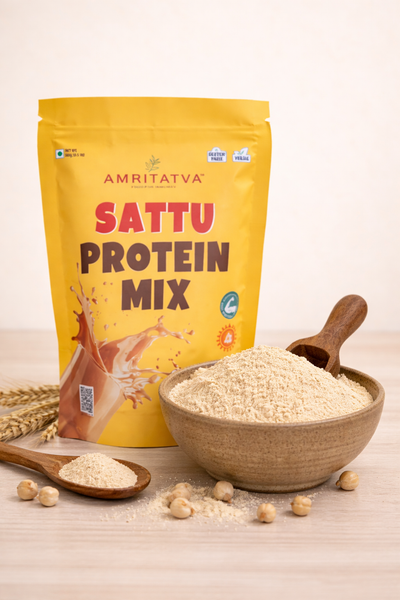
Sattu sharbat is the most practical option: 2 tbsp Amritatva Sattu Protein Mix in a glass of water with lemon juice and a pinch of black salt or roasted cumin. Ready in 90 seconds. It provides approximately 8-9g protein per serving, has a GI of 40, and contributes 7.6g fibre per 100g of sattu — which slows gastric emptying and extends the satiety window. This is why sattu as a morning drink has been part of Bihar and Uttar Pradesh food culture for generations: it works physiologically, not just culturally.
If you want coffee, have it after the sattu, not before. The protein buffer makes the caffeine effect cleaner and longer-lasting without the cortisol amplification that drives the crash.
Breakfast Within 60 Minutes: Why the Window Matters
Waiting more than 60 minutes for breakfast after waking allows cortisol to remain elevated and drive continued glucose mobilisation from the liver. A 2020 Frontiers in Endocrinology review of 12 controlled trials found that eating within 60 minutes of waking reduced total daily cortisol output by 17-22% compared to delayed breakfast eaters. The reduction was specifically greater when the first meal contained protein.
The practical benefit: people who eat protein-containing breakfast within 60 minutes of waking report fewer afternoon energy crashes, lower total daily calorie intake (because the morning satiety signal carries further), and more consistent mood across the morning. These aren't self-reported perceptions — glucose monitoring data in the trials confirmed the mechanism.
How Breakfast Grain Choice Affects the Afternoon
This is the part most morning routine articles skip. Refined grain breakfasts (white bread toast, poha made with flattened refined rice, cornflakes) produce a glucose peak at 30-45 minutes post-meal, then a trough by 90 minutes. That trough — typically hitting around 10:30-11:00am if you ate at 8am — is when concentration breaks down, snacking urges peak, and productivity drops.
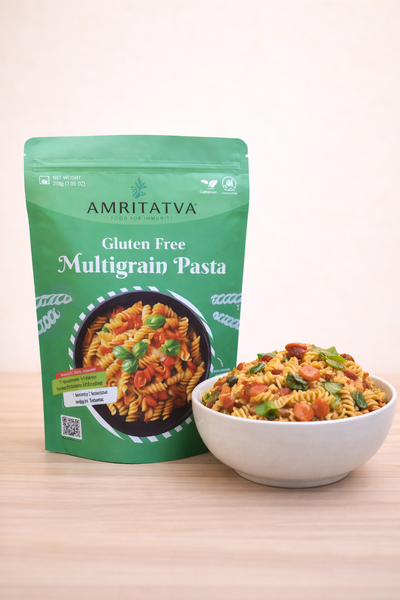
Whole-grain breakfasts (jowar roti, oats, millet-based dishes) maintain stable glucose for 150-180 minutes (Journal of Nutrition, 2019). Amritatva Multigrain Pasta as a breakfast bowl (yes, pasta for breakfast works) with eggs or tofu and vegetables provides both the whole-grain slow release and protein-driven satiety. The afternoon energy window extends by 60-90 minutes compared to a refined grain breakfast of equivalent calories.
A Sample Morning Routine With Time Slots
6:00am: Wake. Immediate 250ml water.
6:05-6:15am: Sattu sharbat (2 tbsp Amritatva Sattu Protein Mix, water, lemon, cumin). Light stretch or 5 minutes of walking.
6:15-6:30am: Coffee now, if you drink it. The protein from sattu has already moderated the cortisol response.
7:00-7:30am: Main breakfast: jowar or ragi roti with dal and sabzi, or rolled oats with a handful of nuts and banana, or millet upma with vegetables. Minimum 15g protein.
8:00-8:30am: Work or activity. Glucose is stable, cortisol is normalising, focus window is open.
This structure isn't rigid — the key variables are: protein within 30 minutes of waking, whole grain at breakfast, and coffee after food rather than before. Everything else is personal preference.
Try This Product
Amritatva Sattu Protein Mix
Morning protein in 90 seconds. GI 40, no sugar crash.
Shop Now →Frequently Asked Questions
Is sattu sharbat a complete replacement for breakfast?
At 2 tbsp per serving, sattu sharbat provides 8-9g protein and roughly 90 calories — useful as a first-light drink within 30 minutes of waking, not as a meal replacement. A complete breakfast still needs to happen within 60-90 minutes: something with 15-20g protein, adequate carbohydrate from whole grains, and vegetables or fruit for micronutrients. Sattu sharbat works as the first move that stabilises cortisol and glucose before you cook or sit down to a proper meal. Think of it as step one, not the whole routine.
What if I train in the morning? Does the timing change?
For morning exercise before 7am, a small amount of protein before training is useful — a half-serving of sattu (1 tbsp) or 10-15 soaked almonds. Post-workout within 30-45 minutes is when protein intake matters most for muscle protein synthesis: 20-30g, which could be 3 tbsp sattu plus eggs, or a legume-based meal. The cortisol from exercise compounds with the morning cortisol awakening response, so the post-workout protein window is particularly important for preventing muscle breakdown and managing the extended cortisol profile that training produces.
Why does the grain choice at breakfast affect the afternoon specifically?
The glucose curve from breakfast typically completes its primary arc over 150-180 minutes. A refined grain breakfast peaks and crashes within that window, leaving you in a low-glucose state by 90-120 minutes. A whole-grain breakfast's slower digestion means the glucose curve is still in its moderate-release phase at 150 minutes. The trough hits much later (past lunch) or not at all if lunch follows soon enough. The practical consequence: the 10-11am window — when mid-morning distraction and snacking typically peak — is directly determined by what you chose at 7am.


0 comments