

Key Takeaways
- Gluten-free noodles made from millet and amaranth have a glycaemic index of 40-55 vs standard wheat noodles at 65-80 — a meaningful difference in blood glucose response over a 2-hour post-meal window (Frontiers in Nutrition, 2021).
- The key technique failure in gluten-free stir fry is overcooking the noodles: millet-based noodles lose structural integrity faster than wheat because they lack gluten's binding protein network. Undercook by 2 minutes, then finish in the wok.
- Store-bought stir fry sauces commonly contain MSG (INS 621), caramel colour (INS 150), and sodium levels of 800-1200mg per 2 tbsp serving — all avoidable with a 5-ingredient scratch sauce (FSSAI ingredient disclosure data).
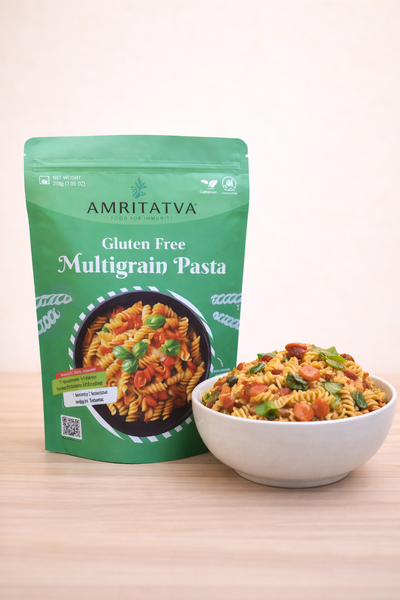
- Amritatva Multigrain Noodles (millet + amaranth) provide approximately 6g protein per 80g dry serving alongside 4.5g dietary fibre, compared to 3.2g protein and 1.8g fibre in standard refined wheat noodles (USDA FoodData Central comparison).
Gluten-free noodle stir fry fails for one reason: soggy noodles. Get the technique right and all three variations below — Indo-Chinese, Thai peanut, South Indian tempered — take under 15 minutes and beat any takeout on ingredient quality. The sauces are scratch-built from real ingredients. No MSG, no mystery thickeners.
The Technique That Makes or Breaks Gluten-Free Stir Fry
Wheat noodles have gluten — an elastic protein network that gives them structural resilience in high-heat cooking. Millet-amaranth noodles don't, which means they absorb moisture faster and break down under sustained heat. Three rules prevent failure. First: undercook the noodles by 2 minutes from package instructions. They should be slightly firmer than al dente when you pull them. Second: drain and rinse with cold water immediately, then toss with a few drops of oil to prevent clumping while you prep the wok. Third: use genuinely high heat and don't steam — add the noodles to the wok last, toss quickly for 60-90 seconds maximum, and serve immediately. If you cover the pan at any point, steam builds up and the noodles turn to paste.
Variation 1: Indo-Chinese Style
This variation mimics the Hakka-style flavour profile found in Indian-Chinese restaurants — dark, savoury, slightly smoky.
Sauce (mix in a small bowl before starting): 2 tbsp tamari or gluten-free soy sauce, 1 tsp rice vinegar, 1 tsp sesame oil, 1/2 tsp coconut sugar, 1/2 tsp white pepper.
Method: Heat a wok until smoking. Add 1 tbsp neutral oil. In goes 4 garlic cloves (minced) and 1 inch ginger (minced) — stir 20 seconds. Add 1 cup julienned cabbage, 1/2 cup sliced capsicum, 1/2 cup carrot matchsticks. Stir-fry on maximum heat, 3 minutes. Don't reduce the heat — the slight char is the flavour. Add sauce, toss 30 seconds. Add pre-cooked Amritatva Multigrain Noodles, toss 90 seconds. Finish with 2 spring onion stalks sliced, a drop of chilli oil, and Amritatva All-Purpose Seasoning to taste.
Per serving (approx.): 310 kcal, 10g protein, 8g fat, 48g carbohydrate, 5.5g fibre.
Variation 2: Thai Peanut Style
The peanut sauce here is built from actual peanuts, not peanut butter with additives. It takes 5 minutes and the flavour is worth every second.
Peanut sauce: Blend 3 tbsp raw peanuts (soaked 30 min), 1 tbsp tamari, 1 tbsp lime juice, 1 tsp grated ginger, 1 small garlic clove, 1 tsp coconut sugar, 2-3 tbsp water to thin. Should coat a spoon without dripping off.
Method: Heat wok. Add sesame oil, then 200g firm tofu cubed (press it dry first — wet tofu steams instead of searing). Cook tofu 4 minutes until golden, remove and set aside. In the same wok: 1 cup broccoli florets, 1/2 cup snap peas, 1/2 cup shredded purple cabbage. Stir-fry 3 minutes. Add pre-cooked noodles, pour peanut sauce over everything, toss 60 seconds. Add tofu back, toss once more. Top with crushed peanuts, fresh coriander, and a wedge of lime.
Per serving (approx.): 390 kcal, 18g protein, 16g fat, 44g carbohydrate, 6g fibre.
Variation 3: South Indian Tempered Style
This is the most underrated of the three. Tempering brings a completely different aromatic profile — mustard seeds, curry leaves, dried chilli — that makes it nothing like the other two variations.
Method: Heat 1 tbsp coconut oil in a wok. Add 1/2 tsp mustard seeds and wait for them to splutter. Add 10 curry leaves (they will crackle loudly), 2 dried red chillies, and 1/4 tsp turmeric. Stir 10 seconds. Add 1 cup sliced green beans, 1/2 cup grated carrot, 1/2 cup corn kernels. Cook 4 minutes. Add pre-cooked Amritatva Multigrain Noodles, 2 tbsp coconut milk, salt, and Amritatva All-Purpose Seasoning. Toss 90 seconds. Squeeze lime generously before serving. Fresh grated coconut on top is optional but excellent.
Per serving (approx.): 295 kcal, 8g protein, 10g fat, 45g carbohydrate, 5.8g fibre.
Why Scratch Sauces Beat Store-Bought
Standard stir fry sauces from the grocery shelf typically list INS 621 (monosodium glutamate), INS 150 (caramel colour, which can contain 4-methylimidazole, a potential carcinogen flagged by IARC), and sodium levels of 800-1200mg in a 2 tbsp serving — that's 35-50% of ICMR's recommended daily sodium intake in a single sauce addition. The scratch sauces in these recipes have 3-5 named ingredients, take under 5 minutes, and cost less per use than the packaged alternative.
Try This Product
Amritatva Gluten-Free Millet Noodles
Millet noodles + seasoning. No maida, no MSG. Ready in 10 min.
Shop Now →Frequently Asked Questions
Can I meal prep these noodle variations?
The noodles themselves can be pre-cooked, rinsed, oiled, and stored in the fridge for up to 2 days. The vegetables are best prepped (chopped) but not cooked ahead. The Indo-Chinese and Thai peanut sauces keep well refrigerated for 3 days. The South Indian tempering must be done fresh — reheated tempering loses the crisp aromatic quality that defines the dish. Assembly takes 5 minutes once components are prepped, which is the practical meal prep approach.
Why use tamari instead of regular soy sauce?
Standard soy sauce is brewed with wheat as a fermentation substrate, which means it contains gluten at levels of 10-20mg per tablespoon — above the 20ppm threshold that affects celiac patients. Tamari is brewed without wheat and is gluten-free. In terms of flavour, tamari is slightly richer and less salty than standard soy sauce. If you don't have celiac disease and are just reducing gluten, regular soy sauce in these quantities won't cause issues for most people. But tamari is the default choice here for both flavour and clean-label reasons.
How do Amritatva Multigrain Noodles compare to other gluten-free noodles like rice noodles?
Rice noodles are typically made from refined white rice flour — they're gluten-free but nutritionally thin: low protein (2g per serving), negligible fibre (0.5-1g), and a high GI of 72-78. Amritatva Multigrain Noodles deliver 6g protein and 4.5g fibre per serving with a GI of 40-55, which is a substantial nutritional upgrade. They also hold their texture better in stir-fry applications than thin rice vermicelli, which turns mushy quickly at high heat.


0 comments