

What goes into a pack of Amritatva pasta?
A good pasta pack should answer a simple question: what exactly am I eating?
At Amritatva, our gluten-free pasta is designed around a simple idea—make a convenient meal while keeping the ingredients understandable.
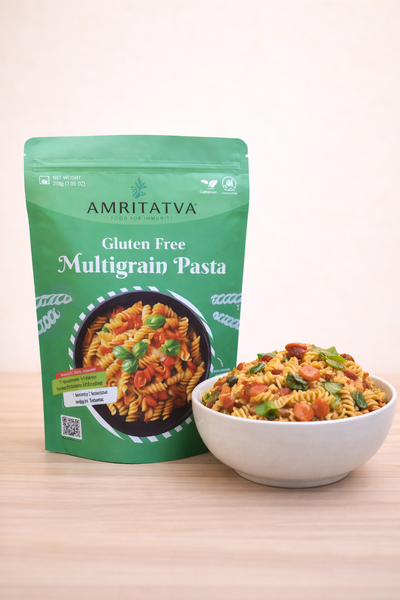
Our current Italian-seasoning pasta combination brings together millet-based gluten-free pasta, dried oyster mushroom chunks and an Italian seasoning blend. The product page also lists the combination as dairy-free and free from preservatives, artificial colours and artificial flavours.
But an everyday meal should not be judged by one ingredient alone.
The overall diet matters.
The World Health Organization describes a healthy diet around adequacy, balance, moderation and diversity. It recommends a variety of foods including whole grains, vegetables, fruits and pulses. For people over 10 years, WHO recommends at least 400 g of fruits and vegetables per day and at least 25 g of naturally occurring dietary fibre daily.
So, where does pasta fit?
It can simply be one convenient component of a varied meal.
Why does Amritatva use millet for its pasta?
Millets are familiar grains in Indian food traditions.
They are used across different parts of India in preparations such as rotis, porridges, khichdi, dosa and other regional foods.
For Amritatva's gluten-free pasta, millet provides the base instead of wheat. The current product page describes the pasta as millet-based, gluten-free, with no wheat, maida or refined flour.
This makes it relevant for consumers looking for a gluten-free pasta option.
But there is an important distinction:
Gluten-free does not automatically mean nutritionally superior.
A gluten-free product can still vary considerably in its ingredients, fibre, protein, fat and overall nutritional profile.
That is why the complete label matters—not just the words “gluten-free.”
What makes the pasta different from a plain pasta pack?
The Italian-seasoning combination is designed as more than just pasta on its own.
The pack includes:
1. Millet-based gluten-free pasta
The pasta provides the main carbohydrate component of the meal.
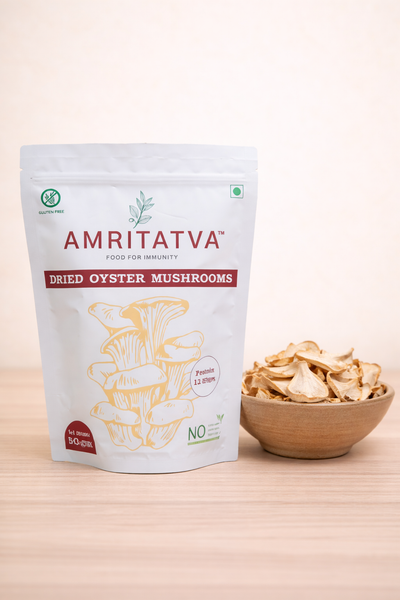
2. Dried oyster mushroom chunks
These add texture and savoury, umami flavour while providing another food ingredient alongside the pasta.
3. Italian seasoning
The current product information describes herbs and spices including oregano, basil and garlic.
This combination is intended to reduce the number of separate ingredients you need to keep ready for a quick pasta meal.
It is a convenience idea—but with an Indian household in mind, convenience should not mean losing sight of what is on the plate.
Why are oyster mushroom chunks included?
Oyster mushrooms are not simply added for novelty.
They bring their own texture and savoury flavour, which can make a simple pasta preparation more interesting.
At Amritatva, mushrooms are also a core part of our food range. We work with dried oyster mushrooms and mushroom powder alongside our pasta and other products.
However, we prefer to keep the nutrition conversation realistic.
Adding mushrooms to a meal does not automatically turn it into a complete or perfectly balanced meal.
Your overall plate still matters.
You can pair mushroom pasta with vegetables, legumes or another suitable protein source depending on your dietary preferences and nutritional needs.
What does “clean label” really mean?
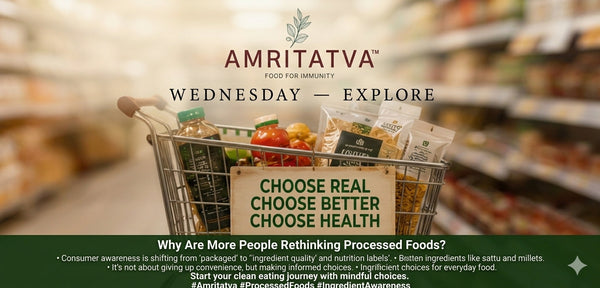
“Clean label” is widely used in food marketing, but it does not have one universal scientific definition.
For us, the more useful question is:
Can you understand what is in the product?
That means paying attention to:
- The ingredient list
- Nutrition information
- Allergen information
- Food claims
- Serving size
- Storage instructions
- Relevant certifications or testing
Our pasta is sold as a gluten-free product under FSSAI licensing, and the current product page identifies the applicable FSSAI licence number.
Amritatva's products are also independently tested by a third-party laboratory as part of our quality approach.
Transparency is more useful than simply using words such as “healthy” or “natural.”
Is gluten-free pasta automatically healthier than regular pasta?
No.
This is an important distinction.
Gluten-free pasta can be an important choice for people who need to avoid gluten, but “gluten-free” itself is not a guarantee that a food is nutritionally better.
The right choice depends on the person's dietary needs and the complete nutritional profile of the product.
| Amritatva Millet Pasta | Typical Wheat Pasta |
|---|---|
| Millet-based | Usually wheat-based |
| Gluten-free | Usually contains gluten |
| No wheat or maida in the current Italian-seasoning product | Wheat is generally the main grain |
| Includes dried oyster mushroom chunks in the combo | Usually sold as pasta alone |
| Italian seasoning included in the combo | Sauce/seasoning generally added separately |
| Designed for a quick, convenient meal | Can also be used in quick meals |
This is not about declaring one type of pasta universally better.
It is about choosing according to dietary requirements, ingredients, taste and convenience.
How can you turn pasta into a balanced Indian meal?
Pasta doesn't have to mean a restaurant-style plate loaded with sauce.
You can build a simple meal around ingredients already familiar in an Indian kitchen.
Try adding vegetables
Use:
- Capsicum
- Carrots
- Beans
- Broccoli
- Peas
- Spinach
- Tomatoes
- Corn
- Mushrooms
A generous serving of vegetables can add colour, texture and variety.
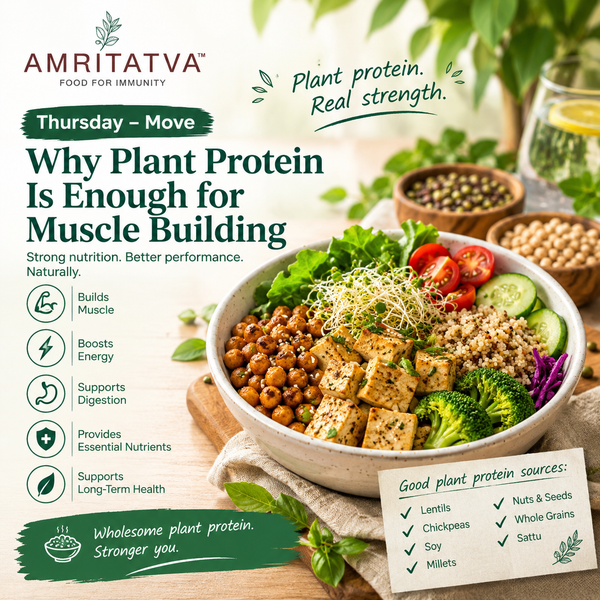
Add a protein source
Depending on your diet, you could add:
- Chana
- Rajma
- Green peas
- Tofu
- Soy-based foods
- Lentils as part of the wider meal
You don't have to force every nutrient into the pasta itself.
Think about the whole plate.
Add an Indian touch
You can also adapt the seasoning to your family's taste.
Try pasta with:
- Garlic and vegetables
- Tomato-based masala
- Sautéed spinach and mushrooms
- Mixed vegetables with Indian spices
- A little chilli and coriander
- A simple vegetable stir-fry
Food can be global in format while still feeling completely at home in an Indian kitchen.
How does Amritatva pasta fit a busy household?
Convenience is one of the reasons people choose packaged food in the first place.
The problem isn't convenience itself.
The challenge is making convenient food fit into an overall nutritious eating pattern.
WHO notes that changing lifestyles and increased availability of highly processed convenience foods have influenced dietary patterns, while a healthy diet still depends on variety and balance.
A pasta meal can therefore be part of a practical routine without being presented as a complete solution to nutrition.
For example:
Pasta + vegetables + mushroom + suitable protein
can become a quick weekday dinner.
Or:
Pasta + vegetables + dal-based side
can bring together familiar Indian foods with a different format.
The goal is not to make every meal complicated.
It is to make everyday choices easier to understand.
What does “quality” mean at Amritatva?
Quality isn't only about how a product tastes.
For a food brand, it also involves consistency, ingredient transparency, food safety and appropriate testing.
At Amritatva, our products are made in India, with our range built around vegan and gluten-free food options.
Our focus is particularly relevant for households looking for convenient gluten-free choices without giving up familiar food formats.
The current Amritatva pasta product is also available for pan-India shipping through the website.
But we don't believe one product should carry the entire responsibility for someone's nutrition.
Good nutrition comes from the overall eating pattern.
What should you look for when buying packaged pasta?
Before choosing any pasta, take a minute to check:
1. What is the main ingredient?
Look beyond the front of the pack.
2. Is it suitable for your dietary needs?
For people avoiding gluten strictly, check the gluten-free declaration and relevant product information carefully.
3. What else is included?
Look at seasonings, sauces and added ingredients.
4. What does the nutrition panel say?
Check carbohydrate, protein, fat, fibre and sodium according to your needs.
5. How will you serve it?
A pasta meal can become more varied when paired with vegetables and an appropriate protein source.
The packet is only one part of the meal.
What really goes into an Amritatva pasta pack?
The answer is more than just ingredients.
It is the idea of making a gluten-free, convenient food option that can fit into real households.
For the current Italian-seasoning combination, that means:
Millet pasta.
Dried oyster mushroom chunks.
Italian seasoning.
And then your kitchen takes over.
Add vegetables.
Add a suitable protein source.
Adjust the spices.
Serve it for dinner.
Pack it for a suitable tiffin.
Make it your own.
Because convenient food doesn't have to mean disconnected from everyday cooking.
At Amritatva, we believe food should be understandable, practical and enjoyable—while fitting naturally into the way Indian households actually eat.
Frequently Asked Questions
Is Amritatva pasta completely gluten-free?
Amritatva's pasta is sold as a gluten-free product, and the current Italian-seasoning product page identifies it as millet-based with no wheat or maida. If you need strict gluten avoidance, always check the current package label, gluten-free declaration and preparation practices rather than relying only on general ingredient descriptions.
What is Amritatva gluten-free pasta made from?
The current Italian-seasoning pasta combination uses millet-based gluten-free pasta and includes dried oyster mushroom chunks and Italian seasoning. The product page describes the pasta as having no wheat, maida or refined flour. For the exact ingredient declaration, nutrition information and allergen details, use the current pack label as the final reference.
Is millet pasta healthier than regular wheat pasta?
Not automatically. Millet pasta and wheat pasta are different products with different ingredients and dietary uses. Millet pasta can be useful for people seeking a gluten-free option, while overall nutritional value depends on the complete formulation and serving. What you add to the meal—vegetables, pulses or another protein source—also influences the overall nutritional quality.
Can I make Amritatva pasta with Indian spices?
Yes. Pasta does not have to be limited to one style of cuisine. You can cook it with vegetables, garlic, tomato, chilli, coriander or familiar Indian spices according to your taste. The Italian seasoning included with the current combination can also be adjusted to suit your family's preferred flavour profile.
Does adding mushroom make pasta a complete meal?
No single ingredient automatically makes a meal complete. Oyster mushroom chunks can add flavour, texture and nutritional value, but a balanced meal depends on the overall combination of foods. Consider adding vegetables and a suitable protein source such as pulses, tofu, soy or another option appropriate for your diet.
Is gluten-free food always healthier?
No. Gluten-free describes the absence or controlled level of gluten; it does not automatically describe the overall nutritional quality of a food. Some gluten-free products can be high in sugar, fat or sodium, while others can be nutritionally useful. Read the ingredient list and nutrition panel and choose according to your individual dietary needs.
A better pasta pack starts with better questions
Instead of asking only:
“Does it taste good?”
also ask:
“What is it made from?”
“Does it fit my dietary needs?”
“What can I add to make the meal more balanced?”
“Can my family actually enjoy eating it regularly?”
Those questions lead to more informed food choices.
And sometimes, better food choices don't require giving up convenience.
They simply require knowing what is in the pack—and what you put on the plate beside it.

0 comments