

Key Takeaways
- Chana sattu delivers 20–22g of protein per 100g, a glycaemic index of just 40, 7.6g dietary fibre, and 8–9mg iron — making it one of the most nutritionally complete plant proteins in the Indian food system (ICMR Indian Food Composition Tables, 2017).
- 73% of urban Indians are protein deficient, with only 10% of the Indian population meeting daily protein requirements — despite the fact that sattu has been a cost-effective protein solution in India for centuries (IMRB Protein Consumption Survey).
- Sattu's low glycaemic index of 40 (compared to 70+ for white rice and 85 for maida) means it releases glucose slowly, providing sustained energy without the blood sugar spike that drives mid-morning fatigue.
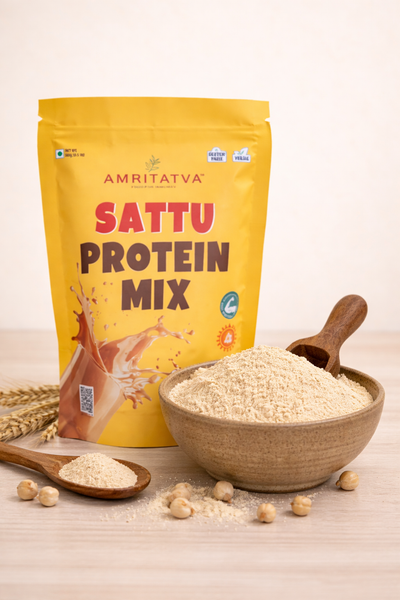
- Amritatva's Sattu Protein Mix adds oyster mushroom powder to traditional chana sattu — layering beta-glucans and Vitamin D2 onto sattu's existing protein, fibre, and iron profile.
Before protein powders arrived in Indian gyms and supplement stores, Bihar had sattu. Before "functional food" became a marketing category, sattu was delivering 20–22g of protein per 100g, 7.6g of dietary fibre, and a glycaemic index lower than most foods on the planet — all in a flour you could mix with water in 30 seconds. Sattu didn't need a rebrand. It needed people to stop dismissing it as a rural tradition and start reading its nutrition label.
The IMRB Protein Consumption Survey found that only 10% of Indians meet daily protein requirements. The solution has been sitting in Bihar's kitchens for generations. We just stopped looking there.
What Sattu Is — and Why It Got Forgotten
Sattu is roasted gram flour — most commonly made from roasted chana (Bengal gram), though barley, mixed grain, and mushroom-enriched versions exist. The roasting process increases nutrient bioavailability, reduces anti-nutrients like phytic acid, and creates a shelf-stable flour that requires no cooking. In Bihar, UP, Jharkhand, and Bengal, sattu has been a morning staple for generations — mixed with water and salt for a savoury drink, kneaded into flatbread, stuffed into parathas, or shaped into laddoos. It sustained farmers through long working days because it released energy slowly and kept hunger at bay for hours.
Sattu's Nutritional Profile Compared to Modern Protein Sources
Per ICMR Indian Food Composition Tables (2017), 100g of chana sattu provides: 20–22g protein, 7.6g dietary fibre, 406 kcal, glycaemic index of 40, 8–9mg iron (nearly half an adult woman's daily RDA), and 172µg folate (43% of adult female RDA). Compare that to common alternatives: whole milk provides 3.4g protein per 100ml; a commercial whey protein serving (30g) provides 22–25g protein but typically contains artificial sweeteners, emulsifiers, and a price per gram of protein that is 10–15x that of sattu.
The Glycaemic Advantage: Why Sattu Doesn't Crash Your Energy
Sattu's glycaemic index of 40 is one of the lowest of any high-protein Indian food. White rice sits at 72. Maida roti at 85. Most breakfast cereals range from 55 to 80. A low GI food releases glucose gradually into the bloodstream — preventing the sharp spike-and-crash cycle that causes mid-morning fatigue, hunger rebound, and over-eating at the next meal.
Why Mushroom-Enriched Sattu Goes Further
Amritatva's Sattu Protein Mix adds oyster mushroom powder to traditional chana sattu. The functional reason: chana sattu is nutritionally excellent but has two gaps — low Vitamin D and limited beta-glucan content. Oyster mushroom powder fills both. The result is a traditional food that now delivers not just protein, fibre, iron, and folate, but also Vitamin D2 (from sun-dried mushroom ergosterol), beta-glucans for immune training, and ergothioneine — the antioxidant that accumulates in stress-vulnerable tissues.
How to Use Sattu Every Day: 5 Practical Recipes
- Classic sattu sharbat: 2 tbsp sattu + cold water + lemon juice + black salt + cumin powder. Shake or stir. Ready in 60 seconds. Provides 6–7g protein, 2.3g fibre, and 3mg iron before breakfast.
- Sattu paratha: Mix sattu with chopped onion, green chilli, ajwain, and a splash of mustard oil — use as stuffing in whole wheat or millet paratha.
- Post-workout recovery drink: 30g sattu + 200ml cold milk + pinch of cardamom + jaggery. Provides 13–15g protein, complex carbohydrates for glycogen replenishment, and calcium from milk.
- Sattu energy balls: Mix sattu with dates, sesame seeds, ghee, and cardamom. Roll into small balls. A no-cook high-protein snack that stores for a week at room temperature.
- Sattu soup base: Stir 1 tbsp sattu into vegetable broth while heating — it thickens the broth and adds protein and fibre to a light meal.
Try This Product
Amritatva Sattu Protein Mix
Roasted chana protein. No artificial isolates. The OG Indian protein.
Shop NowFrequently Asked Questions
Is sattu better than whey protein?
For most people eating a plant-based or vegetarian Indian diet, sattu is a more practical daily protein source than whey. It provides comparable protein (20–22g/100g), is 10–15x cheaper per gram of protein, and adds dietary fibre, iron, and folate that whey doesn't contain.
Who should eat sattu?
Sattu is appropriate for nearly all adults. It's particularly well-suited to: vegetarians and vegans seeking affordable plant protein; people managing blood sugar (low GI of 40 prevents spikes); women of reproductive age (high iron and folate content); older adults (high protein helps preserve muscle mass).
Does sattu cause gas or bloating?
Sattu contains oligosaccharides that can cause gas in people unaccustomed to high-legume diets. Starting with a smaller serving (1 tbsp) and gradually increasing allows the gut microbiome to adapt. Adding asafoetida (hing) to the preparation also significantly reduces gas formation — a traditional cooking practice with a solid biochemical rationale.
Can children eat sattu?
Yes — sattu is an excellent protein source for children over 6 months (as a complementary food) and all older age groups. A sattu drink with milk and jaggery provides protein, iron, calcium, and folate for growing children.

0 comments