

Is healthy eating really about being perfect?
No. Healthy eating is not about getting every meal right; it is about building a pattern of eating that is balanced, varied and realistic enough to maintain over time.
The idea of “clean eating” can sometimes become unnecessarily strict. One meal outside your usual routine, a festival sweet, a restaurant dinner or a busy day does not need to become a reason to abandon your healthier habits altogether.
WHO describes healthy diets through four core principles: adequacy, balance, moderation and diversity. It also recognizes that a healthy diet can look different depending on a person's lifestyle, culture, food availability and individual needs.
That matters in an Indian household, where food is connected to family meals, festivals, travel, celebrations, office schedules and everyday convenience.
The goal, therefore, should not be perfection.
The goal should be a healthier pattern that can survive real life.
Why can the “all-or-nothing” approach make healthy eating difficult?
A common pattern looks something like this:
“I will eat perfectly from Monday.”
Then Monday becomes very strict.
Tuesday goes well.
By Wednesday, a busy workday leads to a restaurant meal.
The thought becomes:
“I have already broken my diet, so I might as well start again next week.”
This is where perfection can become counterproductive.
Instead of looking at one meal as one part of the overall pattern, the person may treat it as evidence that the entire effort has failed.
But healthy habits are not one-time events. NIDDK describes behaviour change as a process involving preparation, action and maintenance, and specifically recommends starting with small changes and planning for setbacks.
A more useful response to an imperfect meal is simply:
“That meal happened. What can I choose at the next meal?”
That small shift can make a healthy routine much easier to continue.
What does a sustainable healthy eating pattern actually look like?
There is no single “perfect” menu that everyone needs to follow.
WHO recommends a varied diet built around foods such as vegetables, fruits, pulses, whole grains and other nutritious foods, while moderating foods high in free sugars, unhealthy fats and sodium.
For an Indian household, that could mean rotating familiar foods rather than completely changing the kitchen.
For example:
| Instead of thinking… | Try thinking… |
|---|---|
| “I can never eat outside food.” | “Most of my meals can be balanced, while eating out can still have a place.” |
| “I must avoid every packaged food.” | “I can read labels and choose products thoughtfully.” |
| “I missed my workout, so the week is ruined.” | “I can return to movement tomorrow.” |
| “I ate a sweet, so I failed.” | “One food does not define my entire eating pattern.” |
| “I need a perfect diet.” | “I need habits I can realistically repeat.” |
This is not about lowering standards.
It is about making healthy choices repeatable.
Can small changes really make a difference?
Small changes are often easier to fit into everyday life than a complete lifestyle overhaul.
NIDDK recommends starting with small changes when building healthier habits and emphasizes that healthy eating and physical activity are lifelong behaviours rather than one-time events. It also notes that setbacks are normal and that people can regroup and return to their goals.
Instead of changing everything at once, consider choosing one or two habits.
For example:
- Add one more serving of vegetables to a regular meal.
- Keep fruit available for an easy snack.
- Include dal, chana, rajma, soy or another protein source regularly.
- Replace some sugar-sweetened drinks with water or unsweetened beverages.
- Prepare a few basic ingredients before a busy workweek.
- Rotate rice, wheat, millets and other whole-grain options according to preference and meal.
- Eat meals without constantly working or scrolling when possible.
- Add regular physical activity that you actually enjoy.
The important part is not how impressive the change looks on day one.
It is whether you can still do it several weeks later.
How can Indian families make healthy eating less complicated?
Healthy eating does not require turning an Indian kitchen into a completely different kitchen.
Many familiar foods can already contribute to a varied diet.
A practical Indian meal could include:
Staple + protein + vegetables + fruit/curd or another suitable accompaniment
For example:
- Roti + dal + sabzi + salad
- Rice + rajma + seasonal vegetables
- Millet khichdi + dal + vegetables
- Idli + sambar + vegetables
- Vegetable poha + peanuts + fruit
- Dosa + sambar + vegetable side
- Sattu-based meal or drink alongside a balanced breakfast
The exact combination and portion will depend on individual needs.
The bigger idea is variety rather than food fear.
WHO India also emphasizes that healthy diets need to reflect local foods, dietary customs, lifestyle and individual circumstances.
That makes a sustainable approach particularly relevant for Indian families.
Does eating healthy mean giving up treats and social meals?
Not necessarily.
A sustainable eating pattern has to work during birthdays, festivals, weddings, travel, office lunches and family dinners too.
For example, during Diwali, a family may enjoy traditional sweets. During a wedding, the meal may be very different from an ordinary weekday lunch. During travel, home-cooked food may not always be available.
The answer does not have to be:
“I have broken my diet.”
It can simply be:
“This is one meal within my overall eating pattern.”
The next meal can return to the usual routine.
That approach does not mean ignoring nutrition. It means understanding that a healthy dietary pattern is created by what happens repeatedly, not by demanding identical choices every day.
What should you do after an “off-plan” meal?
Don't compensate with extreme restriction.
Instead:
1. Drop the guilt.
The meal has already happened.
2. Drink water normally.
There is no need for a “detox” drink or extreme cleansing routine.
3. Return to your normal meal pattern.
A balanced next meal is more useful than skipping meals to compensate.
4. Look at the bigger pattern.
Ask whether most of your meals are reasonably balanced.
5. Continue your normal movement routine.
Don't treat exercise as punishment for eating.
NIDDK specifically recommends expecting setbacks, adjusting your plan and getting back on track rather than giving up.
What role does mindset play in a healthy eating journey?
Food choices are not only about nutrients.
They are also influenced by time, convenience, culture, family routines, preferences, budget, work schedules and social situations.
That is why a plan that looks perfect on paper may be difficult to follow in real life.
A sustainable mindset asks:
“How can I make this healthier while keeping it realistic?”
Rather than:
“How can I make sure I never make a less-than-perfect choice?”
This difference can change how people respond to setbacks.
And if someone experiences persistent guilt, anxiety, fear around food or significant distress about eating, it is better to speak with a qualified healthcare or mental-health professional rather than trying to solve the problem through stricter food rules.
How can you measure progress beyond the weighing scale?
Progress can have many forms.
You might notice that:
- You prepare meals more often.
- Vegetables appear more regularly on your plate.
- You drink fewer sugary beverages.
- You have a more consistent breakfast.
- You plan snacks before a busy day.
- You are more comfortable making food choices outside home.
- You return to your routine more easily after a setback.
- You have stopped treating individual meals as successes or failures.
These are behavioural improvements—not promises of a particular health outcome.
For people working toward weight management, NIDDK recommends realistic goals, sustainable eating patterns, physical activity and ongoing support rather than short-term extreme approaches.
What does “progress over perfection” look like in an Indian week?
Imagine a working family with a busy schedule.
Monday: Home-cooked dal, sabzi and roti.
Tuesday: Vegetable khichdi after a busy day.
Wednesday: Lunch at the office.
Thursday: Simple homemade rice, dal and vegetables.
Friday: Family orders dinner.
Saturday: Breakfast outside and a home-cooked dinner.
Sunday: Meal preparation for the coming week.
That is real life.
The aim isn't to make every meal identical.
The aim is to make balanced choices more often, while having a system that allows you to return to them when life gets unpredictable.
How can meal preparation make consistency easier?
One of the simplest ways to reduce all-or-nothing thinking is to make the healthier choice easier to access.
A little preparation can help:
- Wash and cut some vegetables in advance.
- Keep cooked dal or legumes ready when practical.
- Stock simple breakfast ingredients.
- Keep fruit visible and accessible.
- Prepare basic spice mixes.
- Plan two or three easy weekday meals.
- Keep convenient options for particularly busy days.
NIDDK recommends planning ahead for setbacks and making healthier choices easier to follow in everyday situations.
This is where convenience can support—not replace—healthy eating.
How does Amritatva look at sustainable food habits?
At Amritatva, we believe healthy food should fit into real Indian routines, not demand perfection from them.
That means thinking about familiar meals, convenient preparation and ingredients that people can understand and use in everyday cooking.
Our approach to vegan and gluten-free food is also not that these labels automatically make a food “healthy.” The overall meal, ingredients, portion, preparation and individual nutritional needs still matter.
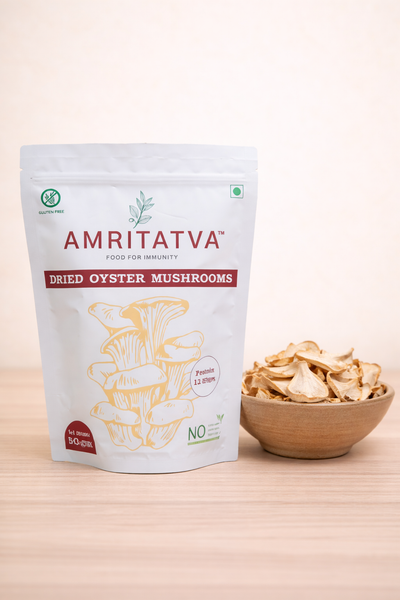
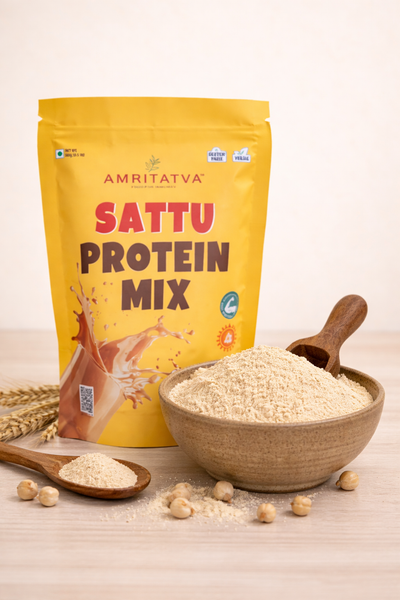
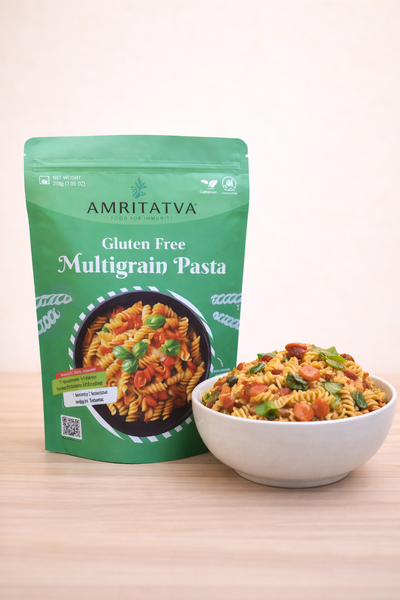
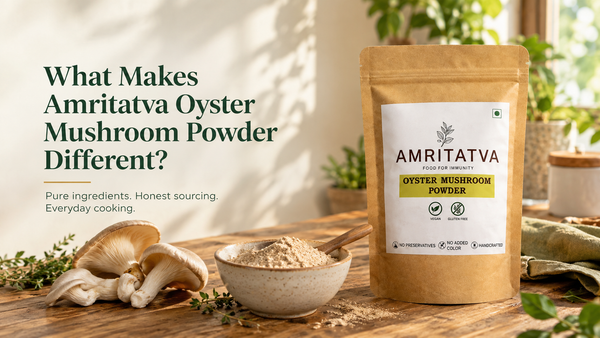
Products such as our gluten-free pasta, noodles, sattu-based products, mushroom products and seasonings are intended to become part of practical meals—not to replace the broader principles of balanced eating.
For us, the bigger idea is simple:
Healthy eating should feel practical enough to continue.
What is the biggest lesson about sustainable healthy eating?
Perfection creates a finish line.
Progress creates a path.
A healthy lifestyle does not require you to make the “perfect” choice every time. It requires enough balanced choices, repeated often enough, to become part of your normal life.
So instead of asking:
“Did I eat perfectly today?”
Try asking:
“What is one healthy habit I can repeat tomorrow?”
That question leaves room for real life—and that is exactly what makes a healthy routine more sustainable.
FAQs
1. Does one unhealthy meal ruin healthy eating progress?
No. One meal should be viewed within the context of your overall eating pattern. Healthy diets are built around adequacy, balance, moderation and diversity rather than perfect individual meals. If one meal is heavier or different from your usual routine, simply return to your normal eating pattern at the next opportunity instead of treating it as failure.
2. Is clean eating a medically defined diet?
No. “Clean eating” is a popular wellness term rather than a standardized medical diet. Different people may use it to mean different things. A more useful approach is to focus on established principles such as dietary variety, adequate nutrition, balanced meals, moderation and appropriate food choices for your individual circumstances.
3. How can I start eating healthier without changing everything?
Start with one or two realistic changes. You could add more vegetables to one daily meal, include a regular protein source, reduce sugary beverages or prepare basic ingredients in advance. NIDDK recommends starting with small changes and building healthier habits gradually rather than expecting an immediate complete lifestyle transformation.
4. Can I eat sweets or restaurant food while following a healthy lifestyle?
Yes. A sustainable eating pattern can include social meals and occasional treats. The key is the overall pattern rather than treating individual foods as either completely “good” or “bad.” During festivals, celebrations or travel, enjoy the occasion and return to your usual balanced eating routine afterward rather than using one meal as a reason to abandon your habits.
5. What should I do if I stop following my healthy eating routine?
Treat the interruption as a setback, not a failure. Identify what made the routine difficult, make one practical adjustment and restart with the next meal or the next day. NIDDK specifically recommends planning for unexpected setbacks and regrouping rather than giving up when routines are disrupted.
6. Is consistency more important than eating perfectly?
For sustainable habits, consistency and long-term adherence matter more than trying to make every individual meal perfect. A healthy dietary pattern is built from repeated choices over time. Choosing nutritious foods regularly, maintaining variety and allowing your routine to adapt to work, travel and social situations can make healthy eating more realistic to maintain.
7. How can families make healthy eating easier?
Start with the food that is already familiar to the family. Plan a few simple meals, keep useful ingredients available, include vegetables and protein sources regularly, and avoid making healthy eating dependent on complicated recipes. WHO India emphasizes that healthy diets should fit local foods, dietary customs, lifestyle and individual circumstances.
0 comments