

Your gut is sometimes called the “second brain” because the digestive tract contains a large and complex network of nerve cells known as the enteric nervous system (ENS). It can coordinate many digestive functions without needing direct instructions from the brain, while also communicating continuously with the brain through several pathways.
This two-way communication is known as the gut-brain axis. It helps explain why emotions and stress can influence digestion, and why signals from the digestive system can influence how we feel and respond to food. The relationship is real, but it is more complicated than saying that a healthy gut automatically means better mood, immunity, sleep or energy.
So, what does science actually tell us about your “second brain,” and what can you do with that information in an everyday Indian kitchen?
What exactly is the “second brain”?
The term “second brain” refers mainly to the enteric nervous system, a network of neurons embedded in the walls of the gastrointestinal tract.
The ENS helps regulate processes such as movement of food through the digestive tract, secretion of digestive substances and other aspects of gastrointestinal function. Research reviews describe hundreds of millions of neurons within this system, which is one reason scientists use the “second brain” analogy.
However, your gut is not literally a second brain. It does not think, reason or make decisions in the same way the brain does. The phrase is simply a useful way to describe the complexity and relative independence of the nervous system within the digestive tract.
How does your gut communicate with your brain?
The communication between the gut and brain is bidirectional.
Signals travel between them through the nervous system, including pathways involving the vagus nerve, as well as through hormones, immune signalling and substances produced by gut microorganisms.
This means the relationship works in both directions.
Your brain can influence digestion. Stress, emotions and other signals can affect appetite and gastrointestinal activity.
At the same time, information from the gut can be sent back to the brain.
The gut microbiome is another part of this communication system. Microorganisms living in the digestive tract interact with food, intestinal cells and the body's own systems. Scientists are still studying exactly how these interactions influence health.
Does the gut really produce serotonin?
Yes, but this statement needs some context.
Serotonin is a signalling molecule involved in several functions, including gastrointestinal activity and communication within the nervous system. A large proportion of the body's serotonin is produced outside the brain, particularly by specialised cells in the gastrointestinal tract.
That does not mean that eating a particular food will automatically increase happiness or treat depression.
The relationship between serotonin, the gut, the brain and mood is complex. So rather than thinking of the gut as a simple “happiness factory,” it is more accurate to understand serotonin as one component of a much larger communication network.
What role does the gut microbiome play?
Your digestive tract contains a diverse community of microorganisms collectively known as the gut microbiome.
According to the U.S. National Institute of Diabetes and Digestive and Kidney Diseases (NIDDK), microorganisms in the gastrointestinal tract can contribute to digestion, while research continues to examine their interactions with nutrition, metabolism, immunity and the gut-brain axis.
But “good bacteria” and “bad bacteria” is an oversimplification.
The microbiome is a complex ecosystem, and researchers are still learning how its composition and activity relate to different aspects of health.
This is also why taking a probiotic supplement should not automatically be treated as a universal solution for digestive problems. Different probiotics can have different effects, and evidence varies depending on the condition and the specific product.
Can stress affect your digestion?
Yes. The gut and brain communicate continuously, so psychological and physiological stress can influence gastrointestinal function.
Some people notice changes in appetite, bowel habits or digestive comfort during stressful periods.
This does not mean every digestive symptom is “caused by stress.” Persistent or severe symptoms deserve appropriate medical evaluation rather than being automatically attributed to the gut-brain connection.
The important lesson is simpler: digestion does not happen in isolation from the rest of the body.
What foods support a healthy gut?
There is no single “gut-healing” food.
A better approach is to build an overall eating pattern that provides enough nutrients and fibre from a variety of foods.
WHO recommends dietary patterns based on adequacy, balance, moderation and diversity, with carbohydrates coming primarily from foods such as whole grains, vegetables, fruits and pulses. WHO also recommends at least 25 grams of naturally occurring dietary fibre per day for people over 10 years of age.
For an Indian kitchen, that can include:
- Dal and other pulses
- Chana and other legumes
- Vegetables
- Seasonal fruits
- Millets and other whole grains
- Nuts and seeds
- Sattu made from roasted gram
- Traditional fermented foods, where suitable for you
The goal is not to create a complicated “gut-health diet.” It is to make everyday meals more varied and nourishing.
Is fibre really important for gut health?
Fibre is an important part of a balanced diet.
Plant foods provide different types of dietary fibre, and some fibres can be used by microorganisms in the large intestine.
But suddenly increasing fibre intake can cause digestive discomfort for some people, particularly if their usual diet is low in fibre.
Instead of adding a large amount of fibre overnight, build it gradually through foods such as dal, chana, vegetables, fruits, whole grains and millets, while maintaining adequate fluid intake.
Individual tolerance matters too.
What can you eat in an Indian meal for better digestive variety?
You don't need a separate “gut-health menu.”
Think about your regular meals.
Breakfast: vegetable poha, millet-based preparations, idli with vegetables, or sattu-based drinks.
Lunch: dal, rice or roti, vegetables and a side of salad or seasonal produce.
Evening: roasted chana, fruit, nuts or a simple homemade snack.
Dinner: khichdi with vegetables, dal with rice, or a millet-based meal.
The point is not that one of these meals will “fix” your gut. The value comes from the overall pattern—variety, adequate nutrition and appropriate portions.
What about highly processed foods?
Not every processed food is unhealthy, and processing itself is not a useful way to classify foods as simply “good” or “bad.”
Some processing helps make food safer, more convenient or easier to prepare.
However, a dietary pattern dominated by highly processed foods can make it harder to achieve the variety and nutritional balance recommended by healthy-diet guidelines.
A practical habit is to read the ingredient list and nutrition information rather than judging a food only by words such as “natural,” “healthy” or “clean.”
Can gut health improve your mood and immunity?
This is where careful language matters.
There is strong scientific interest in the gut-brain and gut-microbiome connection, but it would be an overstatement to promise that improving your gut will automatically improve mood, immunity, sleep or energy.
Your health is influenced by many interacting factors, including diet, physical activity, sleep, stress, genetics, environment and medical conditions.
Think of gut health as one important part of overall health—not the explanation for everything.
How can you support your gut through everyday habits?
You don't need a complicated routine.
Try to:
- Eat a varied diet with vegetables, fruits, pulses and whole grains.
- Include fibre-rich foods regularly rather than occasionally.
- Stay adequately hydrated.
- Choose meals appropriate to your individual tolerance.
- Avoid relying on supplements or “gut cleanses” as a shortcut.
- Pay attention to persistent digestive symptoms and seek professional advice when needed.
A simple comparison
| Everyday approach | What it can offer |
|---|---|
| Varied meals with pulses, vegetables, fruits and whole grains | Fibre and a broad range of nutrients |
| Highly restrictive “gut detox” plans | Often unnecessary and may reduce dietary variety |
| Fermented foods | Can provide live microorganisms, depending on the food and preparation |
| Probiotic supplements | Effects vary by strain, product and health condition |
| Consistent balanced eating | Supports overall dietary adequacy and variety |
What does this mean for an Indian household?
Gut health doesn't need to become another complicated wellness project.
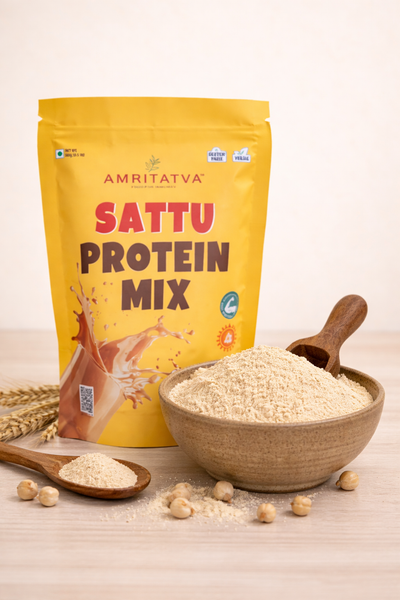
Your everyday dal, chana, vegetables, fruits, millet dishes and other traditional foods can be part of a varied eating pattern. Sattu, for example, can be a convenient way to include roasted gram in meals or drinks, depending on individual dietary needs and tolerance.
At Amritatva, our approach is to make everyday food choices simpler, with products built around ingredients such as mushrooms, millets, roasted gram and plant-based formulations.
The bigger idea is simple: your gut is a living, communicating part of your body—not just a food-processing system.
Understanding that connection can help us make more thoughtful choices without turning every digestive concern into a health trend.
FAQs
1. Why is the gut called the second brain?
The gut is called the “second brain” because it contains the enteric nervous system, a complex network of neurons within the digestive tract. This system can coordinate many digestive functions independently while communicating with the brain. The phrase is an analogy, not a statement that the gut literally thinks or reasons like the brain.
2. How are the gut and brain connected?
The gut and brain communicate in both directions through nervous-system pathways, hormones, immune signalling and chemical signals associated with the gut microbiome. The vagus nerve is one important communication pathway. This is commonly described as the gut-brain axis and helps explain why stress can affect digestion and why signals from the gut can reach the brain.
3. Does a healthy gut automatically improve mood?
Not necessarily. Research shows meaningful communication between the gut and brain, including involvement of the microbiome and signalling molecules such as serotonin. However, mood is influenced by many factors. It would be too strong to claim that improving gut health alone will prevent depression, eliminate stress or automatically make someone happier.
4. What Indian foods are good sources of fibre?
Many everyday Indian foods provide dietary fibre, including dal, chana and other pulses, vegetables, fruits, whole grains, millets, nuts and seeds. The best approach is variety rather than relying on one “superfood.” If you currently eat very little fibre, increase it gradually and maintain adequate fluid intake because a sudden increase may cause digestive discomfort.
5. Are fermented foods always good for gut health?
Fermented foods can contain live microorganisms, but their effects depend on the specific food, microorganisms and individual. Fermented foods should not be treated as a cure for digestive disorders. People with particular medical conditions or food intolerances may also need to choose fermented foods carefully.
6. Should I take probiotics for better gut health?
Not everyone needs a probiotic supplement. Evidence varies substantially between probiotic strains, products and health conditions. The U.S. NCCIH notes that evidence for probiotics in conditions such as IBS remains limited and that different probiotics can have different effects. For persistent digestive symptoms, discussing the issue with a qualified healthcare professional is more appropriate than self-treating with supplements.


0 comments