

Why a Minimalist Kitchen Can Make Clean Eating Easier
Healthy eating does not always begin with a complicated meal plan. Sometimes, it begins with making your kitchen easier to use.
A minimalist kitchen is not about owning fewer things simply for the sake of appearance. It is about keeping the ingredients, cookware and storage systems you actually use easy to find and easy to reach.
When everyday foods such as whole grains, pulses, spices, nuts, seeds and vegetables are accessible, preparing simple meals can become more convenient. The aim is not perfection. It is to create a kitchen environment that makes practical food choices easier to maintain.
What does a minimalist clean-eating kitchen actually mean?
A minimalist clean-eating kitchen does not need expensive appliances, matching containers or a completely empty countertop.
Instead, focus on three simple ideas:
- Keep useful ingredients visible and accessible.
- Store everyday foods in an organised way.
- Reduce unnecessary items that make cooking feel complicated.
For an Indian kitchen, this could mean keeping frequently used dals, grains, spices and cooking essentials within easy reach while storing less-used items separately.
The result is a kitchen designed around your real cooking habits rather than an idealised version of them.
Which foods are useful to keep within easy reach?
Start with ingredients that you already use regularly.
A practical clean-eating shelf could include:
- Whole grains and millets
- Rice or other staple grains
- Dal and pulses
- Nuts and seeds
- Common Indian spices
- Sattu
- Dried mushrooms
- Tea or herbal infusions
- Simple snacks with recognisable ingredients
Fresh vegetables and fruits can be kept where they are easy to see and use before they spoil.
You do not need to buy everything on this list. The best kitchen is one built around the foods your household actually eats.
How can kitchen organisation make cooking simpler?
When ingredients are difficult to find, even a simple meal can feel like a task.
Try grouping ingredients according to how you use them.
For example:
Everyday cooking:
Dal, rice, atta or millet flour, salt and commonly used spices.
Breakfast:
Sattu, oats, poha, nuts, seeds or other ingredients your family regularly uses.
Quick meals:
Millet noodles, pasta, dried mushrooms, vegetables and simple seasonings.
Tea-time:
Nuts, roasted ingredients or other snacks that fit your eating routine.
This approach saves time because you do not have to search through several cupboards before starting to cook.
Which kitchen essentials are actually worth keeping?
A minimalist kitchen does not require dozens of specialised tools.
For many Indian households, a useful basic setup can include:
- One good chopping board
- A sharp kitchen knife
- A few cooking pots or pans
- Pressure cooker or other regularly used cooking vessel
- Mixing bowls
- Measuring spoons
- Airtight storage containers
- A few serving and eating essentials
Keep the tools you use frequently and reconsider items that occupy space without being useful.
The goal is not to throw things away unnecessarily. It is to make the kitchen functional.
Why should healthy ingredients be easy to see?
Visibility can influence convenience.
If a jar of dal, nuts or sattu is easy to find, it takes little effort to use it. If an ingredient is hidden at the back of a cupboard, it may simply be forgotten.
This is why a simple pantry arrangement can be useful.
Keep frequently used ingredients at eye level and label containers clearly. Store less frequently used ingredients higher up or in a separate section.
A transparent container can also make it easier to see how much of an ingredient is left, helping you plan your next grocery purchase.
How can you create a simple Indian clean-eating shelf?
You do not need to redesign your entire kitchen.
Choose one shelf or cabinet and organise it around everyday Indian foods.
You might keep:
Grains:
Bajra, jowar, rice or other grains used by your family.
Pulses:
Moong, masoor, chana, rajma or other dals and legumes.
Spices:
Cumin, coriander, turmeric, black pepper and other spices you regularly cook with.
Seeds and nuts:
Almonds, peanuts, sesame, flax or other commonly used options.
Convenience ingredients:
Sattu, dried mushrooms, millet noodles or other products that help you prepare quick meals.
This creates a small "everyday food zone" without requiring a complete kitchen makeover.
How can traditional Indian foods fit into a minimalist kitchen?
Traditional Indian cooking already offers many simple meal combinations.
A bowl of dal with rice or roti can be a straightforward everyday meal. Khichdi can combine grains, pulses and vegetables in one preparation. Sattu can be used in drinks or savoury preparations. Millets can be used in rotis, porridge and other regional recipes.
Dried mushrooms can also be kept in the pantry and rehydrated when needed for curries, stir-fries or other dishes.
The advantage of these ingredients is versatility. Instead of buying a different packaged product for every meal, you can use a smaller selection of familiar ingredients in several ways.
Can a minimalist kitchen help with meal preparation?
It can make meal preparation more organised, particularly when you plan a few basic meals in advance.
For example, you can:
- Wash and prepare vegetables when you have time.
- Keep frequently used spices together.
- Store grains and pulses in labelled containers.
- Keep quick-cooking ingredients accessible.
- Plan two or three simple meals before grocery shopping.
- Check your pantry before buying more food.
These small habits can reduce unnecessary last-minute decisions.
They also make it easier to use ingredients before they expire.
What is the difference between a minimalist kitchen and a restrictive kitchen?
A minimalist kitchen should not become a restrictive kitchen.
You do not need to remove every packaged food, dessert or favourite ingredient from your home.
Clean eating does not have one universal definition, and different families have different dietary needs, budgets and cultural food habits.
Instead of creating a long list of foods you "cannot" eat, focus on adding more variety and making everyday meals practical.
A simple comparison can help:
| Minimalist approach | Restrictive approach |
|---|---|
| Keeps useful ingredients accessible | Removes large numbers of foods |
| Focuses on simple meal preparation | Depends on strict food rules |
| Encourages variety | Can reduce food variety unnecessarily |
| Adapts to family routines | May be difficult to maintain |
| Uses familiar ingredients | Can rely on complicated substitutes |
The goal is simplicity, not food anxiety.
How can you build a clean-eating routine without making it complicated?
Start with one small area.
Choose your pantry shelf, clean it and remove expired products. Then group the foods you use most often.
Next, choose three or four easy meals that your family already enjoys.
For example:
- Dal + rice + seasonal vegetables
- Millet roti + sabzi
- Vegetable khichdi
- Sattu drink or savoury sattu
- Mushroom and vegetable preparation
- Simple millet noodles with vegetables
You do not need a new recipe every day. Repeating reliable meals can make everyday cooking easier.
How can Amritatva fit into a minimalist pantry?
A minimalist pantry works best when the ingredients serve more than one purpose.
Amritatva products can be used as practical pantry ingredients rather than complicated additions to your routine.
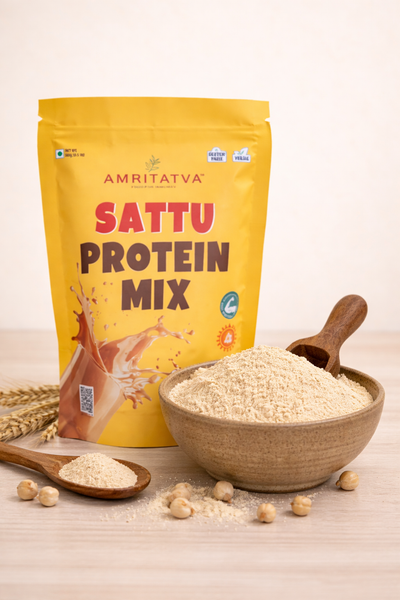
Sattu Protein Mix can be used in smoothies, traditional sattu drinks and savoury preparations.
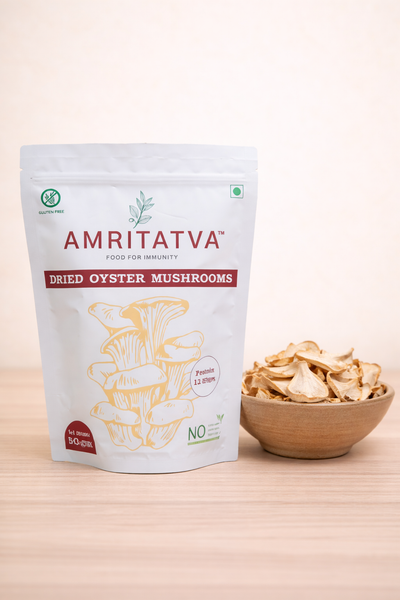
Dried Oyster and Shiitake Mushrooms can be stored in the pantry and used when you want to add mushrooms to curries, stir-fries, soups or other meals.
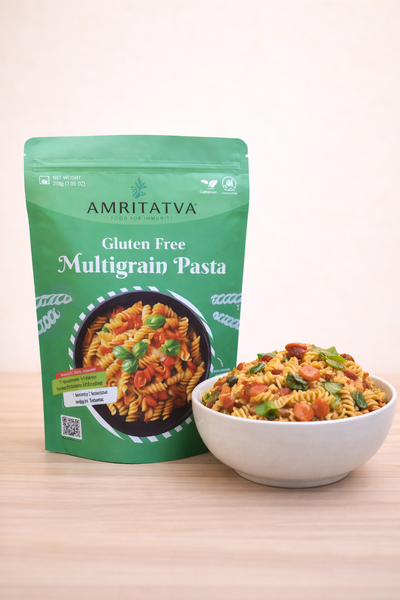
Millet Noodles and Pasta can be paired with vegetables and simple seasonings for a quick meal.
The idea is simple: keep ingredients that fit naturally into the way you already cook.
What are four simple habits for a calmer kitchen?
You can start with these:
1. Keep your everyday foods visible.
Store frequently used ingredients where you can easily see them.
2. Organise by use.
Keep breakfast ingredients together, cooking staples together and snacks in their own section.
3. Check before buying.
Look through your pantry before adding another packet of the same ingredient.
4. Keep cooking simple.
A nutritious everyday meal does not need ten ingredients or an elaborate recipe.
Frequently Asked Questions
Does a minimalist kitchen mean I should remove all packaged foods?
No. Minimalism is about reducing unnecessary clutter and making your kitchen easier to use. Packaged foods can still have a place in a practical kitchen. Look at the ingredient list, nutrition information and your overall eating pattern rather than assuming that every packaged food is unhealthy.
What should I keep in a healthy Indian pantry?
A practical pantry can include grains, millets, pulses, spices, nuts, seeds and other ingredients your family regularly uses. You can also keep versatile ingredients such as sattu or dried mushrooms if they fit your cooking style. The best pantry is one that supports the meals you actually prepare.
How do I organise a small kitchen?
Start with the ingredients and tools you use most often. Keep them within easy reach and move rarely used items to less accessible storage. Use labelled containers where helpful, and avoid buying storage products simply because they look organised. Function should come before appearance.
Can I follow clean eating without spending more money?
Yes. Clean eating does not require expensive speciality foods. Basic ingredients such as dal, rice, seasonal vegetables, millets, spices and locally available foods can form the foundation of many meals. Planning meals and using ingredients before they expire can also help reduce food waste.
What is one easy way to start?
Choose one shelf or cupboard today. Remove expired ingredients, group similar foods together and place your most-used ingredients where they are easy to reach. Then choose one simple meal you can prepare with what you already have. Small changes are easier to maintain than a complete kitchen makeover.
A simpler kitchen can support simpler choices
A minimalist kitchen is not about creating a picture-perfect space.
It is about creating an environment where cooking feels manageable and the foods you use regularly are easy to find.
You do not need to change everything at once. Start with one shelf, one meal and one simple routine.
Traditional Indian kitchens have always worked with practical ingredients, adaptable recipes and everyday cooking habits. Bringing some of that simplicity into a modern kitchen can make healthy eating feel less like a project and more like part of daily life.
At Amritatva, we believe food should fit into real Indian homes and real routines—simple, useful and easy to enjoy.

0 comments