

What makes a foxtail millet bowl a practical everyday meal?
A foxtail millet bowl can be a simple way to bring a whole grain, vegetables and a protein-rich food together in one meal. Instead of treating millet as a special “health food,” use it like any other grain: cook it, season it well and pair it with foods that complement the meal.
The recipe below uses cooked foxtail millet, vegetables and chickpeas or tofu, with lemon, herbs and seeds for flavour and texture. It is designed for a busy Indian kitchen and can be adjusted according to what is already available at home.
Millet is one of the whole grains that WHO includes as part of a varied healthy diet. WHO also recommends building meals around a variety of foods, including whole grains, pulses, vegetables, fruits, nuts and seeds.
The goal, therefore, is not to make one ingredient do everything. It is to create a balanced, repeatable meal.
What do you need to make this foxtail millet bowl?
Serves: 2
For the millet base
- ½ cup foxtail millet
- About 1½ cups water, adjusted according to the millet and cooking method
- A pinch of salt
For the vegetables
- ½ cup carrots, chopped
- ½ cup beans or broccoli
- ½ cup bell pepper
- 1 cup spinach or other seasonal greens
- 1 tsp oil
- ½ tsp cumin seeds
- Salt to taste
- Black pepper or chilli, according to preference
For the protein
Choose one:
- ¾–1 cup cooked chickpeas
- 100–150 g tofu, cubed
- 100–150 g paneer, cubed
For finishing
- 1–2 tsp lemon juice
- Fresh coriander
- 1 tbsp roasted pumpkin, sunflower or sesame seeds
- Optional: a simple curd-based or tahini-style dressing, depending on preference
For a fully vegan bowl, choose tofu or chickpeas and a plant-based dressing.
How do you cook foxtail millet for a bowl?
Rinse the foxtail millet well and drain.
Add it to a saucepan with water and a little salt. Bring it to a boil, then reduce the heat, cover and cook until the grains are tender. The exact water requirement and cooking time can vary with the millet and cooking method, so follow the pack instructions if they differ.
Once cooked, let the millet rest for a few minutes and fluff it gently with a fork.
For a bowl, you want the millet cooked but reasonably separate rather than very soft or porridge-like.
Time-saving tip: If you regularly eat millet, cook a larger batch and refrigerate the extra portion for another meal, following safe food-storage practices.
How do you prepare the vegetables and protein?
Heat a pan and add about a teaspoon of oil.
Add cumin seeds and let them crackle. Add the chopped carrots, beans, broccoli and bell pepper. Cook until they are tender but still retain some texture.
Add spinach towards the end and cook until wilted.
Season with salt, black pepper and, if you like, a little chilli.
Now add your protein of choice.
For chickpeas: use cooked chickpeas and warm them through with the vegetables.
For tofu: lightly sauté cubes separately or add them directly to the vegetables.
For paneer: lightly brown the cubes before combining them with the vegetables.
This gives you three different versions of essentially the same bowl without needing a completely different recipe.
How do you assemble the bowl?
Divide the cooked foxtail millet between two bowls.
Add the cooked vegetables and your chosen protein.
Finish with:
- Lemon juice
- Fresh coriander
- Roasted seeds
- Black pepper
- Optional dressing
Mix lightly before eating, or keep the components separate if you prefer different textures.
The lemon is particularly useful from a cooking perspective because it adds brightness without requiring a heavy sauce.
Why combine millet with vegetables and a protein source?
A bowl becomes more nutritionally balanced when different food groups contribute different things.
| Bowl component | What it contributes | Indian alternatives |
|---|---|---|
| Foxtail millet | Carbohydrates and dietary fibre | Rice, other millets, whole-grain options |
| Chickpeas/tofu/paneer | Protein | Dal, rajma, lobia, soy, sprouts |
| Vegetables | Fibre, vitamins and minerals | Carrot, beans, peas, spinach, cauliflower |
| Seeds | Unsaturated fats and texture | Sesame, pumpkin, sunflower seeds |
| Lemon & herbs | Freshness and flavour | Coriander, mint, lime, Indian spices |
WHO recommends obtaining carbohydrates primarily from whole grains, vegetables, fruits and pulses, while a varied diet helps provide adequate protein, vitamins and minerals.
That is why the bowl works better as a combination than as a millet-only meal.
Is foxtail millet automatically a high-protein food?
Not necessarily.
Millets contain protein, but using the phrase “protein-rich” for the whole meal depends on what you add and in what quantity.
That is an important distinction when planning meals.
Foxtail millet can provide the grain component, while chickpeas, tofu, paneer, dal, soy or other protein-containing foods can make the meal more substantial from a protein perspective.
Research on millet protein recognises millets as nutrient-containing cereals, but also notes that millet protein research is still developing.
So rather than expecting millet alone to meet your protein needs, pair it with a clear protein source.
Does cooking change the nutritional properties of millet?
Processing and cooking can influence the nutritional characteristics of millets.
A review of Indian millet processing found that processing techniques can affect nutritional properties and digestibility.
That does not mean one cooking method is universally “best.”
For everyday cooking, focus on a method that:
- Produces a pleasant texture
- Fits your meal
- Uses reasonable amounts of oil, salt and added ingredients
- Makes the food easy enough to prepare regularly
The healthiest recipe is not necessarily the one with the longest ingredient list. It is often the one that helps you consistently eat a varied diet.
How can you make this bowl more Indian?
You do not need to make a separate “fusion” recipe every time you cook millet.
Try these combinations:
Indian masala bowl
Foxtail millet + chickpeas + beans + carrot + cumin + coriander + lemon.
South Indian-inspired bowl
Foxtail millet + vegetables + curry leaves + mustard seeds + peanuts + lemon.
Palak tofu bowl
Foxtail millet + spinach + tofu + cumin + garlic + coriander.
Rajma millet bowl
Foxtail millet + rajma + onion + tomato + capsicum + coriander.
Seasonal vegetable bowl
Use whichever vegetables are available locally instead of buying a fixed list every week.
This flexibility is what makes a bowl practical for Indian households.
How can working professionals prepare this meal faster?
The biggest time saver is not a special ingredient. It is preparation.
You can:
- Cook millet ahead of time.
- Keep cooked chickpeas or other protein ready.
- Wash and cut vegetables in advance.
- Keep basic spices, lemon and seeds available.
- Assemble the bowl when you need it.
This turns the actual weekday cooking into reheating, sautéing and assembling rather than starting from zero.
WHO's current healthy-diet guidance emphasises adequacy, balance, moderation and diversity rather than a single “perfect” food.
Can this bowl be part of a gluten-free diet?
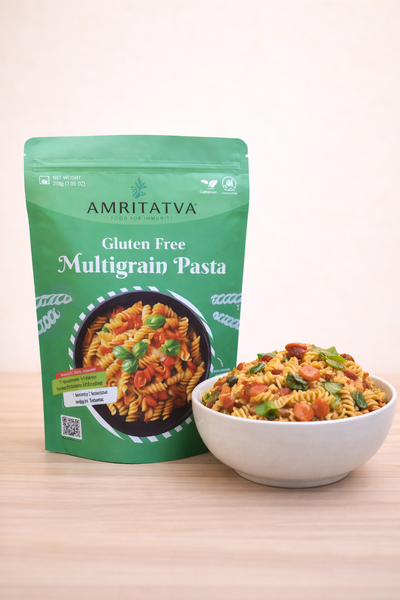
Millets are naturally gluten-free grains, but a finished recipe is only as safe as its ingredients and preparation environment.
For someone who needs strict gluten avoidance, check packaged ingredients such as sauces, spice blends, dressings and other additions for gluten and consider cross-contact during preparation.
This is especially relevant when cooking for someone with a medically diagnosed gluten-related condition.
How can Amritatva's approach fit into this kind of meal?
At Amritatva, we believe familiar Indian ingredients can be made practical for modern routines without turning every meal into a complicated health project.
Our focus on millet-based and mushroom-based foods fits naturally into this idea: build meals around real ingredients, use clear preparation methods and combine different foods rather than expecting one ingredient to provide every nutritional benefit.
The same principle applies whether you are making a millet bowl, khichdi, dal or a simple home-cooked lunch.
What is the simplest formula to remember?
Think of your bowl as:
Whole grain + protein source + vegetables + flavour + texture
For example:
Foxtail millet + chickpeas + seasonal vegetables + lemon & spices + roasted seeds
Once you remember this formula, you can create different bowls without following a recipe every time.
That is what makes healthy cooking more sustainable: less complexity, more flexibility and meals you actually want to eat.
FAQs
Is foxtail millet good for everyday meals?
Foxtail millet can be included as one of several whole-grain choices in a varied diet. WHO includes millet among whole grains that can contribute to a healthy dietary pattern. It does not need to replace every other grain. Rotating millet with rice, wheat and other whole grains can add variety while allowing meals to remain familiar and culturally appropriate.
What can I add to foxtail millet to increase protein?
Pair it with a clear protein source such as chickpeas, dal, rajma, lobia, tofu, soy foods, paneer, curd or eggs, depending on your dietary preference. The quantity needed depends on your individual protein requirements and the rest of your day's diet. Calling millet itself “high protein” can be misleading when the actual protein content of the complete meal depends on all its ingredients.
Can I make a foxtail millet bowl without paneer?
Yes. Chickpeas, tofu, rajma, lobia, sprouts or other pulses can be used instead. For a vegan bowl, tofu, chickpeas, beans or other plant-based protein sources work well. The important idea is to combine the millet with a protein-containing food rather than relying on the grain alone.
Can I eat a millet bowl for lunch?
Yes. A millet bowl can work well for lunch when it contains a combination of a grain, protein source and vegetables. Portion size should reflect your individual energy needs, activity level and the rest of your day's meals. For a work lunch, preparing millet and the protein component ahead of time can make assembly much easier.
Is foxtail millet better than rice?
There is no universal answer. Both can be part of a healthy diet, depending on the type, portion, preparation and overall meal. WHO recognises both rice and millet within healthy dietary patterns. The useful question is not simply “Which grain is better?” but “How can I build a varied, balanced meal around the grain I am eating?”
Can I make this recipe vegan and gluten-free?
Yes. Use tofu or chickpeas instead of paneer and choose gluten-free seasonings and dressings. For people who need strict gluten avoidance, check packaged ingredients and prevent cross-contact during preparation. Naturally gluten-free ingredients can still become unsuitable if contaminated during processing or cooking.
0 comments