

Key Takeaways
- Shiitake mushrooms contain lentinan, a beta-glucan compound with over four decades of peer-reviewed research confirming its activation of macrophages and Natural Killer cells — the first-line defenders of the immune system.
- The soaking water from dried shiitake mushrooms contains water-soluble beta-glucans, B vitamins, and minerals — discarding it loses a significant portion of the soup's nutritional value.
- A 2024 Frontiers in Nutrition study confirmed mushroom beta-glucans drive "trained immunity" — keeping immune cells in a state of heightened readiness for weeks after each exposure.
- This recipe takes 15 minutes from start to bowl, uses one pot, and produces a soup with meaningful umami depth without any MSG or synthetic flavour boosters.
Fifteen minutes. One pot. A soup that tastes like it was cooked for an hour. The secret isn't technique — it's the ingredient. Dried shiitake mushrooms carry a concentration of umami (from glutamic acid and guanylate compounds) that fresh mushrooms can't match, because drying removes water weight while concentrating every flavour and nutrient compound. When you rehydrate them, you don't just get the mushroom back — you get a more intense version of it, plus a soaking liquid that's essentially a free, flavour-dense broth.
Why Dried Shiitake Makes a Better Soup Than Fresh
Fresh shiitake mushrooms provide about 2.2g of protein and 2.5g fibre per 100g with a mild, pleasant flavour. Dried shiitake provides roughly 7g of protein and 11g of fibre per 100g — because the water is gone (USDA FoodData Central). The flavour is more concentrated because the enzymatic changes during drying convert glutamic acid to more complex flavour compounds. This is why dried shiitake has been a cornerstone of Japanese, Chinese, and Korean cooking for centuries — it builds depth in minutes that would take hours with stock from scratch. The soaking liquid amplifies this further: use it as the soup base and you're cooking with a functional, flavour-packed broth that cost you nothing extra.
The Recipe: 15-Minute Shiitake Soup
Serves: 2 | Prep: 5 min | Cook: 10 min
Ingredients:
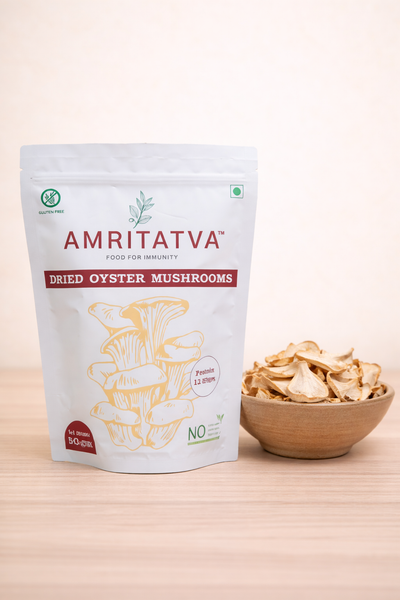
- 15g Amritatva Sun-Dried Shiitake Mushrooms
- 400ml hot water (for soaking) + 300ml additional water or vegetable broth
- 3 garlic cloves, finely chopped
- 1 tsp cold-pressed coconut oil or ghee
- Salt, cracked black pepper to taste
- Optional: 1 tsp Amritatva Italian or All-Purpose Seasoning, fresh coriander to finish
Method:
- Soak shiitake mushrooms in 400ml hot water for 10–15 minutes until fully rehydrated. Remove mushrooms and slice or tear into pieces. Keep the soaking water — this is your broth base.
- Heat oil in a pot over medium heat. Add garlic and cook for 60–90 seconds until fragrant and just beginning to colour.
- Add sliced mushrooms and sauté for 2–3 minutes — they should begin to brown at the edges.
- Pour in the mushroom soaking water plus additional water or broth. Bring to a simmer and cook for 5–7 minutes.
- Season with salt and pepper. For a creamier texture, blend 30–40% of the soup with an immersion blender and stir back in. Finish with fresh coriander and serve immediately.
Why the Soaking Water Matters
The soaking water from dried shiitake mushrooms isn't waste — it's the nutritional payload of the soup. Water-soluble compounds including beta-glucans, riboflavin, niacin, and ergothioneine leach into the soaking liquid during rehydration. Using this liquid as your soup base rather than discarding it means every beta-glucan and B vitamin that came out of the mushroom stays in the bowl you eat. Rinse through a fine sieve first to remove any grit, but otherwise treat it as you would any flavour-dense broth.
The Immune Function Story Behind the Soup
Shiitake mushrooms contain lentinan — a specific beta-1,3/1,6-glucan that has been studied since the 1970s and is used as an adjunct in certain oncology protocols in Japan. Peer-reviewed research published in PMC confirms lentinan activates macrophages, enhances Natural Killer cell activity, and promotes interferon production — the proteins that coordinate immune response between cells. A 2024 Frontiers in Nutrition study found that mushroom beta-glucans broadly drive "trained immunity" — an epigenetic reprogramming of immune cells that keeps them in heightened readiness for weeks after exposure. A bowl of shiitake soup is delivering this compound in a bioavailable, food-matrix form every time.
Variations to Keep It Interesting
- South Indian twist: Temper mustard seeds, curry leaves, and dried red chilli in coconut oil before adding garlic — the mushroom's earthiness pairs beautifully with this tempering.
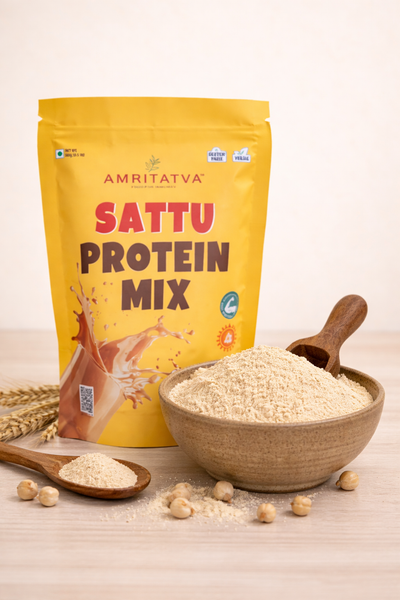
- Add sattu for protein: Stir 1 tbsp of Amritatva Sattu Protein Mix into the finished soup off the heat — it thickens the broth slightly and adds 4–6g of protein per serving.
- Miso variation: Add 1 tsp of white miso paste dissolved in a small amount of cold water at the end (not during cooking) for additional umami and probiotic benefit.
- Add tofu or paneer: Cubed silken tofu or fresh paneer can be added in the last 2 minutes of simmering for a complete-protein meal.
Try This Product
Amritatva Dried Shiitake Mushrooms
Sun-dried, hand-sorted. No chemicals. Rehydrates in minutes.
Shop NowFrequently Asked Questions
Can I use the soaking water from dried mushrooms in cooking?
Yes — and you should. The soaking water contains water-soluble nutrients including beta-glucans, B vitamins, and flavour compounds. Strain it through a fine mesh sieve to remove any grit, then use it as a broth base for soup, dal, or grains. It stores in the refrigerator for 48 hours.
How much dried shiitake do I need per person for a filling soup?
10–15g of dried shiitake per serving (rehydrates to roughly 60–90g) makes a flavourful but not overpowering soup. If you want a richer, more substantial bowl, use 20g per person and reduce the additional liquid slightly.
Does cooking destroy the beta-glucans in shiitake mushrooms?
Beta-glucans are structurally stable polysaccharides that survive standard cooking temperatures (up to 100°C). Research confirms beta-glucan activity in cooked mushroom preparations is biologically comparable to raw. Simmering for 5–10 minutes does not degrade the immune-function properties of the soup.
Can I make this soup in advance?
The soup stores well in the refrigerator for up to 2 days and reheats on the stovetop over low heat. The flavour deepens overnight as the mushrooms continue releasing compounds into the broth. Do not boil aggressively when reheating — a gentle simmer preserves both flavour and nutritional integrity.



0 comments