

What makes a morning routine healthy?
A healthy morning routine is not about waking up at 5 a.m., drinking a special drink or completing a long list of wellness activities.
It is about starting the day with a few habits that support your basic needs: sleep, hydration, movement, nourishment and a manageable daily rhythm.
WHO’s current healthy-diet guidance focuses on adequacy, balance, moderation and diversity, while its physical-activity guidance recommends regular movement throughout the week.
For a busy Indian household, that could simply mean:
- Wake up around a consistent time.
- Drink water according to your thirst and daily needs.
- Get some natural daylight.
- Move your body.
- Eat a balanced breakfast if you usually eat in the morning.
- Spend a few minutes deciding what actually needs to get done that day.
The best routine is one you can realistically repeat.
Does the way you start your morning affect the rest of the day?
Your morning does not have to be perfect to have a useful structure.
If you wake up late, immediately check messages, skip food because you are rushing and spend the first hour sitting, the morning can feel very different from one that includes some movement, daylight, food and planning.
But there is no single scientifically proven “perfect morning routine.”
Different people have different work schedules, sleep requirements, family responsibilities and health needs.
For someone working from home, a morning walk may be practical. For a parent getting children ready for school, five minutes of stretching may be more realistic. For someone working an early shift, the priority may simply be getting enough sleep and eating something practical.
A healthy routine should fit your life—not create another source of stress.
Should you drink water immediately after waking up?
Hydration matters throughout the day, but you do not need a special morning detox drink.
Water is a simple option when you are thirsty after waking. WHO describes good hydration as important for health and recommends water as a healthy drink option where it is safe and available.
You can keep a glass or bottle of water beside your bed or in the kitchen so that drinking water becomes easy rather than another task to remember.
What about warm lemon water?
If you enjoy it, there is nothing wrong with making it part of your routine. But lemon water should not be presented as a “detox,” fat-burning drink or cure for digestive problems.
Simple water is enough.
Is morning movement really necessary?
You do not need a full workout before breakfast to be physically active.
Walking, stretching, yoga, cycling, household work and exercise all contribute to physical activity. WHO recommends that adults get 150–300 minutes of moderate-intensity aerobic activity per week, or an equivalent amount of vigorous activity, along with muscle-strengthening activities on at least two days each week.
Your morning can contribute to that total.
Try:
- A 10-minute walk around the neighbourhood
- Gentle stretching
- A short yoga session
- Walking while taking a phone call
- A few mobility exercises
- Cycling when practical
- Household activities that keep you moving
If you currently do very little activity, starting small is reasonable. WHO specifically notes that some physical activity is better than none.
The important thing is not whether the movement happens at 6 a.m.
It is whether you are moving regularly across the week.
What should you eat for breakfast?
There is no universal breakfast that everyone needs to eat.
Some people prefer an early breakfast; others eat later. What matters more is the overall quality and balance of the diet.
If you eat breakfast, think beyond simply choosing something labelled “healthy.”
A practical breakfast can combine foods from different groups—for example, a grain or millet with a protein-rich food, fruit or vegetables, depending on your preferences and dietary needs.
Indian options can include:
- Vegetable poha with peanuts
- Moong dal chilla with vegetables
- Idli with sambar
- Vegetable upma
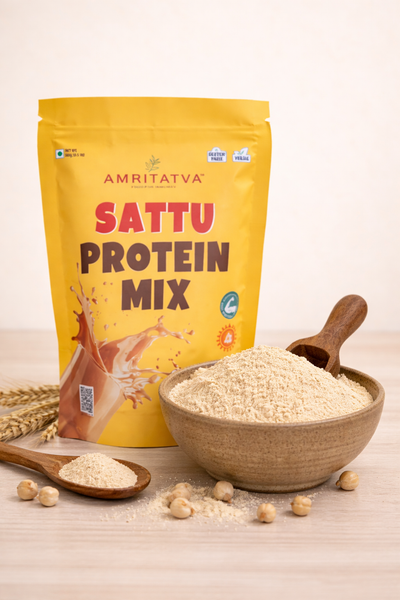
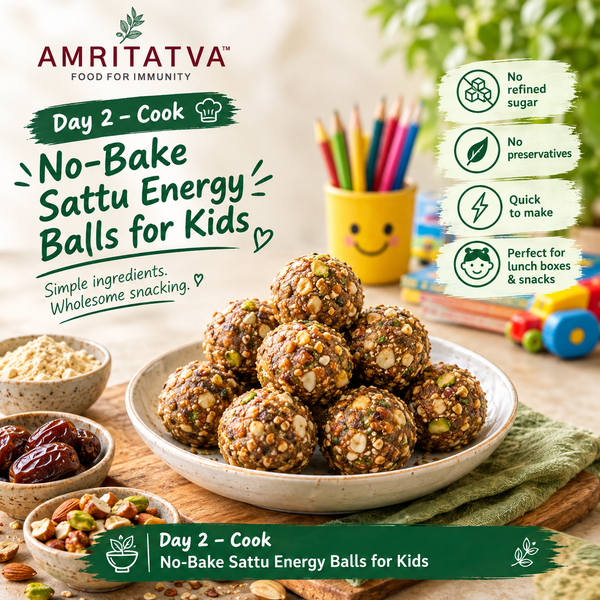
- Sattu with water or an appropriate milk alternative
- Millet-based porridge with nuts and fruit
- Besan chilla with vegetables
- Leftover dal with roti or another familiar staple
WHO recommends a varied diet that includes foods such as cereals or other staples, legumes, vegetables and fruits, with the exact combination varying according to dietary needs and local food traditions.
Does breakfast need to be high in protein?
Protein is an important part of the diet, but breakfast does not need to become a protein competition.
Instead, look at your total daily diet.
Indian kitchens already have many protein-containing foods: dal, chana, rajma, moong, soy foods, sattu, nuts and seeds, along with dairy or other protein sources depending on the dietary pattern.
For someone who exercises in the morning, a meal containing protein can be one practical part of the day's nutrition.
The goal is not to turn every breakfast into a supplement-based meal.
Simple food can work too.
Can traditional Indian breakfasts fit a modern fitness routine?
Yes.
Fitness does not require abandoning Indian food.
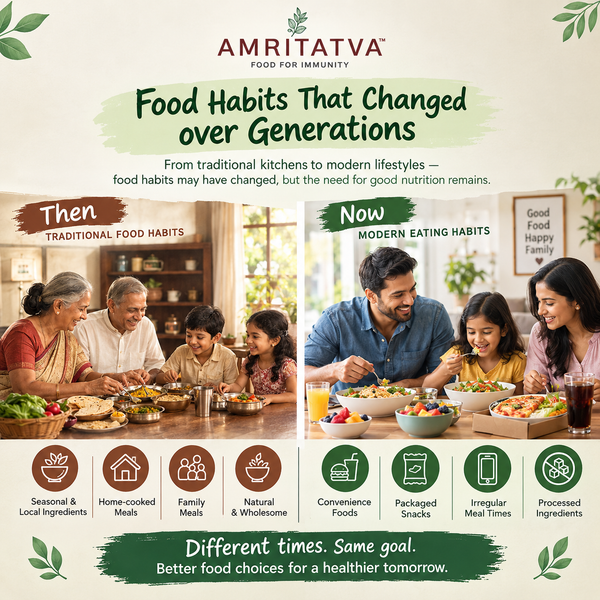
In fact, familiar foods can make healthy routines easier to maintain because they fit naturally into household cooking.
Consider:
| Traditional Indian option | Simple modern adaptation |
|---|---|
| Sattu | Quick drink or preparation for a busy morning |
| Poha | Add vegetables and peanuts for a more varied meal |
| Idli + sambar | Convenient combination of fermented food and dal-based accompaniment |
| Moong dal chilla | Prepare batter ahead for quicker mornings |
| Upma | Add vegetables and serve with another protein-containing food |
| Millet meal | Use millets in familiar Indian preparations rather than forcing a completely new recipe |
The objective is not to label one breakfast as “perfect.”
It is to make balanced choices easier to repeat.
Should you check your phone first thing in the morning?
There is no universal rule that your phone must be completely banned in the morning.
But if checking messages, social media or work notifications immediately makes you feel rushed, try delaying it for 10–20 minutes.
Instead, use that time for something practical:
Water → daylight → movement → breakfast → plan the day.
This does not require a complicated mindfulness practice.
Even writing down three priorities can make the day feel more organised.
And if your morning is already busy with children, cooking or work, keep the routine realistic.
Why does morning daylight matter?
Morning light can be useful for supporting a regular sleep-wake schedule.
The CDC recommends keeping a consistent sleep schedule and getting natural light earlier in the day; it also notes that most adults need at least seven hours of sleep.
So rather than thinking only about what happens after waking, consider the previous night too.
A healthy morning begins with adequate sleep.
If you are regularly sleeping too little, adding a long morning routine may not solve the underlying problem.
Sometimes the healthiest morning habit is simply:
Go to bed a little earlier.
What does a realistic morning routine look like?
Here is one example for a working Indian household:
6:30–6:40 AM — Wake up & hydrate
Have water and get ready without immediately opening every notification.
6:40–7:00 AM — Move
Walk, stretch, practise yoga or do another activity you enjoy.
7:00–7:10 AM — Daylight & planning
Spend a few minutes outside or near natural light and identify the day's key priorities.
7:10–7:40 AM — Breakfast & family time
Choose a familiar, balanced breakfast that fits your dietary needs.
After that — Start the day
Work, school, commute, exercise or household responsibilities.
Your timing can be completely different.
The structure matters more than the clock.
What if you only have 15 minutes in the morning?
You can still create a useful routine.
Try:
2 minutes: Water and freshen up
5 minutes: Stretch or walk
3 minutes: Natural daylight
5 minutes: Simple breakfast preparation or planning
That is enough to create a starting point.
You do not need a 90-minute morning ritual to take care of yourself.
WHO's physical-activity guidance also reinforces that activity can be accumulated through everyday movement, and some activity is better than none.
How can you make a morning routine easier to maintain?
The biggest challenge is usually not knowing what to do.
It is remembering to do it consistently.
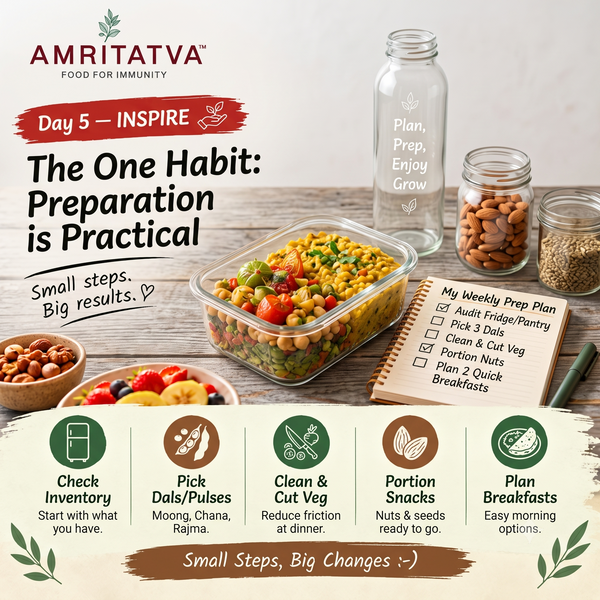
Try preparing the night before:
- Keep your water bottle ready.
- Decide your breakfast.
- Keep walking shoes accessible.
- Prepare sattu or other ingredients in advance.
- Keep your phone away from the bed if notifications disturb your sleep.
- Write down tomorrow's most important task.
Make the healthy choice the easy choice.
You don't need to change everything at once.
Start with one habit, repeat it for several days, and then add another.
What does Amritatva believe about morning wellness?
At Amritatva, we believe everyday wellness should fit into real Indian routines.
That can mean a familiar breakfast, a practical sattu preparation, a millet-based meal, some movement and enough water—not an elaborate morning ritual.
Our approach is centred on making food choices feel familiar, practical and enjoyable while keeping nutrition awareness in the picture.
Because sustainable habits are built into everyday life—not just followed for a few days.
Frequently Asked Questions
1. What is the healthiest thing to do first thing in the morning?
There is no single “healthiest” morning action for everyone. A practical start can include waking after adequate sleep, drinking water if you are thirsty, getting some daylight, moving your body and having a balanced breakfast if you eat in the morning. The most useful routine is one that fits your schedule and can be repeated consistently rather than one built around strict wellness rules.
2. Is warm lemon water necessary in the morning?
No. Warm lemon water can be a pleasant drink, but there is no need to use it as a detox or special health treatment. Plain water is a perfectly reasonable choice for hydration. If you enjoy lemon in water, you can include it as part of your normal diet. The bigger priority is maintaining adequate hydration throughout the day rather than depending on one particular morning drink.
3. How much exercise should adults get each week?
WHO recommends that adults get at least 150–300 minutes of moderate-intensity aerobic physical activity per week, or an equivalent amount of vigorous activity. Adults should also include muscle-strengthening activities involving major muscle groups on at least two days per week. These are weekly targets, so your activity does not have to happen entirely in the morning.
4. What is a good Indian breakfast for a busy morning?
There is no single best Indian breakfast. Practical options include vegetable poha with peanuts, idli with sambar, moong dal chilla, vegetable upma, sattu preparations or millet-based meals. Try to include variety across the day rather than expecting one breakfast to provide everything. WHO recommends dietary diversity, with staples, legumes, vegetables and fruits forming important parts of a healthy dietary pattern.
5. Do I need to wake up early to have a healthy lifestyle?
No. Waking extremely early is not a requirement for healthy living. Sleep duration, regularity, physical activity, nutrition and overall lifestyle matter more than following a particular wake-up time. The CDC recommends consistent sleep and wake times and notes that most adults need at least seven hours of sleep. Your morning routine should work around your responsibilities and allow adequate sleep.
6. Can a 10-minute morning walk really count?
Yes. Walking is physical activity, and WHO encourages people to be more active throughout the day. A 10-minute walk can be one small contribution toward your weekly activity total. It does not replace the overall recommended amount of physical activity, but it can be a realistic starting point for someone who currently does very little movement. Over time, you can gradually increase duration or intensity according to your ability.
0 comments