

Last updated July 2026. Reviewed by the Amritatva editorial team.
Naturally Gluten-Free Indian Foods: The Direct Answer
Most of the Indian pantry is naturally gluten-free: rice, millets like ragi and jowar, all pulses, fresh vegetables, fruit, dairy, nuts, and plain meat or fish. The real risk isn't the core ingredient, it's what gets mixed in during processing. FSSAI caps gluten in "gluten-free" labeled food at 20 mg/kg (20 ppm), the same threshold used by Codex Alimentarius (FSSAI, Regulation 2.14). Yet a peer-reviewed lab study found 10.1% of FSSAI-labeled "gluten-free" products in Delhi NCR still exceeded that limit, and 11.8% of unlabeled "naturally gluten-free" products did too (European Journal of Clinical Nutrition, PMID 33462461). So the food list matters, but so does knowing which everyday items quietly break the rule. This guide covers both.
Key Takeaways
- Rice, millets, pulses, dairy, fruits, vegetables, and plain meat are all naturally gluten-free.
- Hidden gluten hides in hing, soy sauce, namkeen, spice blends, and shared fryers, not in the "obvious" foods.
- 11.8% of unlabeled "naturally gluten-free" Indian products tested above the legal 20 ppm limit in an NCR lab study (PMID 33462461).
- Reading labels matters more than avoiding entire food groups.
If you were just diagnosed or are still figuring out what gluten intolerance actually means for your body, our guide to gluten intolerance signs and diagnosis in India is a good place to start before you dig into this food list. And if you want the full framework, the Gluten-Free Diet in India: The Complete Guide pillar article ties everything in this cluster together.
Why Is a Simple Food List Not Enough in India?
Celiac disease affects roughly 8.53 per 1,000 people in northern India, compared to 4.66 per 1,000 in the northeast and just 0.11 per 1,000 in the south, a gap that tracks almost exactly with regional wheat consumption (American Journal of Gastroenterology, PMID 26729543). That means the risk of hidden gluten is highest exactly where wheat is most embedded in daily cooking, which is also where most "safe food" lists get written casually.
A separate community screening in Delhi NCR found celiac sero-prevalence of 1.44%, with an overall confirmed prevalence of 1.04%, or roughly 1 in every 96 people (PMID 21182543). That's not a rare condition. It's common enough that "just eat rice and dal" isn't sufficient guidance anymore. Most Indian food lists online copy the same 15 items without ever addressing the additives that actually cause reactions in practice, which is the gap this list is built to close.
Wheat isn't always announced on the label either. It hides inside "compounded" spice mixes, fried snacks, and even asafoetida. That's why this list is organized by category first, then followed by a dedicated warning section, because knowing rice is safe means nothing if the tempering you add to it isn't.
Which Grains and Flours Are Gluten-Free in India?
Citation capsule: ICMR-NIN's 2024 Dietary Guidelines for Indians recommend including millets in at least one meal daily, citing ragi's 344 mg calcium and 11.2 g fibre per 100 g, and bajra's 11.6 g protein and 8.0 mg iron per 100 g (ICMR-NIN, 2024). Jowar (sorghum) rounds out the trio with 10.4 g protein, 4.1 mg iron, 25 mg calcium, and 6.3 g fibre per 100 g, the same government dataset shows. Together, these three staples deliver more iron and fibre per serving than refined wheat flour, with none of the cross-contamination risk covered later in this guide. These grains form the backbone of a gluten-free Indian diet and were eaten across the subcontinent long before wheat became dominant, which is why India's own dietary guidelines treat them as a recommendation rather than a substitution, not a niche "diet food" swap reserved for people avoiding gluten.
Rice and rice-based foods
Rice in every form, including poha and murmura, is naturally gluten-free. The catch is packaged poha or murmura mixes with added "namkeen" style seasoning, which sometimes contain wheat-based sev or bhujia mixed in. Plain rice, plain poha, and plain murmura are safe. Read the ingredient panel on flavored versions.
Millets: ragi, jowar, bajra, and the lesser-known ones
Ragi (finger millet), jowar (sorghum), and bajra (pearl millet) are India's most common gluten-free staples, used for roti, porridge, and dosa batter. Beyond these three, foxtail, kodo, little, barnyard, proso, and browntop millets are all naturally gluten-free and increasingly available in urban grocery stores as India's millet push has expanded shelf space nationally.
Buckwheat, amaranth, and other "flour" staples
Buckwheat (kuttu) is not related to wheat despite its name. It's a seed, not a grass grain, which makes it genuinely gluten-free and commonly used during fasting (vrat) foods. Amaranth (rajgira), corn flour (makki ka atta), sago (sabudana), and water chestnut flour (singhara atta) round out the fasting-food category and are all safe in their pure, unblended form.
Besan and sattu: read the label before you buy
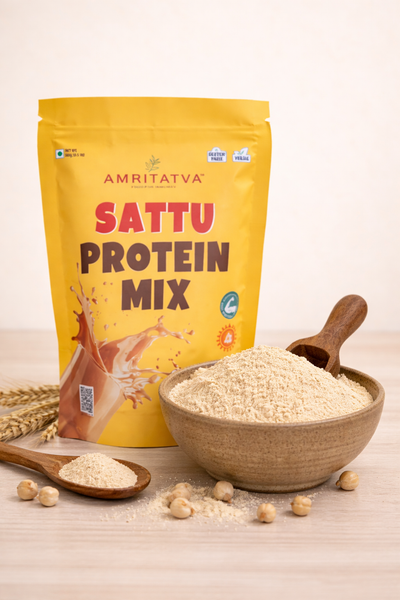
Besan (chickpea flour) is naturally gluten-free when made purely from chana. Sattu should be roasted chana only, but many commercial sattu blends mix in roasted barley or wheat for cost and texture, which makes cross-contamination a genuine risk rather than a theoretical one. This is exactly why Amritatva's Sattu Protein Mix is lab-verified for gluten before it ships, so you're not left guessing from an ingredient list that may not tell the full story.
Which Pulses and Legumes Are Safe to Eat?
Every major Indian pulse and legume is naturally gluten-free, including toor, moong, masoor, chana dal, urad, rajma, chana, lobia, and soybean. This makes dal, arguably India's most common daily dish, one of the safest anchors of a gluten-free plate. Sprouted versions carry the same safety profile as long as nothing is added during preparation.
Dal doesn't need a substitute ingredient the way roti does. It's already built for a gluten-free kitchen, whether you're making toor dal fry, rajma-chawal, or a simple moong khichdi. The only place pulses become risky is in packaged dal-based snacks that mix in wheat flour as a binder or filler, which brings us to the category most gluten-free lists skip entirely: hidden gluten in processed foods.
Are Fresh Vegetables, Fruits, and Dairy Always Gluten-Free?
Fresh vegetables and fruits are gluten-free in their natural state, with no exceptions, because gluten is a protein found only in wheat, barley, and rye. The risk appears only when they're battered, coated, or fried in shared oil with wheat-based items like pakoras or samosas.
Dairy follows the same pattern. Milk, curd, paneer, ghee, and plain lassi or chaas are naturally safe. Malted or flavored milk drinks are the exception, since malt is typically derived from barley. If you're buying a flavored milk product, check for "barley malt extract" specifically on the label before assuming it's safe.
What About Nuts, Seeds, Meat, and Eggs?
Plain nuts, seeds, meat, poultry, fish, and eggs are naturally gluten-free across the board. Almonds, cashews, walnuts, pistachios, and peanuts are all safe raw or roasted, as are chia, flax, sesame, pumpkin, and sunflower seeds. The exception is flavored or masala-coated nuts, where a wheat-based coating is sometimes used for the spice mix to stick.
Meat, poultry, fish, and eggs are gluten-free when cooked plain, but Indian restaurant and home-fried preparations frequently use a besan-and-wheat-flour batter combination for coating. Tandoori marinades are usually fine, but the shared fryer or shared tandoor is where cross-contamination sneaks in, which we cover in more detail below.
Where Does Gluten Actually Hide in Indian Cooking?

Citation capsule: Celiac advocacy groups in India, including the International Gluten Free Association, commonly report that compounded hing (asafoetida), the version sold in most retail stores, is cut with wheat flour or starch used as an anti-caking agent, while pure resin hing remains rare on regular grocery shelves. No peer-reviewed Indian lab study has yet quantified exactly how much wheat compounded hing typically contains, which is itself worth noting: this is a widely reported, largely unregulated gap rather than a settled statistic. The practical workaround is to look for hing explicitly labeled "100% pure asafoetida resin" or sourced from a specialty spice importer, since standard supermarket tins rarely disclose their carrier ingredient at all, and asking the manufacturer directly is often the only way to get a straight answer. This single ingredient is one of the most overlooked sources of accidental gluten exposure in otherwise "safe" Indian home cooking.
This is the section most gluten-free food lists skip, and it's often the real reason people keep reacting even while "eating clean." The failure point usually isn't the thali, it's the eight small additions that go into it without a second thought. Here's what to watch for specifically.
Hing (asafoetida)
Compounded hing, the version most Indian households use daily in tadka, is commonly reported by celiac advocacy groups to contain wheat flour as a carrier or anti-caking agent. Pure resin hing is technically gluten-free but hard to find in regular retail. If you cook with hing daily, this is worth investigating directly with the brand you use.
Soy sauce and Indo-Chinese condiments
Most commercial soy sauce, including the bottles used in Indian Chinese cooking at home and in restaurants, contains wheat as a core fermentation ingredient. Only tamari or a product explicitly labeled gluten-free is safe to use. This one substitution alone removes a common source of exposure for anyone who cooks hakka noodles or manchurian-style dishes at home.
Packaged spice blends and garam masala
Some commercial garam masala and other packaged spice blends use wheat flour as a cheap filler or anti-caking agent. This isn't universal, but it's common enough that reading the ingredient list on your regular masala brand is worth five minutes of your time.
Namkeen: sev, bhujia, and mixture
Namkeen is one of the riskiest snack categories for anyone avoiding gluten. Sev and bhujia are traditionally besan-based, but many commercial versions cut costs by blending in wheat flour, and shared fryers across multiple product lines add a further cross-contamination risk even when the recipe itself looks safe.
Papad, malted drinks, and restaurant risk
Papad is usually made from urad or moong and is generally safe, but some brands add wheat flour as a binder, so check before assuming. Malted health drinks that use barley malt are not gluten-free regardless of how they're marketed. And in restaurants, tandoori marinades and shared fryers create a real cross-contamination risk, even when every individual ingredient on the menu looks fine on paper. Ready-made curry pastes and gravies sometimes use wheat flour as a thickener too, so homemade is safer when you're not sure.
Is This Actually Gluten-Free? Why Lab-Testing Matters
Citation capsule: A peer-reviewed lab study using Ridascreen Gliadin R5 ELISA testing on 794 Indian food products found that 10.1% of FSSAI-labeled "gluten-free" items and 11.8% of unlabeled "naturally gluten-free" products exceeded the legal 20 mg/kg limit, while none of the imported gluten-free products tested did (European Journal of Clinical Nutrition, PMID 33462461). The sample broke down into 360 labeled gluten-free products, 80 imported gluten-free products, and 354 unlabeled "naturally gluten-free" products, meaning the domestic labeled category alone had over 36 individual products fail a test they were sold to pass. This gap between domestic and imported products suggests either weaker manufacturing controls or inconsistent enforcement of India's own 20 mg/kg threshold, since the same regulatory limit technically applies to every product sold in the country regardless of origin. That's the single most important number in this entire article.
Read that again: more than 1 in 10 products carrying a "gluten-free" label in the NCR sample still failed the test. This isn't a fringe finding, it's a peer-reviewed study testing nearly 800 real retail products. If a label alone isn't reliable, the only real protection is third-party lab verification behind the label, not just on the front of the pack.
This is precisely why Amritatva has every batch of its gluten-free pasta and gluten-free noodles tested by an FSSAI-approved third-party laboratory before it ships, with reports published on our certifications and quality standards page. We're not claiming to be the only safe option in India. We're saying that given what PMID 33462461 found, checking for an actual lab report, not just a label, should be non-negotiable for anyone managing celiac disease or serious wheat sensitivity.
For a closer look at how these are tested and what to check before you buy, see our dedicated guides to gluten-free pasta in India and gluten-free noodles in India.
Where to Buy Verified Gluten-Free Foods in India
Fresh, whole foods like rice, dal, vegetables, and fruit don't need a "gluten-free" label because their gluten-free status is inherent to the ingredient itself. Processed and packaged foods are where verification matters, especially pasta, noodles, and multigrain mixes that combine several flours in one product. That combination is exactly where the NCR lab study found the highest failure rates among labeled products.
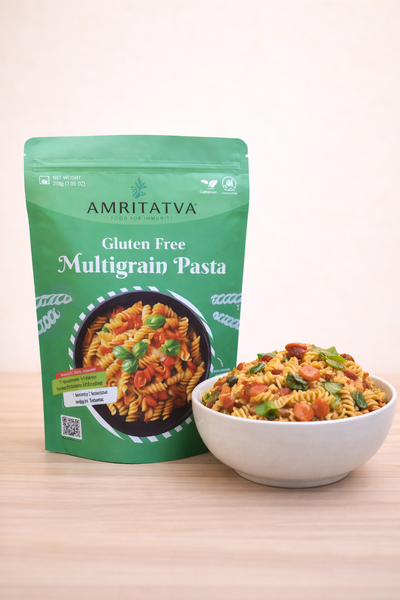
Amritatva's Gluten-Free Pasta collection includes options like the Pasta with Italian Seasoning and the Pasta with All-Purpose Seasoning, both made from a multigrain, gluten-free base and tested batch by batch. The Gluten-Free Noodles collection follows the same standard, with the Noodles with Italian Seasoning and Noodles with All-Purpose Seasoning giving you an Indo-Chinese-style option without the shared-fryer or soy-sauce risk flagged earlier.
If sattu is part of your routine, the same label-reading caution applies: a lab-verified option made purely from roasted chana means you don't need to call the manufacturer to confirm what's actually in the blend.

Frequently Asked Questions
Is rice completely gluten-free in India?
Yes, plain rice in every form, including basmati, brown rice, poha, and murmura, is naturally gluten-free. The only exception is flavored or packaged poha and murmura mixes that add namkeen-style seasoning, which can contain wheat. Always check the ingredient panel on seasoned or ready-to-eat versions.
Can I eat besan and sattu if I'm gluten intolerant?
Pure besan made from chana is gluten-free, and pure sattu made only from roasted chana is too. The risk is commercial sattu blends that mix in roasted barley or wheat for cost and texture. Choose a lab-verified brand if you want certainty rather than guesswork.
Is hing (asafoetida) safe for a gluten-free diet?
Not always. Celiac advocacy groups in India commonly report that compounded hing, the type most households use, is cut with wheat flour as an anti-caking agent. Pure resin hing is gluten-free but uncommon in regular retail, so this ingredient deserves specific attention if you cook Indian food daily.
Why did a "gluten-free" labeled product still make me sick?
A peer-reviewed lab study found that 10.1% of FSSAI-labeled gluten-free products in an NCR sample exceeded the legal 20 mg/kg gluten limit (PMID 33462461). Labeling alone isn't a guarantee. Look specifically for brands that publish independent, third-party lab reports rather than relying on the front-of-pack claim.
What Indian snacks should I avoid if I have celiac disease?
Be cautious with namkeen like sev, bhujia, and mixture, since many commercial versions blend in wheat flour or are made in fryers shared with wheat-based products. Malted health drinks, some packaged spice blends, and certain papad brands also carry hidden wheat. When unsure, homemade versions with verified ingredients are the safer choice.
The Bottom Line
Most of what's already on an Indian plate, rice, millets, dal, vegetables, fruit, dairy, and plain meat, is naturally gluten-free without any substitution needed. The real work is in the details: reading labels on hing, spice blends, namkeen, and soy sauce, and choosing packaged staples that are actually lab-tested rather than just labeled. With celiac sero-prevalence around 1.44% in Delhi NCR screening (PMID 21182543) and over 1 in 10 labeled products failing lab tests (PMID 33462461), verification isn't optional anymore.
If you're still working through a diagnosis, start with our guide on gluten intolerance signs and diagnosis in India, or go back to the Gluten-Free Diet in India: The Complete Guide for the full framework this list sits inside. And when you're ready to stock your pantry with something verified rather than just labeled, the pasta and noodles collections linked above are tested batch by batch by an FSSAI-approved laboratory.
Every Amritatva product is independently tested by FSSAI-approved third-party laboratories. View our lab reports →
0 comments