

How Do You Cook Gluten-Free in an Indian Kitchen?
Cooking gluten-free in an Indian kitchen means three things done consistently: choosing FSSAI-verified ingredients below 20ppm gluten, managing cross-contamination at specific high-risk points (shared frying oil, shared pasta water, unlabelled compounded hing), and swapping wheat-based staples for millet or rice-based alternatives that hold up in daily cooking.
You do not need a separate kitchen. You need a system. Start with your atta dabba: replace wheat flour with jowar, bajra, ragi, or a tested rice-besan blend for rotis. Check every "gluten-free" claim against FSSAI's Sub-Regulation 2.14 standard of under 20mg/kg (20ppm), the only legal gluten-free threshold in India since the old 20-100ppm "low gluten" category was removed (NuFFooDS Spectrum, 2019). Watch your fryer and your hing tin closely: these are the two most commonly overlooked contamination points in Indian home kitchens, and both are fixable with a five-minute label check or a dedicated pan.
Key Takeaways
- FSSAI's only legal gluten-free standard is under 20ppm (20mg/kg); the older 20-100ppm "low gluten" category no longer exists (NuFFooDS Spectrum, 2019).
- Shared fryers are the riskiest shared equipment: 25% of gluten-free foods fried alongside wheat items exceeded 20ppm in one study (NCBI).
- Standard compounded hing commonly uses wheat flour as a carrier; check labels for "pure asafoetida" or an explicit gluten-free claim.
- 10.1% of labeled gluten-free products in India exceeded 20ppm in independent testing (PubMed).
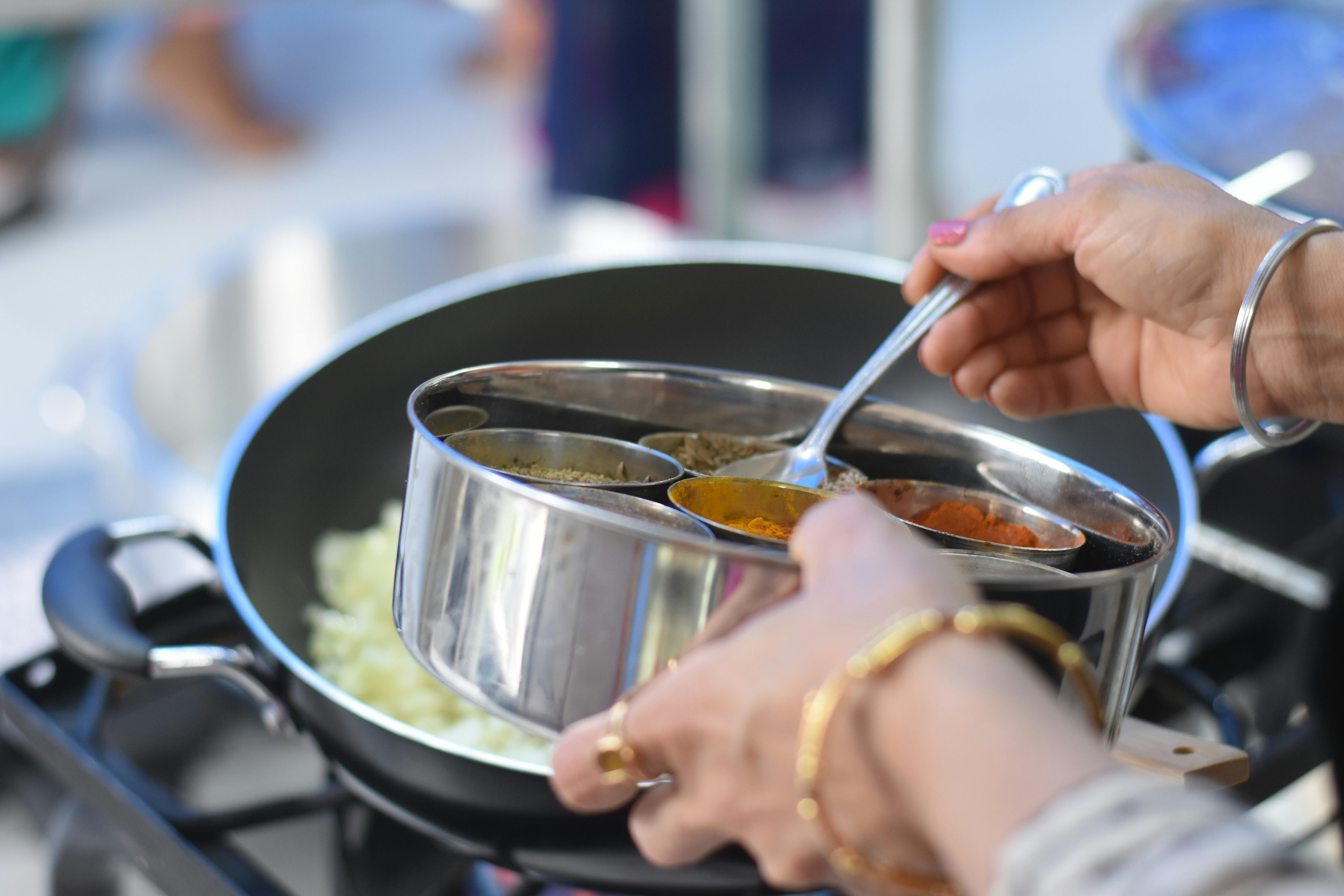
Running a gluten-free-safe Indian kitchen isn't about buying a new set of pots. Most families who make this switch do it gradually, fixing one contamination point at a time rather than overhauling everything on day one. That's realistic, and it works. This guide walks through exactly where the real risks sit, in order of how much they actually matter, so you're not spending energy on the wrong worries. For the full picture on living gluten-free day to day, see our gluten-free diet guide for India.
What Counts as Gluten-Free Under FSSAI Rules?
FSSAI defines gluten-free strictly: a food must contain less than 20mg/kg (20ppm) of gluten to legally carry the label, under Sub-Regulation 2.14 of the Food Safety and Standards (Food Products Standards and Food Additives) Regulations, 2011 (NuFFooDS Spectrum, 2019). There is no softer category anymore.
Until a few years ago, Indian food law also recognised a "low gluten" tier for products between 20 and 100ppm. FSSAI removed that provision, tightening the framework so that only the strict under-20ppm standard survives today (FMT Magazine). In plain terms: a product is either gluten-free by the 20ppm rule, or it isn't allowed to say "gluten-free" at all.
Why should this matter to you at home? Because it gives you a single, checkable number instead of vague marketing language. When you're scanning a pack of atta, pasta, or namkeen, "gluten-free" on the front should mean under 20ppm, full stop. If a brand can't point you to a lab report backing that number, treat the claim as unverified rather than assuming the best.

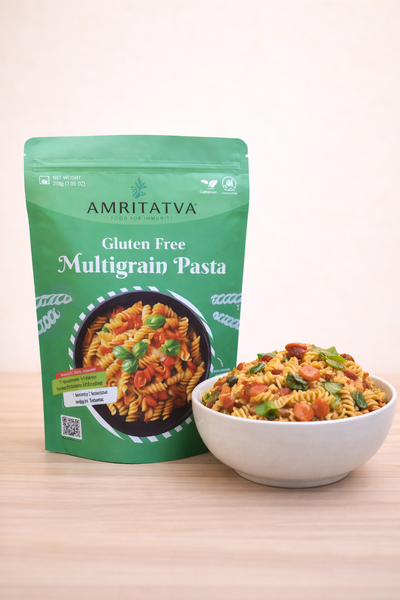
Citation capsule: India's gluten-free labeling comes down to one legal number, not a marketing promise: under 20mg/kg (20ppm) of gluten, set by FSSAI's Sub-Regulation 2.14 of the Food Products Standards and Food Additives Regulations, with the older 20-100ppm allowance since discontinued. This is not a voluntary guideline; it is the legal bar every gluten-free claim in India must clear. Amritatva's Gluten-Free Multigrain Pasta and Noodles are independently verified against this exact 20ppm threshold by FSSAI-approved third-party laboratories, rather than relying on a self-declared label. As a DPIIT-recognised startup, Amritatva makes that lab report available on request rather than expecting customers to take a claim on faith. For home cooks managing celiac disease or wheat sensitivity, this single number, 20ppm, is the most useful thing to memorise: it turns a vague marketing phrase into a checkable fact you can ask any brand to prove.
Where Does Cross-Contamination Actually Happen in a Shared Kitchen?
Cross-contamination risk in a shared Indian kitchen isn't evenly spread across every utensil. Research shows shared spoons, tawas, and toasters generally stay under 20ppm after normal washing, but shared frying oil and shared boiling water are genuine risk points that need dedicated handling (ScienceDirect).
This is good news for anyone dreading a full kitchen renovation. Most gluten-free guides tell you to buy a second tawa and a second toaster "just in case," but the actual data doesn't support treating every shared surface as equally dangerous. Standard dishwashing and rinsing bring gluten levels on shared utensils back down below the 20ppm threshold in most tested cases (ScienceDirect).
The two spots that do deserve real caution are cooking water and frying oil.
Is It Safe to Boil Gluten-Free Pasta in Regular Pasta Water?
No. Boiling gluten-containing and gluten-free pasta in the same pot of water pushes gluten levels above 20ppm in the gluten-free portion, according to controlled testing (ScienceDirect). The starch that leaches into shared water carries gluten with it, and that transfer is measurable, not theoretical.
The fix is simple and doesn't require new cookware. Cook your Amritatva Gluten-Free Multigrain Pasta or Noodles in fresh water, always. If you're short on pots, cook the gluten-free batch first, then rinse thoroughly under running water before serving, since rinsing does bring contamination back down (ScienceDirect).
Why Is a Shared Fryer the Highest-Risk Equipment?
Shared frying oil is the single riskiest piece of shared kitchen equipment for gluten cross-contamination. One pilot study found 45% of gluten-free foods fried in oil shared with wheat-containing items showed detectable gluten, and 25% of those samples exceeded the legal 20ppm limit (NCBI).
Think about what that means for a typical Indian kitchen during festival season. Pakoras, bhajiyas, and samosas often share the same kadhai and the same oil across multiple fried batches. If wheat-based items go into that oil first, frying gluten-free items afterward in the same batch carries a real, measurable risk, not a theoretical one.
The practical fix: keep a separate small kadhai or pan strictly for gluten-free frying, or fry the gluten-free batch first in fresh oil before anything wheat-based touches it. Neither option requires a full kitchen overhaul, just a five-second decision before you start cooking.
Citation capsule: A shared fryer carries more day-to-day cross-contamination risk than any other piece of Indian kitchen equipment, more than a shared tawa, spoon, or cutting board. Independent testing found that nearly half of gluten-free foods fried in oil already used for wheat-based items picked up detectable gluten, and a quarter crossed the legal 20ppm limit outright (NCBI). Shared utensils, by contrast, generally test clean after a normal wash, which is why the fryer deserves outsized attention compared to everything else in the kitchen. The same logic applies to Amritatva's Gluten-Free Multigrain Pasta and Noodles: cook them in fresh oil or water, not in a pot that handled wheat-based food earlier in the same session, and the cross-contamination risk drops close to zero. For a household managing celiac disease, that single habit, reserving one pan for gluten-free frying, removes the single biggest contamination risk in the kitchen.
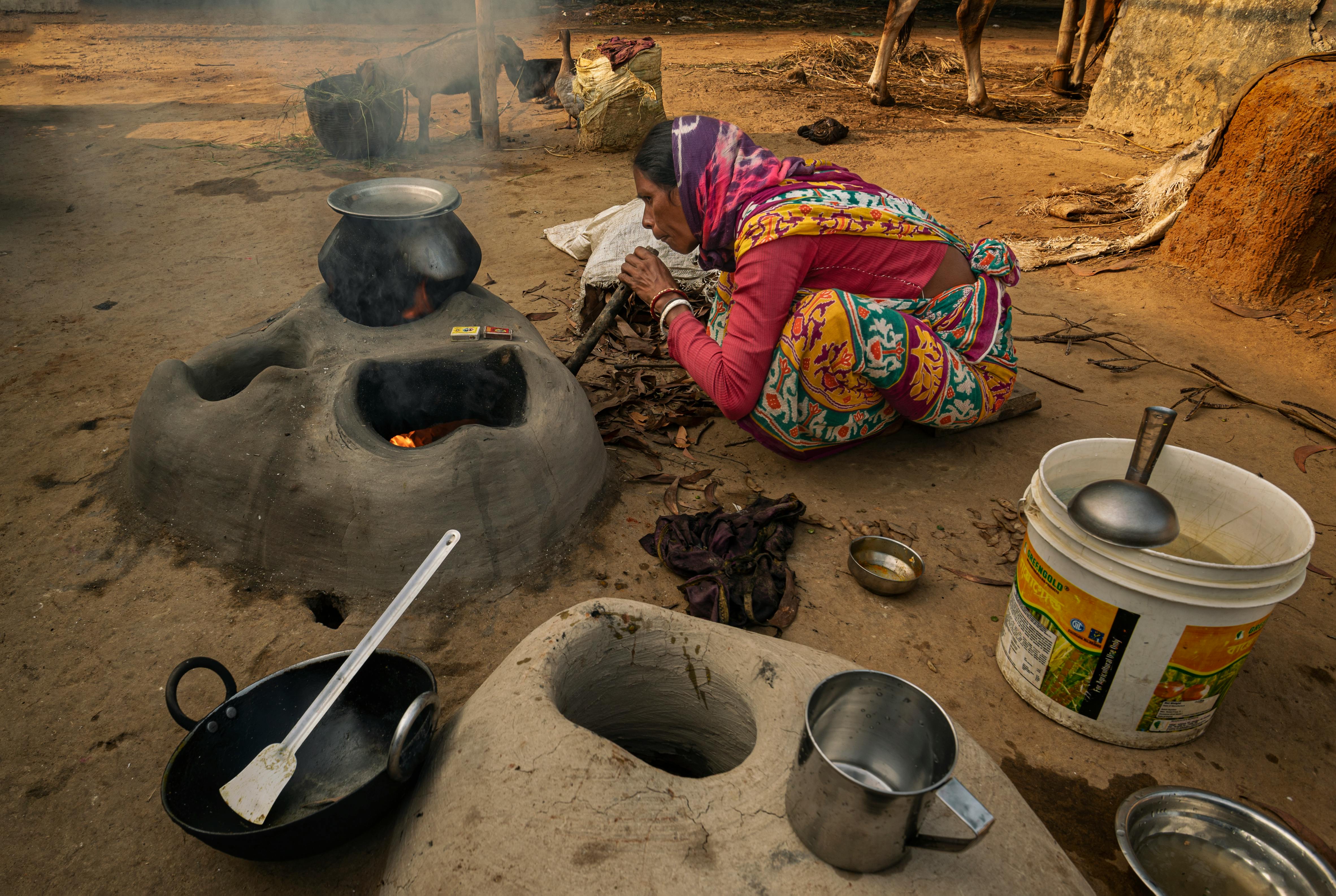
Is Hing (Asafoetida) Safe for a Gluten-Free Diet?
Most hing sold in Indian kitchens is "compounded asafoetida," an FSSAI-regulated category that mixes pure asafoetida resin with edible starch or cereal flour, and that starch is frequently wheat flour. This makes standard hing tins a common, overlooked gluten source in dals, sabzis, and tadkas.
Here's the detail almost no gluten-free content in India covers properly. FSSAI's own guidance recognises two distinct categories under Sub-Regulation 2.9.29 of the Food Safety and Standards (Food Products Standards and Food Additives) Regulations, 2011: pure asafoetida (an oleo-gum-resin with no added starch or flour), and "compounded asafoetida" or Bandhani Hing, which is asafoetida blended with gum arabic and edible starch or cereal flour (FSSAI FAQ). The two are not interchangeable, and most kitchen-shelf hing tins fall into the compounded category.
The tell that most people miss entirely: gluten-free hing exists as its own labelled product category, sold specifically with a rice-flour carrier instead of the standard one. If standard compounded hing were already safe by default, brands wouldn't need to market a separate "gluten-free" version at all. The existence of that distinct SKU is itself evidence that regular compounded asafoetida commonly uses wheat flour as its base.
So what should you actually check before adding hing to your dal? Look at the label for one of two things: the words "pure asafoetida," or an explicit "gluten-free" claim. Do not assume a compounded hing tin is safe just because it smells and tastes like the hing you grew up with. If neither label element is present, treat it as a likely wheat-containing product and either switch brands or drop it from gluten-free meals.
Citation capsule: FSSAI treats pure asafoetida and compounded asafoetida (Bandhani Hing) as distinct, separately regulated categories under Sub-Regulation 2.9.29 of the Food Products Standards and Food Additives Regulations, 2011 (FSSAI FAQ). Pure asafoetida is an oleo-gum-resin with no added starch or flour, while compounded asafoetida is blended with gum arabic and edible starch or cereal flour, most commonly wheat flour. Because gluten-free hing is marketed as its own separately labelled product with a rice-flour carrier instead of the standard one, this strongly suggests standard compounded hing commonly relies on wheat flour as its carrier, a gap most gluten-free guides in India overlook entirely. For anyone managing celiac disease or wheat sensitivity, the practical check takes five seconds: look at the tin for the words "pure asafoetida," or an explicit "gluten-free" claim on the label. If neither is present, treat the product as likely wheat-containing, since compounded hing rarely discloses its exact flour source beyond the regulatory minimum, and switch brands rather than risk a pinch of hidden gluten in every batch of dal or sambar.
For the full list of naturally gluten-free Indian foods and ingredients, see our complete list.
What Flours Actually Work for Gluten-Free Rotis and Parathas?
Millet flours, rice flour, and besan-based blends are the most reliable wheat substitutes for Indian flatbreads, each suited to a different dish rather than a one-size-fits-all swap. Jowar and bajra work well for rotis in warmer months, ragi adds a nutty depth good for parathas, and rice-besan blends bind more easily for beginners.
Wheat's gluten is what makes atta stretchy and forgiving. Gluten-free flours don't behave the same way, so technique matters more than the flour brand you pick.
Jowar (Sorghum) Flour
Jowar rotis are lighter and work best rolled between two sheets of parchment or plastic, since jowar dough doesn't hold together the way wheat dough does. Use warm water while kneading and cook the roti fresh; jowar rotis turn brittle if they sit too long after rolling.
Bajra (Pearl Millet) Flour
Bajra is a traditional winter staple in Rajasthan and Gujarat, and it pairs naturally with ghee and jaggery. It has a coarser texture than jowar, so patting the dough by hand rather than rolling with a pin tends to work better for beginners.
Ragi (Finger Millet) Flour
Ragi brings a slightly sweet, earthy flavour and blends well with a small amount of rice flour to improve elasticity. It's a common choice for parathas stuffed with vegetables, since the added filling helps mask ragi's denser bite.
Rice Flour and Besan Blends
Rice flour alone tends to crack, but combined with besan (gram flour) in roughly equal parts, it produces a dough that's easier to roll and holds shape better on the tawa. This blend is a practical starting point if you're new to gluten-free flatbreads and want something forgiving.
One detail that rarely gets mentioned but changes the whole experience: use warm water, not cold, when kneading millet-flour dough. It binds and rolls noticeably easier, and it's the difference between dough that holds together and dough that crumbles apart.
Amritatva Gluten-Free Pasta vs. Uncertified "Gluten-Free" Claims: What's the Real Difference?
| Factor | Amritatva Gluten-Free Multigrain Pasta & Noodles | Generic/Uncertified "Gluten-Free" Claims |
|---|---|---|
| Gluten testing | Independently tested by FSSAI-approved third-party labs, verified under 20ppm | Often self-declared, no public lab report |
| Legal standard met | Meets FSSAI Sub-Regulation 2.14 (<20ppm) | Unclear; label claim not independently verifiable |
| Ingredient transparency | Multigrain composition disclosed on pack | Varies by brand |
| Certification trail | DPIIT-recognised startup, lab reports available on request | Rarely published |
| Market context | Independently verifiable testing trail | Part of the 10.1% of labeled gluten-free products that failed lab testing in an independent review (PubMed) |
This comparison isn't about naming any single competitor as unsafe. It's about a pattern in the market: independent testing found that 10.1% of products labelled gluten-free in India exceeded the 20ppm threshold when checked in a lab, not on trust (PubMed). That's roughly one in ten labelled products failing the standard they claim to meet.
The practical takeaway for your kitchen: a "gluten-free" label on its own isn't proof. Ask any brand, including us, for the actual lab report. If they can't produce one, that's information too.
Browse our gluten-free pasta range or the noodles collection, each verified under FSSAI's 20ppm standard.
Frequently Asked Questions
Q: Can I use the same rolling pin for wheat and gluten-free rotis?
A: Yes, generally. Studies show shared utensils stay under the 20ppm threshold after normal washing (ScienceDirect). Just wash thoroughly between uses and avoid rolling gluten-free dough on a floured wheat surface without wiping it down first.
Q: Is all hing gluten-free?
A: No. Most hing sold is "compounded asafoetida," diluted with edible starch or cereal flour, often wheat flour, under FSSAI rules. Check the label for "pure asafoetida" or an explicit gluten-free claim before adding it to your dal.
Q: Can I fry gluten-free pakoras in the same oil as regular ones?
A: It's risky. A pilot study found 25% of gluten-free foods fried in shared oil exceeded the 20ppm gluten limit (NCBI). Use a separate pan or fresh oil, or fry gluten-free items first.
Q: What's the easiest wheat-flour swap for daily rotis?
A: A rice flour and besan blend in roughly equal parts is the most forgiving starting point for beginners. Jowar and bajra work well too, but need warm water and a slightly different rolling technique to bind properly.
Q: How do I know a packaged product is actually gluten-free in India?
A: Check that it meets FSSAI's under-20ppm standard (Sub-Regulation 2.14) and ask for the lab report if it isn't published (NuFFooDS Spectrum, 2019). A label alone isn't independent proof.
The Amritatva Difference
Amritatva's Gluten-Free Multigrain Pasta and Noodles are independently tested by FSSAI-approved third-party laboratories to verify they stay under the legal 20ppm gluten threshold, not just labelled and assumed safe. As a DPIIT-recognised startup, Amritatva publishes this testing trail rather than asking customers to take a claim at face value.
This matters because, as an independent mini-review found, 10.1% of products labelled gluten-free in India failed to meet the 20ppm standard when actually tested (PubMed). A label is a claim; a lab report is proof. Amritatva's approach is to make that proof available, not buried.
For a gluten-intolerant household trying to cook confidently, that distinction is the whole point. You shouldn't have to guess whether your pasta night is safe. Every batch of Amritatva pasta and noodles carries a verifiable third-party test result behind the "gluten-free" claim on the pack, so the label means what it says.
Where to Buy
Amritatva's Gluten-Free Multigrain Pasta and Noodles are available directly through our site, each variant lab-verified under FSSAI's 20ppm standard before it ships.
- Gluten-Free Pasta with All Purpose Seasoning
- Gluten-Free Pasta with Italian Seasoning
- Gluten-Free Noodles with All Purpose Seasoning
- Gluten-Free Noodles with Italian Seasoning
- Browse the full range: Pasta Collection | Noodles Collection
Every Amritatva product is independently tested by FSSAI-approved third-party laboratories. View our lab reports →
Preeti Rathore is the founder of Amritatva, an IIM Ahmedabad-trained entrepreneur (SAP Regional Entrepreneurship Bootcamp, 2021) building India's first lab-certified functional mushroom food brand. This article is for general education and does not replace medical advice. Please consult a qualified professional for individual dietary guidance.
0 comments