

Key Takeaways
- Dried oyster mushrooms provide 33 kcal per 100g with 3.3g protein, 2.3g dietary fibre, and beta-glucans that activate macrophages and Natural Killer cells within hours of consumption (USDA FoodData Central; 2024 Frontiers in Nutrition).
- Sun-drying converts ergosterol in oyster mushrooms to Vitamin D2 — providing 10–450 IU per 100g depending on UV exposure. India's 70–90% Vitamin D deficiency rate makes this one of the most practical plant-based Vitamin D sources in the country (PMC, NIH, 2024).
- The soaking water from rehydrated dried oyster mushrooms contains water-soluble beta-glucans, B vitamins, and natural glutamates — it functions as a nutrition-dense broth base and should not be discarded.
- Ergothioneine — the antioxidant the human body cannot synthesise — is found in higher concentrations in oyster mushrooms than any other known food source, and accumulates specifically in tissues under oxidative stress (2024 Bioactive Compounds in Health and Disease).
There are very few ingredients that will fit into every meal you already eat, cost less than most kitchen staples, and deliver measurable nutritional value across multiple systems at once. Dried oyster mushrooms are one of them. They're not a replacement for anything in your kitchen. They're an addition that costs almost nothing in terms of cooking effort and adds beta-glucans for immunity, Vitamin D2, B vitamins, and the highest known concentration of ergothioneine of any food on earth. Here's how they do it, and more practically, how to build them into daily cooking.
The Nutritional Case in Specific Numbers
Per USDA FoodData Central (2024), 100g of dried oyster mushrooms provides: protein 3.3g, dietary fibre 2.3g, 33 kcal, copper 0.24mg (27% DV), riboflavin B2 0.35mg (27% DV), niacin B3 4.96mg (31% DV), pantothenic acid B5 1.29mg (26% DV), selenium 2.6µg, zinc 0.77mg. This micronutrient profile addresses several of the most common nutritional gaps in Indian vegetarian diets simultaneously: copper for iron metabolism and immune cell production, selenium (scarce in Indian soils), zinc for T-cell function. None of these make headlines. But their collective absence in Indian diets lowers immune function, energy metabolism, and cognitive performance in ways that get attributed to stress or ageing rather than diet.
Beta-Glucans: What They Do and Why It Matters
Oyster mushrooms contain pleuran — a specific beta-1,3/1,6-glucan that has been studied in human trials for immune modulation. Beta-glucans bind to Dectin-1 receptors on the surface of macrophages and Natural Killer cells — triggering an immune cascade that prepares the body for pathogen response. A 2024 Frontiers in Nutrition study found that regular mushroom beta-glucan intake drives "trained immunity" — an epigenetic reprogramming that keeps immune cells in heightened readiness for weeks. This is the difference between immunostimulation (a temporary spike) and immune training (a sustained baseline shift). Regular consumption maintains the conditioning — which is why eating dried oyster mushrooms daily matters more than eating a large amount occasionally.
Vitamin D From a Dried Mushroom
Sun-dried oyster mushrooms convert ergosterol to ergocalciferol (Vitamin D2) during UV exposure — the same process that occurs in human skin during sun exposure, happening in the mushroom instead. The yield ranges from 10 IU per 100g (minimal UV exposure during drying) to 450 IU per 100g (extended sun-drying), per the Journal of Food Composition and Analysis and USDA data. For India — where 70–90% of the population is Vitamin D deficient despite being a sun-rich country (PMC, 2024) — this matters. Oven-dried mushrooms don't provide this: the UV conversion only happens in sunlight. The drying method is what determines Vitamin D content.
How to Use Dried Oyster Mushrooms in an Indian Kitchen
The integration points are everywhere in Indian cooking. None of them require changing your cuisine:
- In dal: Add 10–15g of rehydrated oyster mushrooms per pot. They absorb the spice profile completely and are invisible in texture. The soaking water adds depth to the dal base — use it instead of plain water when adding liquid.
- As umami seasoning: Grind dried oyster mushrooms to a fine powder and use 1 tsp in the place of MSG-containing masalas. The natural glutamates provide the same umami effect without synthetic additives.
- In sabzi: Toss rehydrated mushrooms with vegetables in a dry preparation. They cook down to a texture similar to paneer and absorb spices effectively.
- In broths and soups: A 10g addition to any broth provides the full nutritional payload — beta-glucans, B vitamins, Vitamin D, and ergothioneine — at cooking temperature. These compounds are stable at 100°C.
- In morning drinks: 1 tsp of dried oyster mushroom powder stirred into warm water or sattu provides beta-glucans and Vitamin D before breakfast.
Try This Product
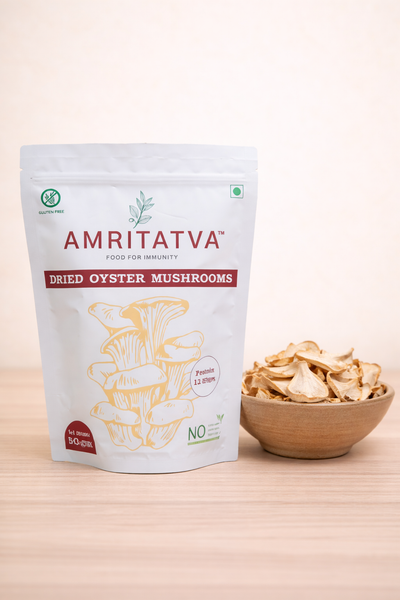
Amritatva Dried Oyster Mushrooms
Sun-dried, hand-sorted. No chemicals. Rehydrates in minutes.
Shop NowFrequently Asked Questions
How do I rehydrate dried oyster mushrooms correctly?
Soak in warm (not boiling) water for 15–20 minutes. Warm water rehydrates faster and extracts more flavour and water-soluble nutrients than cold water. Do not discard the soaking water — strain through a fine sieve and use it as a broth base, in dal, or in any preparation that calls for added liquid. After rehydration, tear or slice mushrooms and use as you would fresh.
How much dried oyster mushroom should I eat daily for immune benefit?
Research on mushroom beta-glucan benefits typically uses doses providing 0.5–3g of beta-glucans per day. Dried oyster mushrooms contain approximately 15–25% beta-glucan by dry weight, meaning 5–10g of dried mushrooms per day (one small handful) delivers a dose in the studied range. That's the equivalent of what fits in a small teacup — enough to add to your daily dal or soup without changing the dish significantly.
Can children and older adults eat dried oyster mushrooms?
Yes. Oyster mushrooms have a well-established safety profile across all age groups and are classified as GRAS (Generally Recognised As Safe) by the US FDA. They're FSSAI-approved as food in India. The beta-glucan and Vitamin D content is particularly relevant for older adults, whose immune function and Vitamin D synthesis decline with age, and for children, where immune system development benefits from consistent beta-glucan exposure.
Do dried oyster mushrooms have any allergen concerns?
Oyster mushrooms (Pleurotus ostreatus) are not a common allergen. Rare cases of mushroom allergy exist but are not specific to oyster mushrooms — they're associated with all fungi. If you've had reactions to other mushrooms, introduce oyster mushrooms cautiously. Otherwise, no specific allergen concern applies to oyster mushrooms in Indian dietary contexts.


0 comments