

Why Traditional Indian Diet Was Scientifically Advanced
Long before nutrition labels and modern dietary trends became part of everyday life, Indian kitchens had developed food traditions built around variety, balance and seasonal ingredients.
Traditional Indian meals were rarely about a single “superfood.” Instead, they often brought together grains, lentils, vegetables, spices, dairy or plant-based foods, nuts and seeds in different combinations.
This way of eating offers an interesting perspective for today's world, where people are increasingly looking for whole foods, plant-forward meals and sustainable eating habits.
The intelligence behind the traditional Indian plate
A traditional Indian meal could include several different food groups at once.
Rice or roti provided carbohydrates. Dal and other pulses contributed protein and fibre. Vegetables added vitamins, minerals and fibre. Nuts and seeds could contribute healthy fats and additional nutrients, while spices added flavour without requiring large amounts of processed sauces or additives.
The exact combination varied from region to region.
A Rajasthani meal was not the same as a South Indian meal, and food traditions in Punjab, Bengal, Maharashtra or the Northeast developed around different climates, crops and cultural practices.
This diversity is one of the strengths of Indian food culture.
Seasonal eating was part of everyday life
Before supermarkets made almost every ingredient available throughout the year, Indian households naturally relied more heavily on seasonal and locally available foods.
Different regions developed their own seasonal recipes using the ingredients that were accessible at that time of year.
Summer might bring cooling drinks, fresh fruits and lighter preparations, while winter meals in many parts of India included ingredients such as millet, sesame, jaggery, nuts and warming spices.
Seasonal eating is not a magic formula for health, but it can encourage variety, local food consumption and greater connection with the ingredients available around us.
Spices were more than just flavour
Indian cuisine is famous for its extensive use of spices.
Turmeric, cumin, coriander, ginger, black pepper, cardamom, cinnamon and many other spices have been used for generations in different regional cuisines.
These ingredients contain naturally occurring compounds that have attracted considerable interest in nutritional and scientific research.
However, it is important to distinguish between a food containing a bioactive compound and a food being a medical treatment.
For example, turmeric contains curcumin and has been widely studied. That does not mean that adding turmeric to a meal should be viewed as a treatment for a medical condition.
Traditional Indian cooking used spices primarily as part of food—and that is still one of the simplest ways to enjoy them today.
Lentils and pulses were everyday nutrition
Dal, chana, rajma, moong, masoor and other pulses have long been staples across India.
They are naturally useful ingredients because they can contribute plant-based protein, fibre, carbohydrates and several micronutrients.
They also pair naturally with grains.
The familiar combination of dal and rice, for example, is more than a cultural comfort food. Together, different plant foods can contribute a broader range of nutrients to a meal.
This is one reason traditional Indian meals can provide a practical foundation for plant-forward eating.
Fermented foods have a long Indian history
Fermentation is another important part of Indian food culture.
Foods and preparations such as idli, dosa batter, dhokla, kanji and various regional fermented foods demonstrate how fermentation has been incorporated into Indian kitchens for generations.
Fermentation can change the flavour, texture and digestibility of foods, and some fermented foods can contain live microorganisms.
But not every fermented food has the same nutritional or probiotic properties. The effect depends on the food, preparation method and storage conditions.
So rather than calling all fermented foods automatically “probiotic,” it is better to appreciate fermentation as an important traditional food technique with interesting nutritional characteristics.
The importance of fibre
Traditional Indian diets often included a wide variety of fibre-containing foods: whole grains, pulses, vegetables, fruits, nuts and seeds.
Today, fibre is an important part of conversations around digestive and overall health.
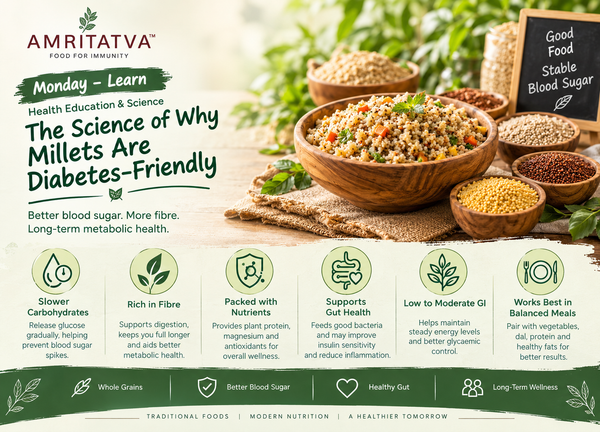
Whole grains and millets, for example, can provide dietary fibre along with carbohydrates and other nutrients.
This is one reason the growing global interest in millets and other traditional grains is particularly interesting for India.
The goal, however, should not be to replace every grain with one “perfect” grain. Variety remains important.
Millet was never just a modern trend
Millets are now appearing in wellness menus and global food conversations, but Indian communities have been cultivating and eating them for centuries.
Bajra, jowar, ragi and other millets have been part of regional food traditions across India.
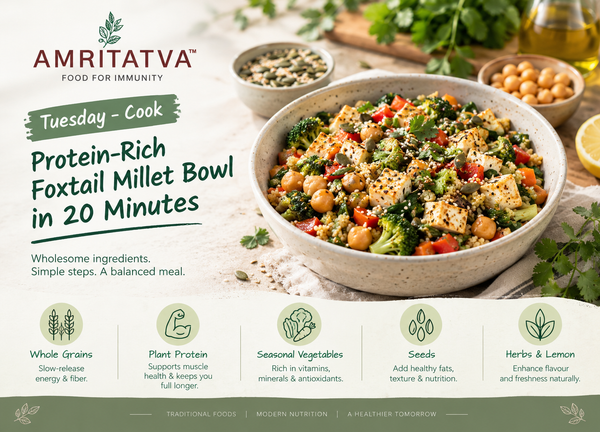
They can be prepared as rotis, porridges, khichdi, dosa-style preparations and many other dishes.
Their renewed popularity is a good example of how traditional foods can find a place in modern diets without losing their cultural identity.
Traditional food was about balance, not restriction
One of the most valuable lessons from Indian food culture is that healthy eating does not have to mean eliminating entire food groups or following complicated rules.
A balanced meal can include:
- Whole or minimally processed grains
- Pulses and legumes
- Vegetables
- Seasonal fruits
- Nuts and seeds
- Traditional spices
- Appropriate sources of fats
- Fermented foods where culturally and nutritionally suitable
The exact proportions can vary according to individual needs, culture and lifestyle.
Traditional food practices also varied considerably across India, so there is no single diet that represents all of Indian cuisine.
What changed with modernization?
As lifestyles became faster, convenience foods and highly processed packaged foods became more common.
This does not mean that everything modern is unhealthy or everything traditional is automatically healthy.
Traditional foods can also be high in sugar, salt or saturated fat depending on the recipe and portion size. Modern foods, meanwhile, can sometimes offer convenience and useful nutrition.
The more useful question is:
How can we combine the best of traditional food knowledge with what we understand about nutrition today?
That approach allows us to preserve food heritage while making informed choices.
Bringing traditional Indian food into modern life
You do not need to completely change your lifestyle to reconnect with traditional Indian food.
Start with small choices.
Choose a millet-based meal occasionally. Add a dal or pulse preparation to your lunch. Include seasonal vegetables. Use traditional spices for flavour. Experiment with fermented foods that are familiar to your region.
You can also explore traditional ingredients in new formats.
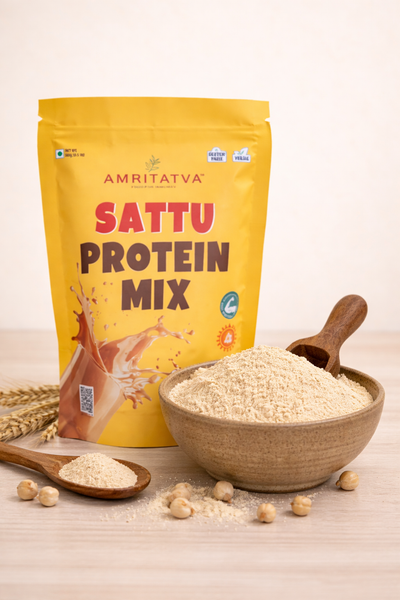
For example, sattu, made traditionally from roasted gram, can be used in drinks, parathas and modern recipes such as smoothies.
At Amritatva, we explore ways to bring traditional Indian ingredients into contemporary food choices while keeping the recipes simple and practical.
Tradition and modern nutrition can work together
The idea that traditional Indian food was “scientifically advanced” should not mean that every traditional practice has already been scientifically proven.
Rather, Indian food culture contains many practices that are interesting to examine through the lens of modern nutrition: dietary diversity, pulses, whole grains, seasonal foods, spices, fermentation and plant-forward meals.
Modern nutrition gives us tools to understand food more precisely.
Traditional food culture gives us recipes, techniques and generations of culinary knowledge.
The opportunity lies in bringing these two perspectives together.
Perhaps progress does not always mean leaving tradition behind.
Sometimes, it means understanding what was valuable in the past and using that knowledge thoughtfully in modern life.
Frequently Asked Questions
Was the traditional Indian diet healthy?
Many traditional Indian diets included whole grains, pulses, vegetables, fruits, spices, nuts and seeds, which can contribute a wide range of nutrients. However, Indian cuisine is extremely diverse, and the nutritional value of a meal depends on its ingredients, preparation method and portion size.
Is Ayurveda the same as modern nutrition science?
No. Ayurveda is a traditional Indian system of health and medicine, while modern nutrition science is based on contemporary scientific research and evidence. They should not be treated as identical systems.
Why are millets becoming popular again?
Millets have been part of Indian food traditions for centuries. Their nutritional profile, versatility and suitability to different growing conditions have contributed to renewed interest in them in India and globally.
Are spices good for health?
Many culinary spices contain naturally occurring compounds that have been studied for their potential biological effects. However, spices should primarily be considered ingredients in a balanced diet, not substitutes for medical treatment.
Are fermented foods always probiotic?
No. Some fermented foods may contain live microorganisms, but fermentation does not automatically mean that every fermented food is a probiotic food. The microorganisms present depend on the food and fermentation process.
What can modern diets learn from traditional Indian food?
Modern diets can draw useful inspiration from traditional Indian practices such as eating a variety of plant foods, using pulses and whole grains, incorporating seasonal ingredients and preparing food with herbs and spices.
A timeless idea for modern food
Indian food culture has always been diverse, regional and constantly evolving.
Its real strength may not lie in any single ingredient or ancient rule, but in the idea of creating meals from a variety of foods, flavours and textures.
As the world becomes increasingly interested in plant-forward eating, whole foods, traditional grains and sustainable food systems, many Indian ingredients are finding new relevance.
At Amritatva, we believe traditional Indian food wisdom can have a meaningful place in modern life—not by romanticizing the past, but by understanding it, respecting it and adapting its best ideas thoughtfully.
Tradition gives us the foundation. Modern knowledge helps us understand it better.
0 comments