

Why Overnight Oats With Sattu Make a Convenient Breakfast
Overnight oats with sattu are a practical make-ahead breakfast that combines oats with roasted gram flour, milk or curd and your favourite toppings. The oats soften in the refrigerator while the sattu adds a familiar roasted flavour and contributes plant-based protein. Together, these ingredients can make a satisfying breakfast without requiring morning cooking.
This recipe is especially useful when your mornings are busy and you want to prepare something in advance. You can adjust the consistency, sweetness and toppings to suit your taste, using ingredients already available in your kitchen.
There is no single breakfast that is perfect for everyone, and overnight oats are not a detox drink or a guaranteed source of lasting energy. Their nutritional value depends on the ingredients and portions you use. The real advantage is simple: a flexible recipe that makes planning breakfast easier.
What Are Overnight Oats With Sattu?
Overnight oats are oats soaked in milk, curd or a suitable plant-based alternative and refrigerated for several hours. Unlike traditional porridge, they are generally prepared without cooking.
Sattu is roasted gram flour commonly used in Indian food traditions, particularly in drinks and savoury preparations. Adding it to overnight oats brings a nutty, roasted taste and changes the texture of the mixture.
The combination brings together two familiar ideas: a make-ahead oat breakfast and an Indian ingredient that can be used in both sweet and savoury recipes.
Depending on the ingredients selected, the bowl can provide carbohydrates, protein, fibre and fat. The amounts vary according to the oats, sattu, dairy or plant-based milk, seeds, nuts and other toppings you choose.
What Makes This Breakfast Useful for Busy Mornings?
The biggest advantage is preparation in advance. Instead of deciding what to make when you wake up, you can assemble the ingredients the previous evening and refrigerate them.
Here are a few practical benefits:
-
Less morning preparation: The base is ready to eat after chilling.
-
Flexible ingredients: You can use dairy milk, an appropriate plant-based alternative or curd.
-
A familiar Indian ingredient: Sattu adds a flavour that can make the recipe feel different from conventional overnight oats.
-
Customisable toppings: Seasonal fruit, nuts, seeds and spices can change the flavour and texture.
-
Portion flexibility: You can adjust the recipe according to your appetite and nutritional needs.
Convenience does not automatically make a meal nutritionally complete. The ingredients and portions still matter. If you need a more substantial breakfast, you can adjust the serving size or add suitable nuts, seeds, yoghurt or other ingredients you enjoy.
How Do You Make Overnight Oats With Sattu?
This simple recipe makes one serving. Adjust the quantities to suit your preferred texture and appetite.
Ingredients
-
½ cup rolled oats
-
1–2 tablespoons sattu
-
½ cup milk or an unsweetened plant-based alternative
-
¼ cup plain curd or yoghurt, optional
-
1 teaspoon chia seeds, optional
-
½ banana or another fruit of your choice
-
A small pinch of cardamom or cinnamon, optional
-
A little jaggery or honey, optional
-
Chopped nuts or seeds for topping, optional
Note: Honey is not vegan. Choose a suitable plant-based sweetener if you prefer a fully vegan version. Sweeteners are optional because ripe fruit may provide enough sweetness for your taste.
Method
Step 1: Combine the dry ingredients.
Add the rolled oats, sattu and optional chia seeds to a clean jar or container. Stir them together to distribute the sattu evenly.
Step 2: Add the liquid.
Pour in the milk or plant-based alternative. Add curd or yoghurt if using it. Stir thoroughly so the sattu does not remain in dry clumps.
Step 3: Adjust the consistency.
If the mixture looks too thick, add a little more liquid. Remember that oats and chia seeds absorb moisture as they stand.
Step 4: Cover and refrigerate.
Close the container and refrigerate for at least 4 hours, preferably overnight. Do not leave a milk- or curd-based mixture on the kitchen counter overnight.
Step 5: Finish and serve.
In the morning, stir the mixture. Add a little more milk if needed, then top with fruit, nuts, seeds or a pinch of cardamom.
Your breakfast is ready to enjoy cold. If you prefer a warm meal, transfer it to a suitable heat-safe container and warm it safely before serving.
How Can You Adjust the Recipe to Your Taste?
The basic recipe is flexible, so you can experiment with familiar flavours without making the preparation complicated.
| Variation | What to add | Flavour profile |
|---|---|---|
| Banana and cardamom | Ripe banana and a pinch of cardamom | Mild and naturally sweet |
| Apple and cinnamon | Chopped apple and cinnamon | Fruity and gently spiced |
| Cocoa and banana | Unsweetened cocoa and banana | Chocolate-inspired |
| Mango and nuts | Fresh mango and chopped nuts | Fruity and creamy |
| Sattu and savoury spices | Sattu, cumin and a suitable savoury base | Earthy and savoury |
For the savoury version, leave out the sweetener and fruit. Use a suitable combination of curd or another base, spices and fresh ingredients. Keep the mixture refrigerated and prepare only what you can store and consume safely.
You can also change the amount of sattu. Start with one tablespoon if you are new to the flavour, then adjust it according to your preference.
How Does Sattu Contribute to the Recipe?
Sattu is made from roasted gram and contributes plant-based protein, carbohydrates and other nutrients. Its exact nutritional contribution depends on the product and quantity used.
Oats provide carbohydrates and fibre, including beta-glucan, a type of soluble fibre. Research on oats and beta-glucan supports their role in helping maintain healthy blood cholesterol when consumed as part of an appropriate overall diet. However, adding oats to one recipe does not guarantee a particular health outcome.
The combination can make a useful breakfast, but it should not be described as a complete nutritional solution. Its overall composition depends on the proportions and additional ingredients.
If you are comparing products, read their ingredient and nutrition labels rather than assuming all sattu, oats or milk alternatives have the same nutritional profile.
Is Overnight Oats With Sattu Suitable for Everyone?
It can suit many people, but the recipe may need adjustments based on individual preferences and dietary requirements.
For a vegan breakfast: Choose a plant-based milk or yoghurt and a vegan sweetener, if needed. Check the ingredient list of every packaged ingredient.
For a gluten-free diet: Choose oats specifically labelled and verified as gluten-free, and check the sattu and other ingredients. Oats can be exposed to gluten-containing grains during processing, so ordinary oats should not automatically be considered suitable for people with coeliac disease. Follow your healthcare professional's advice if you need a strict gluten-free diet.
For people avoiding dairy: Use a suitable plant-based alternative and check its ingredients.
For people monitoring sugar intake: Consider using unsweetened milk or yoghurt, limiting added sweeteners and adjusting fruit portions to individual needs. People managing diabetes should follow their personalised dietary guidance.
For people with food allergies: Check all ingredient labels, including those for nuts, seeds, milk alternatives and packaged mixes. Avoid ingredients that are unsafe for you.
The best recipe is one that suits your taste, dietary requirements and usual eating pattern.
How Should You Store Overnight Oats Safely?
Because this recipe contains ingredients such as milk, curd or plant-based alternatives, safe storage matters.
-
Use a clean jar or food-safe container with a lid.
-
Refrigerate the mixture promptly after preparation.
-
Keep the refrigerator at a safe temperature, ideally 4°C or below.
-
Add fresh fruit just before serving when practical, especially if you prefer a firmer texture.
-
Use clean utensils and avoid leaving the prepared oats at room temperature for extended periods.
-
Follow the storage instructions for any packaged ingredient you use.
For the best texture and quality, prepare a fresh serving for the next morning. Do not rely on smell or appearance alone to determine whether food has been stored safely.
How Does This Recipe Fit Into Mindful Nutrition?
Mindful nutrition is not about finding one perfect food or following a rigid morning routine. It is about making food choices that suit your needs, preferences and circumstances.
Preparing overnight oats with sattu can be one small practical habit. You decide the ingredients, sweetness, portion and toppings. You can also change the recipe according to the season or use a different breakfast when you feel like something else.
If you enjoy traditional Indian foods, sattu offers a familiar ingredient in a different format. If you prefer simple meal preparation, the overnight method reduces the work required in the morning.
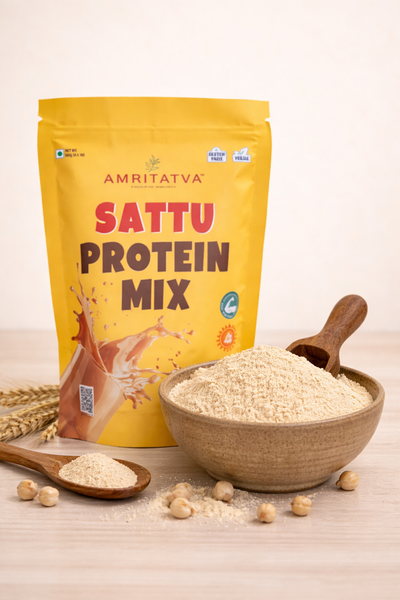
At Amritatva, we believe food should feel approachable and enjoyable. Our sattu-based mixes and other food products reflect our interest in bringing familiar ingredients into modern kitchens. If you explore a packaged mix, check its ingredients and preparation instructions to see whether it suits this recipe and your dietary needs.
A balanced lifestyle is built around your broader eating pattern, not one special breakfast.
Frequently Asked Questions
1. Can I add sattu directly to overnight oats?
Yes. You can stir sattu directly into the oats and liquid before refrigerating. Mix thoroughly to avoid dry clumps, and add a little extra liquid if the mixture becomes too thick. Start with one tablespoon if you are unfamiliar with the roasted flavour, then adjust the amount to suit your taste.
2. Do overnight oats with sattu need to be cooked?
No. Rolled oats can soften in liquid during refrigeration, so cooking is generally unnecessary for this recipe. Use oats suitable for the preparation, follow the package instructions and refrigerate the mixture safely. If you prefer a warm breakfast, you can heat the prepared mixture in a suitable container before serving.
3. Can I make overnight oats with sattu without milk?
Yes. You can use an appropriate plant-based milk or another suitable liquid. Plain plant-based yoghurt can also be used for a thicker texture. The flavour and nutritional profile will change according to the alternative selected, so check labels if you have allergies or specific dietary requirements.
4. Are overnight oats with sattu a high-protein breakfast?
The recipe provides protein from ingredients such as sattu, oats, milk or yoghurt, but the total amount depends on the quantities and products used. Do not assume a serving meets a particular protein target without calculating it from reliable nutrition information. If you need a specific protein intake, a qualified dietitian can help you plan portions suited to your needs.
5. Can people following a gluten-free diet eat overnight oats with sattu?
They should check every ingredient carefully. Oats can be exposed to gluten during harvesting or processing, so people with coeliac disease should choose oats specifically verified as gluten-free and follow their healthcare professional's guidance. Also check the sattu, flavourings and any packaged toppings for suitable ingredient and cross-contact information.
6. How long can I keep overnight oats in the refrigerator?
For this recipe, preparing it the evening before and eating it the following morning is a convenient approach. Keep it covered and refrigerated at 4°C or below, and follow safe food-storage guidance. Storage life can vary with the ingredients and handling, so do not leave the mixture at room temperature overnight or rely only on its smell or appearance.
Make Tomorrow's Breakfast a Little Simpler
Overnight oats with sattu bring together a convenient preparation method and a familiar Indian ingredient. With oats, your preferred milk or curd, a little sattu and toppings you enjoy, you can prepare a flexible breakfast in advance.
Start with the basic recipe, adjust the texture and sweetness, and use ingredients that fit your dietary needs. There is no need to follow a complicated routine or expect one meal to transform your health.
At Amritatva, we believe practical food choices begin with understanding ingredients and finding enjoyable ways to use them. Sometimes, a little preparation the night before is all you need to make the morning feel easier.
0 comments