

Japan has long attracted global attention for its food culture and high life expectancy. Traditional Japanese meals often feature a variety of foods, modest portions, vegetables, rice, soy-based ingredients, mushrooms, seaweed and fish. Eating habits also place importance on presentation, seasonal ingredients and enjoying meals thoughtfully.
One concept that has travelled beyond Japan is hara hachi bu, commonly associated with Okinawan food culture. It encourages people to stop eating before feeling completely full. Meanwhile, ingredients such as miso, natto and shiitake mushrooms have become familiar to food enthusiasts around the world.
But there is no single Japanese food secret responsible for longevity. Healthy ageing is influenced by several factors, including genetics, physical activity, social connections, healthcare and the wider environment. What we can learn from Japan is how everyday food habits can encourage balance, variety and consistency.
Why is Japanese food culture attracting global attention?
Japanese food culture is often discussed in conversations about healthy ageing and sustainable eating. One reason is its traditional emphasis on combining different food groups rather than relying on one food or nutrient.
The Japanese Food Guide Spinning Top, developed by Japan’s health and agriculture authorities, illustrates a balanced daily eating pattern through staple dishes, vegetable dishes, protein-containing main dishes, milk products and fruits. It also highlights water or tea, regular physical activity and moderation with snacks and sweetened beverages.
This is a useful reminder that a balanced diet is built through the overall pattern of meals—not through a single superfood.
Traditional Japanese food culture also values:
-
A variety of ingredients and dishes.
-
Seasonal foods and local produce.
-
Regular meal routines.
-
Thoughtful presentation and enjoyment of food.
-
Appropriate portions and moderation.
-
A combination of staple foods, vegetables and main dishes.
These ideas can be useful in many countries, even when the actual ingredients differ.
What is the meaning of hara hachi bu?
Hara hachi bu is a phrase associated with Okinawan culture that is commonly interpreted as eating until approximately 80% full.
Rather than treating it as a strict calorie-control rule, it can be understood as a mindful eating principle. It encourages people to pay attention to hunger, eating speed and feelings of fullness.
Here are a few practical ways to apply the idea:
-
Eat without rushing whenever possible.
-
Take a moment between servings to notice whether you are still hungry.
-
Avoid eating automatically while distracted by screens.
-
Serve a comfortable portion and take more if you remain hungry.
-
Pay attention to your body's fullness cues without forcing yourself to stop at an arbitrary percentage.
The idea is awareness, not restriction. Food requirements differ according to age, activity, health and individual needs.
Which foods are common in traditional Japanese meals?
Traditional Japanese eating patterns include a wide range of ingredients. The exact combination varies by region, household, season and individual preference.
| Food or ingredient | How it is used |
|---|---|
| Rice | A common staple served with meals |
| Vegetables | Served cooked, raw, pickled or in soups |
| Soy foods | Tofu, miso, natto and other soybean preparations |
| Mushrooms | Shiitake, enoki and other varieties in soups and cooked dishes |
| Seaweed | Used in soups, salads and side dishes |
| Fish | Commonly included in many traditional meal patterns |
| Green tea | A familiar everyday beverage |
The important lesson is the variety of foods and preparations—not the need to copy every ingredient or meal exactly.
Why are fermented foods such as miso and natto popular?
Fermented foods are an important part of many traditional Japanese meals.
Two familiar examples are:
Miso: A fermented soybean paste used in soups, marinades, dressings and sauces. It adds a savoury, umami flavour.
Natto: Fermented soybeans with a distinctive sticky texture and strong flavour, often served with rice.
Fermentation changes the characteristics of food, including its flavour, texture and composition. Some fermented foods contain live microorganisms, depending on how they are produced and handled.
However, not every fermented food contains live cultures when eaten, and fermented foods should not automatically be treated as medicines or guaranteed sources of probiotic benefits.
One practical point is sodium. Miso, soy sauce and pickled foods can contribute significant salt to a meal. Choosing lower-sodium versions and using seasonings thoughtfully can help keep overall salt intake in check.
What role do mushrooms play in Japanese food culture?
Mushrooms are valued in Japanese cooking for their distinctive flavours and textures. Shiitake mushrooms, in particular, are familiar in soups, broths, rice dishes and simmered preparations.
Shiitake is appreciated for its deep umami character. This makes it useful in dishes where cooks want a rich savoury flavour without relying entirely on meat-based ingredients.
Mushrooms also contribute dietary fibre and naturally occurring compounds such as beta-glucans. Their nutritional composition varies by species and preparation, so it is best to enjoy them as one part of a varied diet.
How can oyster mushrooms fit into this food trend?
Oyster mushrooms are not a defining ingredient of traditional Japanese cuisine in the same way that shiitake is widely recognised. However, their mild flavour and soft, savoury texture make them easy to incorporate into many Asian-inspired and Indian dishes.
They can be used in:
-
Vegetable stir-fries.
-
Rice bowls and pulao.
-
Broths and soups.
-
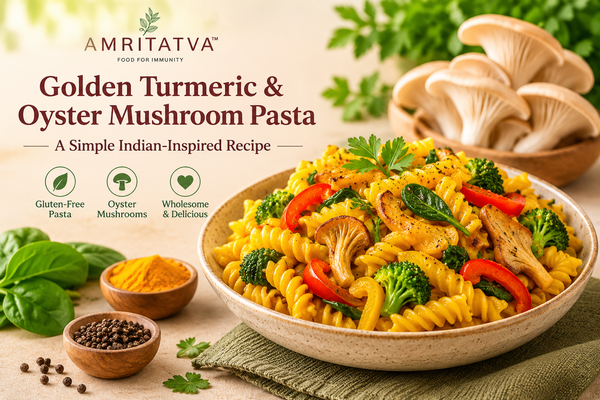
Noodles and pasta.
-
Mushroom and vegetable curries.
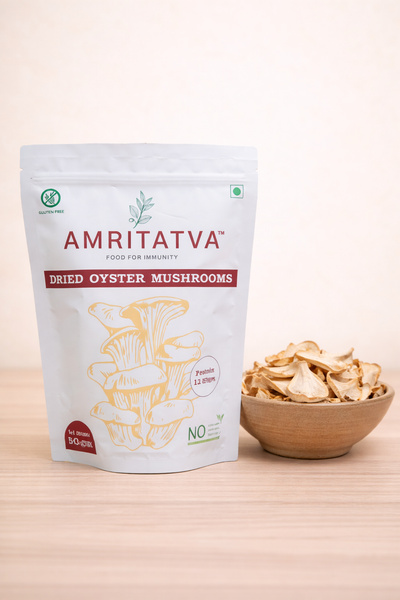
At Amritatva, our dried oyster and shiitake mushrooms offer convenient ways to bring these ingredients into everyday cooking.
Explore:
What can Indian kitchens learn from Japan?
India already has a rich food culture built around regional ingredients, seasonal produce, pulses, grains, vegetables, spices and traditional cooking methods.
Instead of replacing Indian food with Japanese meals, we can adapt a few useful principles.
| Japanese food principle | An Indian kitchen adaptation |
|---|---|
| Variety across meals | Combine dal, roti or rice, vegetables and a suitable protein source |
| Seasonal ingredients | Choose locally available seasonal vegetables and fruits |
| Mindful portions | Serve comfortable portions and eat without rushing |
| Fermented foods | Include suitable traditional options such as idli, dosa or fermented batters |
| Mushroom-based dishes | Add oyster or shiitake mushrooms to soups, pulao and curries |
| Balanced meal combinations | Include staple grains, vegetables and protein-rich foods |
For example, a simple Indian meal could include dal, seasonal sabzi, rice or roti, a salad and a mushroom side dish. It does not need imported ingredients or complicated recipes to offer variety.
Is the Japanese diet perfect?
No traditional food pattern is perfect, and Japanese eating habits have their own nutritional considerations.
Some traditional foods, including miso, soy sauce, pickles and salted fish, can contain substantial amounts of sodium. Excessive sodium intake is associated with higher blood pressure and cardiovascular risk.
Modern Japanese diets also vary considerably from traditional patterns. Eating habits have changed with urbanisation, work routines, food availability and global influences.
This is why it is more useful to understand the strengths and limitations of a food culture than to label an entire country's diet as universally healthy.
Does following Japanese eating habits guarantee a longer life?
No. Japan's high life expectancy cannot be attributed to a single diet, ingredient or eating philosophy.
Research has explored associations between Japanese dietary patterns and health outcomes, including mortality and functional health. However, observational findings do not prove that one particular food or habit directly causes longer life.
Healthy ageing is influenced by a combination of factors:
-
Overall dietary quality and food variety.
-
Regular physical activity.
-
Adequate sleep.
-
Social relationships and community support.
-
Access to healthcare.
-
Genetics and living conditions.
The most useful takeaway is to build sustainable habits that work in your own environment.
How does Amritatva connect global food ideas with Indian kitchens?
At Amritatva, we believe useful food ideas should be practical to adopt. Global food traditions can inspire us, but everyday meals should still reflect local tastes, ingredients and cooking habits.
Our dried oyster and shiitake mushrooms can be added to familiar Indian preparations such as dal, pulao, soups, curries and stir-fries. They offer savoury flavour, texture and another ingredient choice for people who enjoy experimenting with plant-based cooking.
You do not need to follow another country's diet exactly. You can take inspiration from its food culture and build a balanced approach around ingredients that are familiar and accessible.
Explore the range at www.amritatva.com.
Frequently Asked Questions
1. What is the traditional Japanese diet?
The traditional Japanese diet is a varied eating pattern that commonly includes rice, vegetables, soy foods, fish, seaweed, mushrooms and fermented foods. Meals often combine staple dishes, main dishes and side dishes. Patterns vary across regions and households, and modern Japanese eating habits are not identical to historical traditions.
2. What does hara hachi bu mean?
Hara hachi bu is an Okinawan expression commonly understood as eating until approximately 80% full. It is associated with mindful eating and awareness of fullness. It should not be treated as a strict dietary rule or a requirement to undereat. Individual food needs vary.
3. Are fermented Japanese foods good for gut health?
Foods such as miso and natto are fermented and may contain microorganisms, depending on how they are prepared and processed. Fermented foods can add variety to a diet, but their effects differ by food and individual. They are not guaranteed treatments for digestive conditions.
4. Why are shiitake mushrooms popular in Japanese cooking?
Shiitake mushrooms have a distinctive savoury umami flavour and are commonly used in Japanese soups, broths, rice dishes and simmered foods. They can also be added to stir-fries and vegetable preparations. Their flavour makes them useful in both plant-based and mixed dishes.
5. Can Indians follow Japanese eating habits?
Yes, many broad principles can be adapted without copying Japanese meals. Indian households can focus on seasonal vegetables, food variety, balanced meal combinations, mindful portions and traditional fermented preparations. Local ingredients such as pulses, millets, rice and mushrooms can fit naturally into this approach.
6. Are oyster mushrooms part of traditional Japanese food culture?
Shiitake is more widely recognised as a traditional Japanese cooking ingredient. Oyster mushrooms are used in many cuisines and can be incorporated into Japanese-inspired dishes, but they should not be presented as a defining feature of the traditional Japanese diet. They are also versatile in Indian soups, curries, rice dishes and stir-fries.
A final thought
The most valuable lesson from Japan's food culture is not a secret ingredient or a strict diet. It is the importance of variety, thoughtful portions, seasonal foods and consistency.
India has its own rich food traditions. By combining the best of familiar local ingredients with useful ideas from other cultures, we can make everyday meals more interesting, balanced and enjoyable.
At Amritatva, we believe global food inspiration begins at home—with simple ingredients, mindful choices and food that people genuinely enjoy.



0 comments