

“Clean label” has become one of the most talked-about ideas in the modern food industry, but the term does not have one universally accepted definition. Research describes clean label as a consumer-driven concept that can involve simpler ingredient lists, recognisable ingredients, fewer artificial additives, production methods and greater transparency.
That distinction matters because clean label does not automatically mean healthy, natural, organic or minimally processed. A shorter ingredient list alone cannot tell you whether a food is nutritionally appropriate for your needs.
What is changing is the way people look at packaged food. Consumers increasingly want to understand what they are buying, how it is made and what the ingredients actually mean. For Indian households, this can turn “clean label” from a marketing phrase into something more useful: reading the label, understanding the product and making an informed choice.
What exactly is “clean label”?
There is no single regulatory definition of “clean label” that applies universally.
A review of clean-label consumer behaviour found that the concept can mean different things to different consumers. It may involve a simpler ingredient list, recognisable ingredients, fewer artificial additives, perceived naturalness, production methods or information on the back of the package.
That means two people can look at the same product and have different ideas about whether it qualifies as “clean label.”
For consumers, the useful lesson is:
Don't judge a product only by the words on the front of the pack. Read what is actually inside.
Why are consumers paying more attention to ingredient lists?
Packaged food has become a regular part of modern food environments, particularly as urban lifestyles and convenience foods become more common.
WHO's 2026 healthy-diet guidance emphasises that healthy diets are based on adequacy, balance, moderation and diversity, with a variety of foods including vegetables, fruits, pulses, whole grains and suitable protein sources.
This makes label awareness useful—but it should be part of a bigger picture.
For example, a consumer may want to know:
- What are the main ingredients?
- Is there an ingredient I need to avoid?
- How much added sugar or sodium does it contain?
- What is the serving size?
- Does the product suit my dietary requirements?
- Is the “free-from” claim relevant to me?
- Does the nutrition information make sense for the way I plan to eat it?
These questions are more useful than simply asking whether a package “looks clean.”
Does a short ingredient list mean a food is healthier?
Not necessarily.
A short ingredient list can make a product easier to understand, but ingredient-list length alone does not determine nutritional quality.
For example, a product can have only a few ingredients but still be high in salt, sugar or saturated fat. Conversely, some nutritionally useful foods may require several ingredients because of fortification, preservation, flavouring or formulation.
WHO recommends considering the overall dietary pattern, including the amount and variety of vegetables, fruits, pulses, whole grains and other foods—not judging nutrition from one characteristic of a packaged product.
So the better question is:
“What does this product contribute to my overall diet?”
Is clean label the same as “natural”?
No.
This is one of the most important distinctions.
“Clean label” is largely a consumer and industry concept, while terms such as “natural” have specific regulatory considerations in India.
FSSAI's advertising and claims regulations place conditions on the use of terms such as “natural,” and composite foods cannot simply be described as “natural” without meeting the applicable requirements. The regulations also restrict expressions such as “natural goodness” and “naturally better.”
So brands should not treat:
clean label = natural = healthy = better
as four interchangeable terms.
They are not.
What should you actually look for on a food label?
Instead of searching for a magic word such as “clean,” look at several parts of the package.
1. Ingredient list
Ingredients are generally listed in descending order by weight at the time of incorporation, subject to applicable regulations.
Look at the first few ingredients. They tell you what makes up a significant part of the product.
2. Nutrition information
Check serving size, calories, protein, carbohydrate, total fat, sugars and sodium as relevant to the product.
3. Allergen information
If you have a food allergy or medically diagnosed food intolerance, check the allergen declaration and applicable cross-contact information carefully.
4. “Free-from” claims
Terms such as gluten-free, dairy-free or other “free-from” claims should be considered according to your actual dietary requirements and the applicable regulatory standards.
5. Date and storage information
A product's safety is not determined only by its ingredient list. Check the date, storage instructions and package condition.
6. Claims on the front
Words such as “natural,” “healthy,” “traditional,” “real” or “clean” should not replace reading the actual label.
How is clean label different from minimally processed food?
They are related ideas, but they are not the same thing.
A minimally processed food generally undergoes relatively limited processing while remaining close to its original form.
Clean label, on the other hand, describes a broader consumer-facing idea about ingredients, processing and transparency.
| Term | What it generally refers to | What it does NOT automatically mean |
|---|---|---|
| Clean label | Transparency, ingredient simplicity or consumer expectations | Automatically healthy |
| Minimally processed | Limited processing of a food | Automatically nutritionally complete |
| Natural | A regulated/defined claim depending on the product and jurisdiction | Synonym for clean label |
| Organic | Production under applicable organic standards | Automatically low in sugar or calories |
| Gluten-free | Meets applicable gluten-free requirements | Automatically healthier |
| Vegan | Contains no animal-derived ingredients under the relevant definition | Automatically nutritionally superior |
This is why label literacy matters more than simply following food trends.
What is happening globally with processed foods?
The clean-label conversation is also happening alongside a broader global discussion about highly processed foods.
WHO reported in 2026 that highly processed foods are becoming increasingly prominent in food environments and that dietary patterns in many settings are shifting toward foods higher in energy, free sugars, unhealthy fats and sodium.
However, processed does not automatically mean unhealthy.
Cooking, freezing, drying, fermenting, milling and other forms of processing can serve practical purposes and can be part of nutritious food systems.
The more useful question is:
What kind of processing has taken place, what is in the final product, and how does it fit into the overall diet?
Why does transparency matter for food brands?
As consumers become more interested in ingredients, brands have a responsibility to make information easier to understand.
That means:
- Clear ingredient lists
- Accurate nutrition information
- Appropriate food claims
- Honest product descriptions
- Clear allergen information
- Traceable sourcing where claims are made
- No exaggerated health promises
Transparency is not simply about making a package look simple.
It is about giving consumers information they can actually use.
For a food company, that can mean being willing to explain not only what is in a product—but also what a product does not claim to do.
How can Indian consumers use the clean-label idea practically?
You don't need to completely change your pantry.
Start with five simple habits.
1. Read before you buy
Spend a few seconds looking at the ingredient list and nutrition panel.
2. Don't fear unfamiliar words automatically
An unfamiliar ingredient is not automatically harmful. If you don't recognise something, look up what it is and why it is used rather than judging it purely by its name.
3. Compare similar products
If you are choosing between two pasta, noodle, snack or breakfast products, compare their ingredients, nutrition information, serving size and price.
4. Think about the whole meal
A packaged food can be part of a balanced meal when combined appropriately with vegetables, pulses, fruits or other foods.
5. Match the product to your needs
For someone who needs gluten-free food, the relevant question may be whether the product meets the applicable gluten-free requirements—not whether the label simply looks “clean.”
What does clean label mean for Amritatva?
For Amritatva, the useful part of the clean-label conversation is transparency.
Our approach is to communicate what goes into our products rather than relying only on broad wellness language.
For example, when discussing Amritatva products, the useful information is specific: the ingredients, dietary positioning, preparation method, relevant testing and applicable food claims.
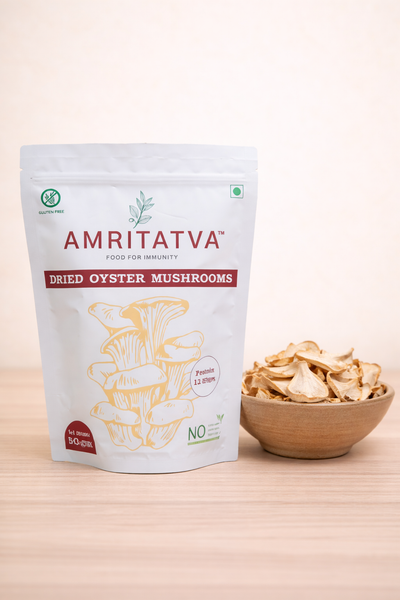
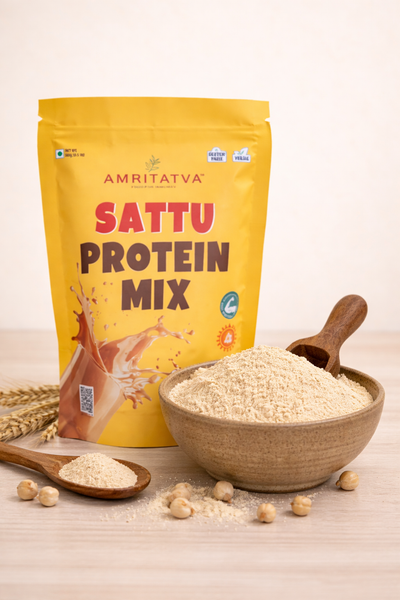
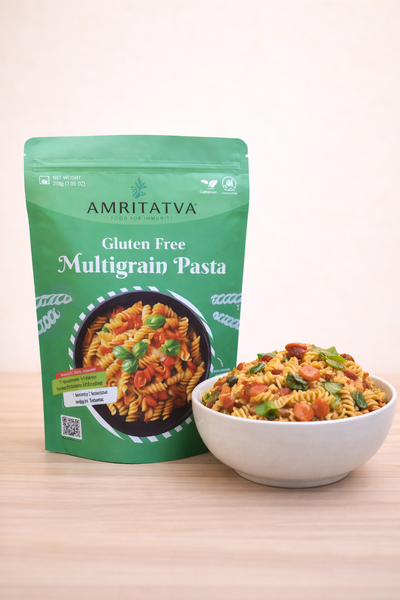
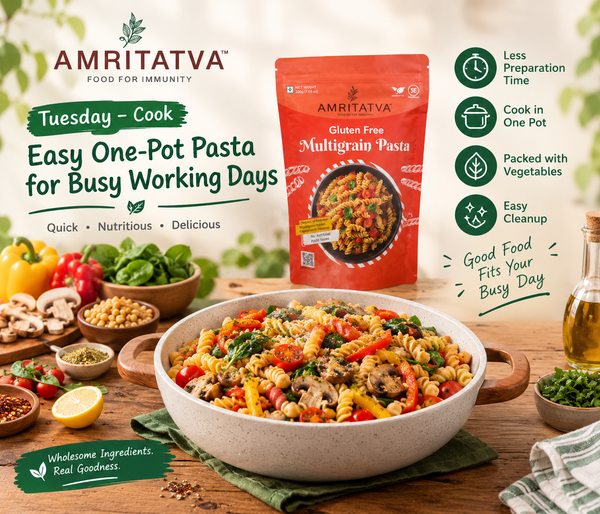
Our products include gluten-free pasta and noodles, oyster mushroom products, sattu-based products and seasonings. Each product should be evaluated based on its actual formulation and label rather than assuming that one broad term describes the entire range.
That is also the principle we want to bring to food education:
Don't ask consumers to trust a label blindly. Give them enough information to understand it.
Is the clean-label movement really the “future of food”?
It may be tempting to describe clean label as the future of food, but the reality is broader.
Food consumers are simultaneously looking for:
- Convenience
- Affordability
- Taste
- Nutrition
- Food safety
- Dietary suitability
- Sustainability
- Ingredient transparency
These priorities can sometimes compete with one another.
The 2026 UN State of Food Security and Nutrition in the World also highlights affordability as a major part of access to healthy diets.
So the future of food is unlikely to be defined by one label trend alone.
A more useful direction is better information, better formulation, appropriate claims and food choices that fit people's real lives.
What should consumers remember about clean label?
The clean-label movement has created a useful conversation about transparency—but the phrase itself should not become another marketing shortcut.
Instead of asking:
“Is this clean label?”
Try asking:
“What is in it?”
“What does the nutrition panel tell me?”
“Does it meet my dietary needs?”
“How does it fit into my overall diet?”
That shift—from trusting a buzzword to understanding the label—is where food transparency becomes genuinely useful.
FAQs
1. What does clean label mean in food?
Clean label does not have one universally accepted definition. It generally describes consumer and industry expectations around simpler, more recognisable ingredients, fewer artificial additives and greater transparency. However, the term does not automatically mean that a product is healthier, natural, organic or minimally processed.
2. Is clean-label food healthier?
Not automatically. “Clean label” is not a nutritional standard. A product needs to be assessed using its ingredient list, nutrition information, serving size, preparation and place in the overall diet. A shorter or more familiar ingredient list can improve understanding, but it cannot by itself establish nutritional quality.
3. Does clean label mean no preservatives?
Not necessarily. Some consumers associate clean label with fewer or no artificial preservatives, but there is no single universal definition requiring all clean-label foods to be preservative-free. Preservatives can serve food-safety or shelf-life purposes. The useful approach is to read the actual ingredient list and understand the purpose of ingredients.
4. Is clean label the same as natural food?
No. “Natural” and “clean label” should not be treated as synonyms. In India, FSSAI has specific conditions governing the use of terms such as “natural” in food labelling and advertising.
5. How can I identify a clean-label product?
There is no single checklist that scientifically certifies a product as “clean label.” Instead, read the ingredient list, nutrition information, allergen declaration, applicable claims, storage information and other mandatory label details. Compare similar products and consider whether the product fits your dietary requirements and overall eating pattern.
6. Are all processed foods unhealthy?
No. Processing covers a very broad range of techniques, including cooking, drying, freezing, fermenting and other methods. Some processed foods can be useful parts of a nutritious diet. The more relevant questions are what processing has occurred, what the final product contains and how frequently it is consumed. WHO recommends a varied diet based largely on nutritious foods while limiting foods high in unhealthy fats, free sugars and sodium.
The clean-label movement has brought an important question into the food conversation:
Do we really understand what we are buying?
For consumers, the answer starts with reading beyond the front of the pack.
For brands, it starts with making that information clear.
And perhaps the most meaningful version of “clean label” is not fewer words on a label—but more honesty behind them.
0 comments