

A busy working day does not always leave time for elaborate cooking, but a homemade meal does not have to be complicated. This easy one-pot pasta brings together pasta, vegetables, mushrooms and simple seasoning in one pot, making it practical for lunch or dinner when time is limited.
The idea is simple: instead of cooking pasta separately and preparing another sauce or vegetable dish, you can build the meal in one pan or pot. Adding vegetables and a protein-rich ingredient such as chickpeas can make the meal more varied and satisfying.
For Indian households, this kind of recipe can also be adapted to what is already available in the kitchen. The goal is not to label one dish as a “perfect healthy meal,” but to make everyday home cooking easier, more balanced and more realistic for busy schedules. WHO similarly recommends a varied diet that includes vegetables, fruits, legumes and whole grains.
Why is a one-pot pasta useful on a busy working day?
The biggest advantage is simplicity.
You can prepare the vegetables, pasta and seasoning together rather than managing several pans at once. That means less preparation, fewer utensils and easier cleanup.
For someone leaving for work in the morning or returning home after a long day, reducing the number of cooking steps can make homemade food more practical.
And convenience matters. If a meal is too complicated to prepare regularly, it is less likely to become part of a sustainable routine.
A one-pot recipe does not need to be nutritionally complicated either. Start with your pasta, add vegetables, include a suitable protein source if you want one, and use herbs and spices for flavour.
What ingredients do you need?
For 2–3 servings
- 200 g Amritatva gluten-free pasta
- 1 tablespoon cooking oil
- 4–5 garlic cloves, finely chopped
- 1 small onion, sliced
- 1 small capsicum, chopped
- 1 medium tomato, chopped
- 1 cup mushrooms, sliced
- 1 cup spinach
- ½–1 cup cooked chickpeas, optional
- Approximately 500–600 ml water or unsalted vegetable stock
- 1–2 teaspoons Amritatva All Purpose Seasoning
- Black pepper, to taste
- Salt, as needed
- 1 teaspoon lemon juice
- Fresh coriander or basil, optional
Note: The amount of cooking liquid can vary depending on the pasta and the pot. Start with enough to cook the pasta and add a little more if required.
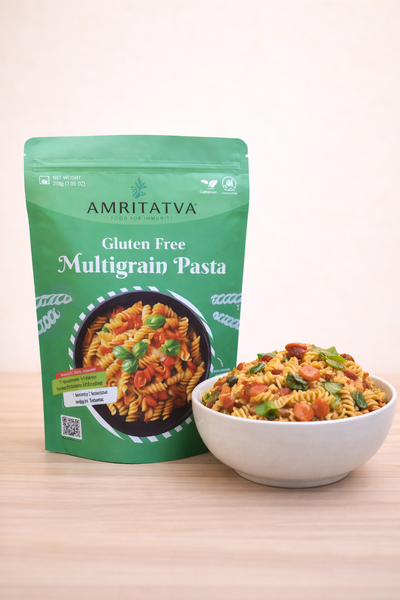
Amritatva's current gluten-free pasta range is millet-based and includes pasta combinations with dried oyster mushroom chunks and seasoning. The current product information describes the pasta as gluten-free and made without wheat, maida or refined flour.
How do you make this one-pot pasta?
Step 1: Start with the vegetables
Heat the oil in a wide pot or deep pan.
Add the chopped garlic and onion. Cook for a couple of minutes until the onion softens.
Add capsicum, tomato and mushrooms.
Cook for another 3–4 minutes.
You do not need to cook the vegetables completely at this stage because they will continue cooking with the pasta.
Step 2: Add the pasta and liquid
Add the pasta directly to the pot.
Pour in approximately 500 ml of water or unsalted vegetable stock.
Add the All Purpose Seasoning and a little black pepper.
Bring everything to a gentle boil.
Step 3: Let everything cook together
Reduce the heat and cook while stirring occasionally.
Because the pasta is cooking directly in the same pot, keep an eye on the liquid and texture. If the pot becomes dry before the pasta is cooked, add a little more water.
The exact cooking time can vary according to the pasta type and heat.
Step 4: Add greens and chickpeas
When the pasta is nearly cooked, add spinach and cooked chickpeas if using.
Stir everything together and cook for another 1–2 minutes.
The chickpeas add another food group to the meal, while spinach adds another vegetable component.
Step 5: Finish with lemon and herbs
Switch off the heat.
Add a squeeze of lemon and some fresh coriander or basil.
Taste and adjust the seasoning if necessary.
That's it.
One pot. One meal. Much less cleanup.
How can you make one-pot pasta more balanced?
Pasta by itself is mainly a carbohydrate-containing food. The rest of the plate—or, in this case, the rest of the pot—can help make the meal more varied.
Think about adding three things:
| Component | Easy additions |
|---|---|
| Pasta | Millet-based or another suitable pasta |
| Vegetables | Capsicum, spinach, tomato, broccoli, zucchini, mushrooms |
| Protein-rich ingredient | Chickpeas, beans, tofu or another suitable option |
| Flavour | Herbs, spices, garlic, lemon |
| Healthy fat | A measured amount of cooking oil, nuts or seeds if appropriate |
This approach is more useful than simply calling a recipe “clean.”
WHO's healthy-diet guidance focuses on variety and balance, including vegetables, fruits, legumes, nuts and whole grains.
Can you make this pasta with Indian kitchen ingredients?
Absolutely.
You don't need to make pasta completely separate from your usual Indian cooking habits.
Try these combinations:
Indian-style vegetable pasta
Add peas, carrots, capsicum and spinach with your regular herbs and spices.
Chickpea pasta bowl
Add cooked chana or chickpeas along with vegetables for a more substantial meal.
Mushroom masala-inspired pasta
Sauté mushrooms with garlic, onion and capsicum, then add the pasta and seasoning.
Lunchbox-friendly version
Keep the seasoning moderate, add vegetables and use a slightly thicker preparation so it is easier to pack and eat.
Leftover vegetable version
Have some cooked vegetables left from dinner? Add them to the pot rather than letting them go unused.
This is where one-pot cooking becomes especially useful: the recipe can adapt to your kitchen instead of requiring a completely new shopping list.
Is gluten-free pasta automatically healthier?
No.
This is an important distinction.
Gluten-free pasta can be useful for people who need or prefer to avoid gluten, but gluten-free does not automatically mean nutritionally superior.
The nutritional profile depends on the ingredients, portion size and what you eat with the pasta.
Amritatva's pasta is positioned as a millet-based gluten-free option without wheat, maida or refined flour, but the overall meal still matters. Adding vegetables and a suitable protein source can make the meal more varied.
So instead of asking:
“Is this pasta healthy?”
A more useful question is:
“What does my complete meal look like?”
Why does one-pot cooking work well for working families?
Because healthy eating needs to be practical.
A recipe that requires five pans, multiple preparations and an hour of cooking may be enjoyable on a relaxed day—but difficult to repeat after work.
One-pot meals reduce the number of steps.
| Traditional pasta preparation | One-pot approach |
|---|---|
| Boil pasta separately | Cook pasta in the same pot |
| Prepare sauce separately | Build flavour in the same pot |
| Cook vegetables separately | Add vegetables directly |
| More utensils | Fewer utensils |
| More cleanup | Easier cleanup |
| Multiple cooking steps | Simplified workflow |
This doesn't mean one-pot meals are automatically healthier. Their real advantage is convenience, which can make home cooking easier to maintain.
How can you fit this into a busy Indian workday?
Try a simple routine:
After work:
Chop the vegetables while the pan heats.
First 5 minutes:
Sauté garlic, onion and vegetables.
Next 10–15 minutes:
Add pasta, liquid and seasoning.
Final few minutes:
Add spinach, chickpeas and lemon.
Before serving:
Taste, adjust seasoning and serve immediately.
For families with different preferences, keep additional toppings separately—such as chilli flakes, herbs, seeds or lemon—so everyone can adjust their own bowl.
Can you prepare the ingredients in advance?
Yes.
You can make busy-day cooking easier by preparing a few ingredients ahead of time:
- Wash and chop vegetables.
- Keep cooked chickpeas refrigerated.
- Keep mushrooms cleaned and ready.
- Store seasonings together.
- Keep pasta and other dry ingredients organised.
Then the actual cooking becomes much faster.
This is not about meal-prepping everything for the entire week. Even 10–15 minutes of preparation can reduce the friction of cooking after work.
Where does Amritatva fit into this recipe?
This is exactly the type of everyday use case Amritatva's pasta is designed to support: a convenient pasta meal without requiring you to separately arrange every flavour component.
The current Amritatva gluten-free pasta combinations use a millet-based pasta with dried oyster mushroom chunks and seasoning.
You can still make the meal your own by adding whatever vegetables, legumes or other ingredients suit your household.
The product is the starting point—not the entire meal.
What makes this a realistic weekday meal?
It doesn't ask you to completely change the way you eat.
You don't need expensive ingredients.
You don't need a complicated sauce.
You don't need multiple cooking vessels.
And you don't need to treat pasta as a “cheat meal.”
Instead, you can simply build a meal around pasta, vegetables and an appropriate protein source, using ingredients that fit your dietary preferences.
Healthy eating becomes more sustainable when it fits real life.
FAQs
1. Can I make pasta in one pot without boiling it separately?
Yes. Pasta can be cooked directly in a sufficiently wide pot with an appropriate amount of water or stock. Stirring occasionally helps prevent sticking. The exact liquid requirement and cooking time depend on the pasta type, pot size and heat, so check the pasta texture while cooking and add more liquid if necessary.
2. What vegetables go well with one-pot pasta?
Capsicum, spinach, mushrooms, tomatoes, broccoli, zucchini, peas and carrots can all work well. Choose vegetables based on availability and cooking time. Harder vegetables may need to go in earlier, while leafy vegetables such as spinach can be added towards the end.
3. How can I add protein to a vegetarian pasta?
Cooked chickpeas, rajma, beans, tofu, peas or other suitable protein-rich foods can be added depending on your dietary preferences. The quantity should fit the overall meal and your individual nutritional needs. Adding a protein-rich ingredient is one simple way to make a pasta meal more varied.
4. Is millet pasta healthier than regular pasta?
Not automatically. Millet pasta can be useful for people looking for a gluten-free or millet-based option, but nutritional quality depends on the complete product and overall meal. Gluten-free does not automatically mean healthier. The ingredients, portion, preparation and foods served alongside the pasta all matter.
5. Can I make this recipe gluten-free?
Yes. Choose pasta that is specifically labelled gluten-free and follow the manufacturer's cooking instructions. If someone has celiac disease or needs strict gluten avoidance, cross-contact during storage and cooking also needs to be considered—not just the ingredients themselves.
6. Can I use leftover vegetables in one-pot pasta?
Yes. This is one of the easiest ways to make the recipe practical. Cooked vegetables can be added towards the end so they warm through without becoming overcooked. Using suitable leftovers can also help reduce food waste and make weekday cooking faster.
A busy working day doesn't have to mean choosing between convenience and home cooking.
Sometimes the better solution is simply to make the cooking process easier.
One pot, a few vegetables, a suitable protein source, good seasoning—and dinner is ready without turning the kitchen upside down.
Simple cooking is not about making food less interesting. It is about making good everyday meals easier to repeat.
0 comments