

What should you eat after a workout?
A post-workout meal does not need to be a complicated shake or an expensive supplement. A simple Indian meal built around sattu, vegetables and a carbohydrate source such as millet roti can be a practical option after exercise.
Sattu is traditionally made from roasted gram and is already familiar in many Indian kitchens. It can be used in savoury preparations, drinks, rotis and other everyday recipes. The important point is not to treat one ingredient as a complete solution for recovery. Your overall diet, the type and duration of your workout, hydration and total daily nutrition all matter.
For people looking for a plant-based option, a savoury sattu bowl is an easy place to start.
Why can sattu fit into a post-workout meal?
Sattu is essentially roasted gram flour, making it a familiar pulse-based food rather than a specialised sports supplement.
Protein is one part of a balanced diet and contributes to the body's normal maintenance of tissues, including muscle. Carbohydrates also have an important role in providing energy. WHO recommends obtaining carbohydrates mainly from foods such as whole grains, vegetables, fruits and pulses, while protein can come from both plant and animal sources.
This is why a post-workout plate does not have to be built around protein powder alone.
A combination such as:
Sattu + vegetables + millet roti + a plant-based accompaniment
can create a more complete meal than simply having sattu on its own.
How much protein does Amritatva Sattu Protein Mix provide?
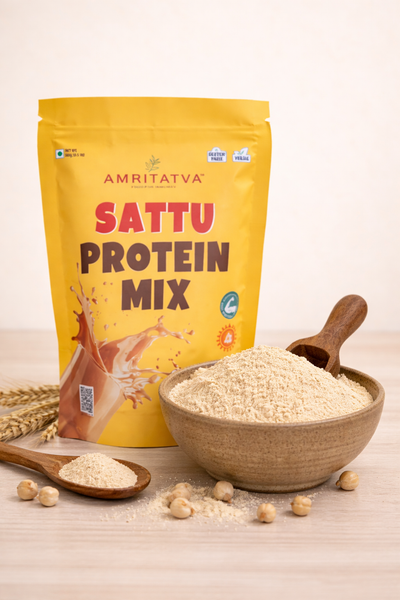
The current Amritatva Sattu Protein Mix nutrition panel lists 21.66 g protein per 100 g, along with carbohydrates, fat and other nutritional values. It is made with roasted chana and oyster mushroom powder and is positioned as a plant-based, gluten-free product.
That number should not be interpreted as a recommendation to consume 100 g after every workout.
Your protein requirement depends on factors such as body size, age, activity level, overall diet and fitness goals. A post-workout meal should therefore be considered as part of your total daily nutrition, rather than as a single “recovery food.”
How can you make a simple post-workout sattu bowl?
Ingredients
For one serving, you can start with:
- 3 tablespoons sattu
- ½ small cucumber, finely chopped
- 1 small tomato, finely chopped
- 2 tablespoons finely chopped onion
- 1 tablespoon fresh coriander
- Juice of ½ lemon
- ¼ teaspoon roasted cumin powder
- A small pinch of black salt
- 2–3 tablespoons water, as required
- 2–3 tablespoons unsweetened plant-based yogurt, optional
You can adjust the quantity according to your appetite and overall meal plan.
How do you prepare it?
- Add sattu to a bowl.
- Slowly add a little water and mix until you get a thick, spoonable consistency.
- Add cucumber, tomato, onion and coriander.
- Add lemon juice and roasted cumin powder.
- Add a small amount of black salt.
- Mix everything well.
- Add plant-based yogurt if you prefer a softer, creamier texture.
Serve it fresh.
For a more substantial meal, pair the bowl with one or two millet rotis, depending on your individual requirements.
Why add vegetables to the sattu bowl?
Sattu provides the base, but a balanced meal benefits from variety.
Cucumber, tomato, onion and coriander add texture, flavour and different nutrients. WHO recommends a varied diet containing foods such as vegetables, fruits, legumes and whole grains rather than relying on a single food.
You can also change the vegetables according to the season.
For example:
| Sattu Bowl | Indian Kitchen Variation |
|---|---|
| Cucumber + tomato | Fresh summer version |
| Carrot + coriander | Crunchy winter version |
| Grated radish + coriander | Seasonal North Indian version |
| Finely chopped capsicum + onion | More crunchy and savoury |
| Sprouts + vegetables | More substantial meal |
There is no single “perfect” combination. The idea is to make the meal varied and enjoyable enough to repeat.
Can you make a sattu drink after exercise?
Yes. A traditional savoury sattu drink can be another simple option.
Try this combination:
- 2–3 tablespoons sattu
- 1 glass water
- Lemon juice
- Roasted cumin powder
- Mint leaves
- A small pinch of black salt
Mix thoroughly and drink soon after preparation.
However, a sattu drink should not automatically be described as a replacement for hydration or as a specialised sports-recovery drink. Water remains an important part of hydration, and hydration needs vary according to exercise intensity, weather, duration and individual circumstances.
On hot Jaipur summer days, for example, you may prefer a light sattu drink, while after a more substantial workout you may prefer a proper meal.
Is sattu enough as a complete post-workout meal?
Not necessarily.
This is one place where nutrition advice should remain practical rather than making exaggerated promises.
Sattu can contribute protein and carbohydrates to a meal, but whether it is enough depends on what you have eaten during the rest of the day and what your workout involved.
For a more balanced Indian meal, combine it with foods from other groups.
A simple plate could include:
Protein source:
Sattu or another pulse-based food
Carbohydrate source:
Millet roti, rice, poha or another suitable staple
Vegetables:
Seasonal sabzi or fresh vegetables
Additional option:
Plant-based yogurt, sprouts, nuts or seeds according to your dietary needs
This approach fits the broader principle of dietary diversity recommended by WHO.
What should you avoid adding unnecessarily?
A healthy recipe can quickly become less balanced if we keep adding ingredients simply because they are marketed as “fitness foods.”
You do not need to add large amounts of sugar, flavoured syrups or highly processed toppings to make sattu useful.
For a savoury post-workout meal, flavour can come from:
- Lemon
- Coriander
- Mint
- Roasted cumin
- Green chilli, if suitable for you
- Fresh vegetables
- A small amount of salt
The overall diet matters more than turning one meal into a perfect nutritional formula.
How can you use sattu in Indian cooking?
Sattu is particularly useful because it fits naturally into Indian food rather than requiring a completely different eating pattern.
In breakfast
Mix sattu into a savoury preparation or use it as part of a stuffed paratha filling.
In lunch
Add a small amount to a vegetable or pulse-based meal, or prepare a sattu-based side dish.
In a tiffin
A sattu-stuffed roti or paratha can be a practical option when paired with vegetables and other foods.
After exercise
Prepare a savoury sattu drink or bowl with cucumber, tomato, coriander and lemon.
At home
Keep roasted sattu available as a pantry ingredient so that a quick meal does not automatically mean reaching for packaged convenience food.
Does the timing of your post-workout meal matter?
It is common to hear that you must eat immediately after exercise or you will “lose your gains.” Nutrition is more nuanced than that.
The appropriate meal depends on your workout, your previous meal, your total daily food intake and your individual goals.
If you finish a workout and are hungry, a balanced meal such as a sattu bowl with vegetables and a suitable carbohydrate source is a practical choice.
If you have already eaten recently, you may not need a large meal immediately.
The goal is to build a sustainable eating pattern rather than become dependent on a strict post-workout clock.
How does this fit into a healthy fitness routine?
Food is only one part of an active lifestyle.
WHO recommends that adults get 150–300 minutes of moderate-intensity physical activity per week, or an equivalent amount of vigorous activity, along with muscle-strengthening activities on at least two days per week.
Your nutrition should support the activity you actually do.
For someone who walks regularly, the food requirements may be different from those of someone doing intensive strength training. Similarly, a recreational workout does not automatically require a specialised sports supplement.
That is why simple foods such as sattu can have a place in everyday fitness routines without being marketed as a miracle recovery solution.
Frequently Asked Questions
Is sattu good to eat after a workout?
Sattu can be included in a post-workout meal because it is made from roasted gram and provides protein and carbohydrates. However, it should be considered one part of the meal rather than a complete recovery formula. Pairing it with vegetables and a suitable carbohydrate source can make the meal more varied and satisfying.
Can I eat sattu if I follow a plant-based diet?
Yes, sattu made from roasted gram is a plant-based ingredient. When preparing a recipe, check the other ingredients as well. For example, if you want the entire meal to remain plant-based, choose unsweetened plant-based yogurt instead of dairy curd. The exact suitability depends on the ingredients used in the final recipe.
Is sattu a substitute for protein powder?
Sattu and protein powders are different types of foods. Sattu is a traditional roasted gram-based food that also contains carbohydrates and other nutrients. Protein powders are generally designed to provide a concentrated source of protein. Whether you need a supplement depends on your individual diet and nutritional requirements; many people can obtain protein from ordinary foods.
Can I drink sattu after exercise?
Yes, a savoury sattu drink can be a convenient option. Mix sattu with water, lemon, roasted cumin, mint and a small amount of salt according to taste. Remember that a sattu drink is a food, not a replacement for your overall hydration needs. During or after exercise, your fluid requirements depend on factors such as duration, intensity and weather.
Is sattu enough for muscle recovery?
Sattu can contribute protein to the diet, but muscle maintenance and development depend on overall protein intake, total nutrition, resistance training, sleep and other factors. One ingredient cannot guarantee recovery. If you have specific athletic or medical nutrition requirements, a qualified sports dietitian can help determine an appropriate eating plan.
Can I eat sattu with roti after a workout?
Yes. A sattu preparation with roti can form part of a practical Indian meal. You can use millet roti or another suitable staple and add vegetables or a vegetable sabzi. The appropriate portion depends on your appetite, activity level and overall dietary needs. The goal is a balanced meal rather than maximising the quantity of any one ingredient.
A simple Indian approach to post-workout food
You do not need to completely change the way you eat just because you started exercising.
Sometimes the answer is already present in familiar Indian ingredients.
Roasted gram.
Fresh vegetables.
Lemon and coriander.
A millet roti.
A glass of water.
Sattu can be one useful ingredient in that routine.
At Amritatva, we believe traditional Indian foods can have a place in modern eating habits when they are used thoughtfully, alongside variety and balanced nutrition.
The goal is not to make one food responsible for everything.
It is to make everyday meals simpler, practical and nourishing.
0 comments