

How to Read Food Labels Like a Pro
When you pick up a packet of pasta, noodles, biscuits, snacks or a ready-to-eat food, the ingredient list and nutrition panel can tell you much more than the front of the packet. Learning how to read these sections helps you compare products based on what they actually contain rather than relying only on words such as “natural,” “healthy,” or “low-fat.”
In India, packaged foods carry information that can help consumers understand ingredients and nutritional composition. FSSAI's labelling framework requires ingredients, where applicable, to be declared in descending order by weight or volume at the time of manufacture.
You do not need to understand every technical term on the first reading. A simple five-step check — ingredients, nutrition information, serving size, claims and dates/storage information — is a good place to start.
What should you check first on a food label?
Start with the ingredient list, rather than the marketing message on the front.
For packaged foods containing more than one ingredient, FSSAI's labelling provisions require ingredients to be listed in descending order of their composition by weight or volume at the time of manufacture.
This means the beginning of the list gives you useful context about what makes up the product.
For example, if you are buying a packaged snack, pasta or breakfast mix, look at:
- What is the first ingredient?
- What are the next few ingredients?
- Is the ingredient you expected to find actually present?
- Are there added sugars, oils, salt or other ingredients you want to monitor?
- Are there ingredients you need to avoid because of an allergy or dietary requirement?
This does not mean that a long ingredient list automatically makes a food unhealthy. Some products need several ingredients for flavour, texture, preservation or preparation. The better approach is to understand what those ingredients are and why they are there.
How can you identify sugar on an ingredient list?
Sugar does not always appear simply as the word “sugar.”
Depending on the product, you may see ingredients such as sucrose, glucose, fructose, maltose or syrups. The nutrition panel can also help you understand the amount of total sugars in the food.
The World Health Organization recommends limiting free sugars to less than 10% of total daily energy intake, with further reduction to 5% or less potentially providing additional health benefits.
For everyday shopping, you do not need to memorise every name. Instead:
- Look at the ingredient list.
- Check the sugars entry in the nutrition information.
- Compare similar products using the same basis, preferably per 100 g.
- Consider how much you actually eat.
A product containing sugar is not automatically a “bad” food. The quantity, the rest of the ingredient list and your overall diet all matter.
Why does serving size matter?
Nutrition information can become confusing when you look only at the numbers without considering the quantity of food you actually eat.
A nutrition panel may provide information per 100 g and, depending on the label, may also provide information per serving or portion.
For example, imagine two snack packets that contain similar foods but have different serving sizes. Comparing only the “per serving” numbers may give you the wrong impression because one company's serving could be considerably smaller.
A simple habit is to first compare products on the same basis, such as per 100 g, and then think about your actual portion.
FSSAI materials on nutrition labelling illustrate nutrition information being presented per 100 g and, in some cases, per portion.
How should you read protein and fibre on a label?
Protein and dietary fibre are two useful parts of a nutrition panel, but neither should be viewed in isolation.
Protein is a nutrient needed for normal body functions, including maintaining and repairing body tissues. Fibre is found in plant foods and contributes to a balanced diet.
When comparing two breakfast mixes, snacks or pasta products, you can look at:
| What to check | Why it helps |
|---|---|
| Protein | Helps you compare the protein contribution of similar products |
| Dietary fibre | Helps you understand the fibre contribution |
| Carbohydrate | Shows the total carbohydrate content |
| Sugars | Helps you assess the sugar content |
| Fat | Shows total fat |
| Saturated fat | Helps you compare the type of fat |
| Sodium | Useful when monitoring salt/sodium intake |
| Energy | Helps you understand calorie contribution |
Remember that a higher number is not automatically better for every nutrient. Your dietary needs and the type of food matter.
Also be careful with phrases such as “high protein” or “high fibre.” Food claims are regulated, and FSSAI has specific requirements for nutrition claims. For example, FSSAI's Food Safety and Standards Digest notes that “High in Dietary Fibre” is subject to a quantitative threshold.
Why should you check sodium?
Sodium is another number worth noticing, particularly when comparing packaged snacks, instant foods, sauces, seasonings and other processed products.
The WHO recommends that adults consume less than 2,000 mg of sodium per day, equivalent to less than 5 g of salt per day.
Sodium is not automatically something that needs to be eliminated. It is an essential nutrient. The concern is excessive intake.
When reading a label, look at the sodium value and consider how the product fits into the rest of your day's food.
For an Indian household, this becomes particularly useful when you are already eating foods such as pickles, papad, namkeen, packaged snacks, sauces or other salty foods during the day.
Do words like “natural”, “healthy” or “low-fat” tell you everything?
No.
The front of a packet is designed to communicate quickly. Words, images and claims can highlight particular characteristics of a product, but they do not replace reading the ingredient list and nutrition information.
For example, “low-fat” does not automatically mean that a product is the right choice for you. Similarly, seeing a familiar ingredient on the front does not tell you how much of it is present unless the label provides the relevant information.
FSSAI treats representations about nutritional properties and other characteristics of foods as regulated claims.
So instead of asking:
“Does this packet look healthy?”
ask:
“What does the label actually tell me?”
What is the difference between a regular product and an ingredient-focused product?
The answer depends on the specific products being compared.
| What to compare | A generic packaged product | An ingredient-focused product |
|---|---|---|
| Ingredient list | Check what appears first and what follows | Check the main ingredients and their order |
| Nutrition | Compare protein, fibre, sugars, fat and sodium | Compare the same nutrients |
| Claims | Check whether claims are relevant and permitted | Verify the same way |
| Portion | Understand the stated serving/portion | Compare on the same basis |
| Dietary needs | Check allergens and ingredients | Check allergens and ingredients |
| Decision | Based on the whole label | Based on the whole label |
There is no need to assume that one category is always better. The label is there to help you make the comparison yourself.
How can you use food labels while shopping for an Indian kitchen?
Reading labels becomes much more useful when you connect it to foods you actually buy.
For breakfast
If you are buying a breakfast mix, cereal or sattu-based product, compare the ingredient list and nutrition panel. Look at protein, fibre, sugars and serving information.
For your child's tiffin
When buying packaged snacks for a school tiffin, check the ingredient list and nutrition panel rather than choosing only on the basis of attractive packaging.
You can also combine packaged foods with familiar homemade options such as roti rolls, fruit, roasted chana or a simple homemade snack.
For pasta or noodles
Check the main flour or grain ingredients and compare nutrition information between products. If you specifically need gluten-free food, check the product's labelling and allergen information rather than assuming that a product is gluten-free because it looks like an alternative grain product.
For chai-time snacks
If you buy packaged namkeen, roasted snacks or crackers, look at the serving information and sodium content. It can be easy to eat more than the stated portion while having chai and conversation.
For everyday cooking
Seasonings, sauces and packaged cooking ingredients can contribute sodium and other nutrients to the overall meal. Reading their labels helps you understand what you are adding to dal, sabzi, pasta, noodles or other dishes.
What should you remember when comparing two food packets?
You do not need to spend ten minutes studying every packet.
Try this 5-point label check:
1. Ingredients
What are the main ingredients?
2. Nutrition
How much protein, fibre, sugar, fat and sodium does it contain?
3. Quantity
Are you comparing products per 100 g or using different serving sizes?
4. Claims
Are you relying on the front-of-pack message or have you checked the actual information?
5. Your needs
Does the product fit your dietary preferences, allergies and the way you normally eat?
That is enough to make grocery shopping more informed without turning every supermarket visit into a nutrition examination.
How does Amritatva approach food labels?
At Amritatva, we believe consumers should be able to make food choices with clear information rather than exaggerated promises.
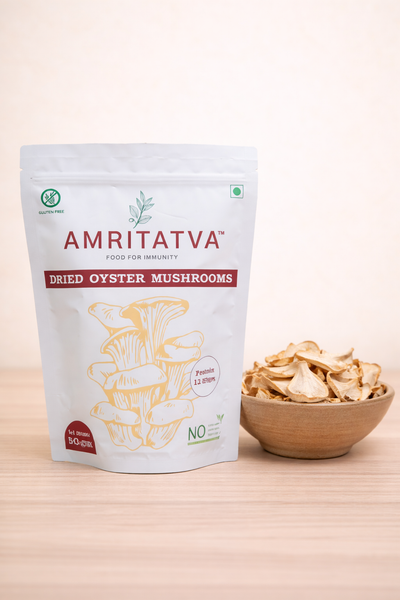
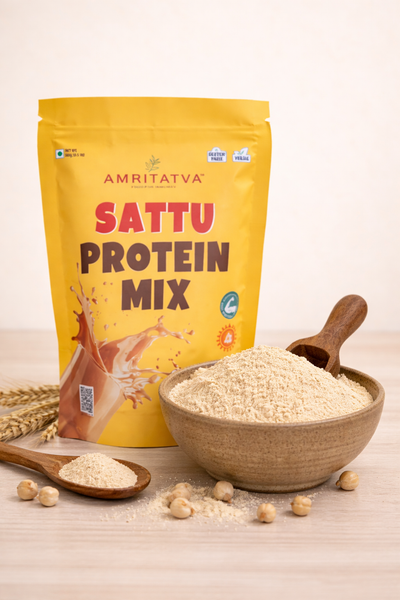
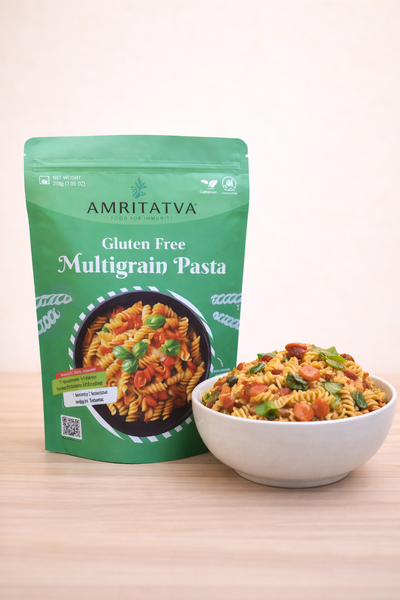
Our products include Oyster Mushroom Powder, Gluten-Free Pasta, Gluten-Free Noodles, Sattu Protein Mix and seasonings.
For any packaged food, including ours, the useful habit is the same: read the ingredient list, check the nutrition information and understand the claims before making your choice.
We believe food labels should help create confidence through information — not pressure.
Frequently Asked Questions
What is the first thing I should check on a food label?
Start with the ingredient list. It tells you what ingredients are used and, under FSSAI's labelling framework, ingredients are generally declared in descending order by weight or volume at the time of manufacture. Then check the nutrition panel for nutrients such as energy, protein, carbohydrate, sugars, fat and sodium.
How do I know if a packaged food has added sugar?
Look at both the ingredient list and the nutrition information. Ingredients may include names such as sucrose, glucose, fructose, maltose or syrups. The nutrition panel shows the amount of sugars. Remember that naturally occurring sugars and added sugars are not the same thing, so read the full label rather than judging from one number.
Is a shorter ingredient list always healthier?
No. A shorter ingredient list is not automatically a healthier choice. Some foods require several ingredients for their intended taste, texture, stability or preparation. Instead of counting ingredients, understand what they are, where they appear in the list, and whether the product suits your dietary needs.
Should I compare food labels per serving or per 100 g?
If you are comparing two similar packaged foods, comparing them on the same basis — often per 100 g — makes the comparison easier. You can then look at the stated serving size and consider how much you actually eat. FSSAI materials show nutrition information being presented per 100 g and, in some cases, per portion.
How much sodium should an adult have in a day?
The WHO recommends that adults consume less than 2,000 mg of sodium per day, equivalent to less than 5 g of salt per day. This is a total daily intake, so sodium from packaged foods, cooking ingredients and other foods all contributes.
Are “natural” and “low-fat” automatically healthier choices?
Not necessarily. These words describe particular characteristics or claims and do not provide the complete nutritional picture. Look at the ingredient list and nutrition information as well. A food's overall nutritional composition, portion and place in your diet matter more than one front-of-pack phrase.
A smarter way to shop
Reading food labels does not have to become complicated.
The next time you pick up a packet at your local supermarket, look beyond the front.
Read the ingredients.
Check the nutrition panel.
Understand the portion.
Question the claims.
Then choose what fits your food habits.
At Amritatva, we believe informed food choices begin with transparency and practical knowledge — not fear or perfection.
Read the label. Understand your food. Choose with confidence.
0 comments