

Why is mushroom coffee becoming popular?
Coffee is part of the everyday routine for millions of people. From the first morning cup to an afternoon break, it is often associated with alertness, comfort and familiar flavour.
Recently, another beverage has entered the wellness conversation: mushroom coffee.
It generally combines regular coffee with mushroom powders or extracts. Popular ingredients include lion’s mane, reishi, cordyceps and chaga. The idea appeals to consumers who want to explore functional ingredients while keeping a familiar coffee ritual.
However, popularity does not automatically mean proven health benefits. Mushroom coffee is not necessarily caffeine-free, does not guarantee better focus, and is not a detox drink. Its nutritional profile depends on the coffee-to-mushroom ratio, the mushroom species, the processing method and the actual serving size.
There is also a broader way to explore mushrooms in everyday nutrition. Edible varieties such as oyster and shiitake mushrooms can add flavour and variety to regular meals, while oyster mushroom powder offers a convenient ingredient for drinks and cooking.
What exactly is mushroom coffee?
Mushroom coffee is a beverage made by combining coffee with mushroom powder or mushroom extracts.
Some products use instant coffee, while others use ground coffee. The mushroom ingredient may be a whole-mushroom powder or a concentrated extract.
Common mushroom ingredients include:
| Mushroom | Why it appears in mushroom coffee | What to understand |
|---|---|---|
| Lion's Mane | Often marketed for cognitive support | Human research is still limited |
| Reishi | Commonly marketed for relaxation and wellness | Strong claims about calmness or immunity are not established for coffee blends |
| Cordyceps | Often marketed for energy and exercise performance | Evidence in humans is mixed and product-specific |
| Chaga | Used in some antioxidant-focused blends | Laboratory findings do not prove health benefits from drinking it |
One important distinction: research on an individual mushroom extract does not automatically prove that a finished coffee blend delivers the same effect.
Is mushroom coffee lower in caffeine than regular coffee?
Sometimes, but not always.
Mushroom powder itself does not naturally contribute caffeine in the way coffee does. Some blends contain less coffee because part of the serving is made up of mushroom ingredients. This can result in a lower-caffeine drink.
However, there is no universal caffeine level for mushroom coffee.
The amount depends on:
-
The quantity and type of coffee used.
-
Whether the product uses instant or brewed coffee.
-
The proportion of mushroom powder or extract.
-
The serving size and preparation method.
If you are trying to reduce caffeine, check the actual caffeine quantity on the label rather than relying on the words "mushroom coffee".
Also remember that less caffeine does not automatically mean fewer jitters or better sleep for everyone. Individual sensitivity, serving size and timing matter.
Does mushroom coffee really improve focus, energy or immunity?
This is where it is important to separate marketing from evidence.
Some mushroom species contain compounds that researchers are studying for their possible biological effects. However, much of the research on functional mushrooms involves laboratory studies, animal studies or specific extracts—not the finished mushroom coffee products available to consumers.
Here is a more realistic way to understand the popular claims:
| Popular claim | What current evidence tells us |
|---|---|
| Better focus from lion's mane | Early human research exists, but stronger evidence is needed |
| More energy from cordyceps | Findings are mixed; coffee's caffeine may explain much of the alertness |
| Relaxation from reishi | Not established as a reliable effect of mushroom coffee |
| Stronger immunity from chaga | Laboratory findings cannot establish a benefit from drinking a coffee blend |
| Reduced caffeine jitters | Possible with a lower-caffeine formulation, but not guaranteed |
Mushroom coffee can be an interesting beverage choice, but it should not be treated as a proven solution for fatigue, stress, poor concentration or health conditions.
What is the difference between oyster, shiitake and functional coffee mushrooms?
Not all mushrooms serve the same purpose in food.
Lion's mane, reishi, cordyceps and chaga are commonly highlighted in functional coffee marketing. Oyster and shiitake mushrooms, on the other hand, are familiar edible mushrooms that can be used directly in everyday cooking.
Both oyster and shiitake mushrooms are studied for their nutritional composition, including dietary fibre and beta-glucans. Their taste and culinary uses also make them interesting ingredients beyond the coffee trend.
| Mushroom | Common use | How it fits into everyday food |
|---|---|---|
| Oyster mushroom | Soups, curries, stir-fries, rice dishes and powders | Mild flavour and versatile cooking ingredient |
| Shiitake mushroom | Soups, noodles, pasta, sauces and Asian-style dishes | Distinctive savoury, umami flavour |
| Lion's mane | Often sold as powders and extracts | Commonly marketed for cognitive wellness |
| Reishi | Often used in extracts and beverages | Traditionally used in wellness preparations |
| Cordyceps | Often included in coffee and supplement blends | Commonly marketed for energy and exercise support |
Oyster and shiitake mushrooms are not substitutes for lion's mane or cordyceps in a research study. Each species has its own composition, and results from one mushroom should not be transferred to another.
Can oyster mushroom powder be added to coffee?
Yes. Oyster mushroom powder can be explored as an ingredient in coffee or tea, provided it is suitable for the individual's dietary needs and the product instructions are followed.
Amritatva's Oyster Mushroom Powder is made from oyster mushrooms and can be used in everyday food preparations. Its mild, earthy and savoury character makes it versatile beyond traditional cooking.
Here are a few simple ways to use it:
1. Mushroom coffee
Prepare your regular black coffee or coffee with milk or a plant-based alternative. Stir in a small quantity of oyster mushroom powder and mix thoroughly. Start with a small amount to understand the flavour and your personal tolerance.
2. Mushroom tea
Add a little oyster mushroom powder to warm tea and stir well. It can be an option for people who want to explore mushroom ingredients without making coffee the centre of their routine.
3. Smoothies
Blend a small amount into a banana or nut-based smoothie. The earthy flavour can be balanced with cocoa, cinnamon or other familiar ingredients.
4. Soups and savoury drinks
Oyster mushroom powder can also be added to warm soups, broths and other savoury preparations for an umami note.
Remember: adding oyster mushroom powder to coffee does not make it a clinically proven mushroom coffee formula. It is simply another way to include an edible mushroom ingredient in your food routine.
Explore Amritatva Oyster Mushroom Powder.
Why should you include whole oyster and shiitake mushrooms in your meals?
Coffee is only one way to explore mushrooms. Whole edible mushrooms can be even more versatile in the kitchen.
Oyster mushrooms
Oyster mushrooms have a mild flavour and a tender texture. They work well in:
-
Indian-style mushroom masala.
-
Vegetable pulao and biryani.
-
Soups and broths.
-
Stir-fried vegetables.
-
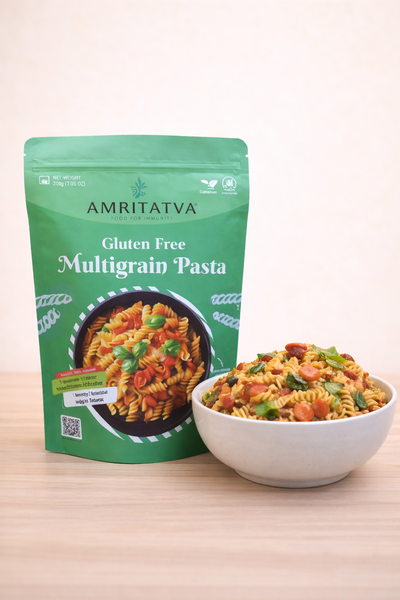
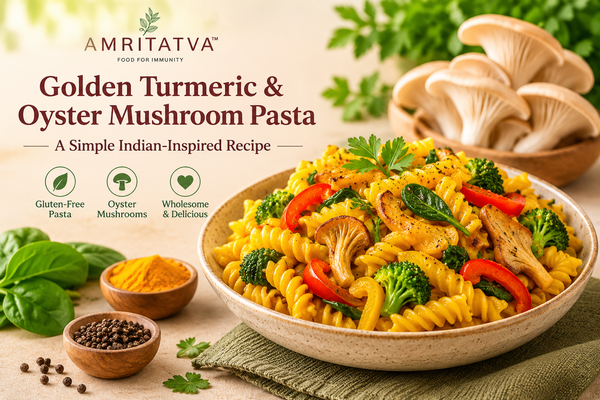
Pasta and noodles.
Shiitake mushrooms
Shiitake mushrooms have a deeper, savoury flavour that works particularly well in:
-
Clear vegetable soups.
-
Noodle bowls.
-
Fried rice.
-
Pasta sauces.
-
Asian-inspired gravies and stir-fries.
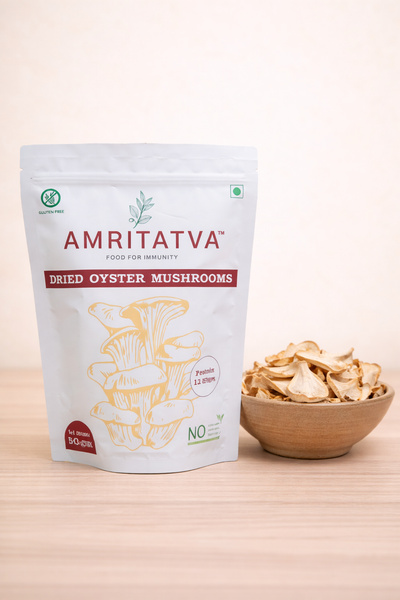
Amritatva offers dried oyster and dried shiitake mushrooms, making it easier to keep these ingredients in the pantry. Dried mushrooms can be rehydrated before cooking, following the product instructions.
Explore:
Mushroom coffee vs regular coffee: Which should you choose?
There is no single answer for everyone. The right choice depends on your taste preferences, caffeine sensitivity, budget and expectations.
| Comparison | Regular coffee | Mushroom coffee |
|---|---|---|
| Main ingredients | Coffee beans | Coffee plus mushroom powder or extract |
| Caffeine | Depends on preparation and serving | Depends on the amount of coffee in the blend |
| Flavour | Familiar coffee flavour | Coffee flavour with possible earthy notes |
| Research | Extensive research on caffeine and coffee | Limited research on finished mushroom coffee blends |
| Cost | Usually more affordable | Can be more expensive |
| Main consideration | Caffeine intake and personal tolerance | Mushroom species, quantity, caffeine and product quality |
If you enjoy regular coffee and tolerate it well, there is no automatic reason to replace it.
If you are curious about mushroom coffee, compare ingredients, serving sizes and caffeine levels before buying. Do not pay a premium simply because a product uses the words "functional" or "wellness".
What should you check before buying mushroom coffee?
Before trying a new beverage, spend a minute reading the label.
Check these six things:
-
Mushroom species: Does the product clearly identify each mushroom?
-
Ingredient quantity: Does it disclose how much of each mushroom is included?
-
Caffeine content: Is the amount stated per serving?
-
Powder or extract: Does the label explain which form is used?
-
Added ingredients: Check for added sugar, sweeteners, flavours and creamers.
-
Quality information: Look for clear manufacturer details, batch information and relevant testing.
If you have a mushroom allergy, take medication or have a medical condition, check with a healthcare professional before trying concentrated mushroom extracts. Some mushroom ingredients may not be suitable for everyone.
How can you make your daily drink routine more mindful?
A mindful beverage routine is not about replacing every familiar drink with a trendy alternative.
Try these practical habits:
-
Notice how much caffeine you consume in a day.
-
Avoid coffee too close to bedtime if it affects your sleep.
-
Check the sugar and sweetener content of packaged drinks.
-
Drink enough water throughout the day.
-
Explore different ingredients and flavours rather than depending on one beverage.
-
Include whole foods such as mushrooms, fruits, vegetables, pulses and grains in your meals.
The aim is not to chase a perfect drink. It is to make informed choices that fit your lifestyle.
How does Amritatva bring mushrooms into everyday nutrition?
At Amritatva, we believe that useful food ingredients should be easy to understand and practical to include in everyday meals.
Our mushroom range focuses on edible varieties and convenient formats:
Amritatva Oyster Mushroom Powder
A versatile mushroom ingredient that can be added to coffee, tea, smoothies, soups, dal and curries.
Amritatva Dried Oyster Mushrooms
A convenient pantry ingredient for Indian curries, rice dishes, soups, pasta and stir-fries.
Amritatva Dried Shiitake Mushrooms
A savoury mushroom variety that adds depth to noodles, soups, sauces and other everyday recipes.
Rather than presenting mushrooms as miracle ingredients, we encourage people to explore their flavour, versatility and nutritional composition as part of a varied diet.
Discover the range at www.amritatva.com.
Frequently Asked Questions
1. Is mushroom coffee healthier than regular coffee?
Not necessarily. Mushroom coffee combines coffee with mushroom powders or extracts, but there is limited human research on the finished beverage. Its nutritional value depends on the ingredients, quantities and caffeine content. Regular coffee can also fit into a balanced diet. The better choice depends on personal preference, caffeine tolerance and the product formulation.
2. Does mushroom coffee contain caffeine?
Most mushroom coffee products contain caffeine because they include regular coffee. Some blends may contain less caffeine than a conventional cup because part of the serving is made up of mushroom ingredients. However, the amount varies. Always check the manufacturer's caffeine information rather than assuming every mushroom coffee is low-caffeine.
3. Can oyster mushroom powder be added to regular coffee?
Yes. Oyster mushroom powder can be stirred into prepared coffee or tea, following the product instructions. It adds an earthy, savoury note. However, adding oyster mushroom powder to coffee does not make it equivalent to commercial blends containing lion's mane, reishi or cordyceps extracts. It is simply another way to use an edible mushroom ingredient.
4. What is the difference between oyster and shiitake mushrooms?
Oyster mushrooms have a relatively mild flavour and work well in curries, stir-fries, soups and rice dishes. Shiitake mushrooms have a more pronounced savoury flavour and are popular in soups, noodles and sauces. Both are edible mushrooms that contribute variety and dietary fibre to meals.
5. Do mushroom coffee ingredients improve focus and energy?
Some individual mushrooms are being studied for possible effects on cognition, stress responses and exercise performance. However, evidence remains limited or mixed, and results from studies of individual extracts cannot automatically be applied to mushroom coffee. The caffeine in the beverage may account for much of the immediate feeling of alertness.
6. Is mushroom coffee suitable for everyday consumption?
Suitability depends on its ingredients, caffeine content, serving size and individual health circumstances. People with mushroom allergies, certain medical conditions or medication-related concerns should seek professional advice before trying concentrated mushroom products. Follow the manufacturer's serving instructions and do not assume that a product is suitable for everyone simply because it contains mushrooms.
7. How can I include mushrooms in my daily diet without drinking mushroom coffee?
You can add oyster or shiitake mushrooms to soups, dal, curries, pasta, noodles, rice dishes and stir-fries. Oyster mushroom powder is another convenient option for smoothies, soups and even coffee or tea. Using whole edible mushrooms in meals is a simple way to explore their flavour and nutritional variety.
Final Thought
Mushroom coffee is an interesting addition to the growing world of mindful beverages, but it is not automatically healthier than regular coffee. Its caffeine content, ingredients and quality matter more than the trend surrounding it.
And there is no need to limit your interest in mushrooms to a cup of coffee.
Oyster and shiitake mushrooms offer plenty of culinary possibilities, while oyster mushroom powder makes it convenient to explore mushroom ingredients in drinks and everyday recipes.
At Amritatva, we believe that better food choices do not have to be complicated. Start with real ingredients, understand what goes into your food and choose what works for your everyday routine.
Mindful nutrition begins with informed choices—one ingredient, one meal and one habit at a time.
0 comments