

Why are millets making a comeback?
Millets are not a new food trend. They have been part of traditional food systems in India and other parts of Asia and Africa for centuries. What is changing is the way people are looking at them today.
As consumers become more interested in dietary variety, traditional ingredients and how food is produced, millets are finding their way back into everyday meals—from bajra rotis and ragi dosa to jowar bhakri, millet khichdi and modern millet-based pasta.
There is also an agricultural reason for the renewed interest. FAO describes millets as crops that can grow in high temperatures, with relatively little water and in poor soils, while showing resilience to difficult climatic conditions.
So, the millet comeback is not simply about calling an old ingredient a “superfood.” It is about reconnecting traditional Indian food, dietary diversity and resilient crops with modern eating habits.
What exactly are millets?
Millets are a group of small-seeded cereal crops.
In India, you may already know them by names such as:
- Jowar — sorghum
- Bajra — pearl millet
- Ragi — finger millet
- Foxtail millet
- Little millet
- Kodo millet
- Barnyard millet
- Proso millet
Different millets have different nutritional profiles, flavours, textures and cooking characteristics.
That matters because there is no single nutritional profile that applies equally to every millet.
For example, ICRISAT's nutrition information based on Indian food-composition data shows differences between millet varieties in protein, dietary fibre and minerals. Finger millet, for example, contains considerably more calcium per 100 g than several other cereals listed in the same comparison.
So rather than asking, “Which millet is the healthiest?”, a better question is:
“Which millet works well for the meal I want to make?”
Why were millets already important in Indian food traditions?
Long before the current interest in “healthy eating,” Indian households were using locally available grains according to their climate, farming systems and regional food traditions.
In Rajasthan and other dry regions, bajra has long been associated with everyday foods such as rotis and khichdi.
In parts of southern India, ragi has traditionally been used for preparations such as mudde, dosa and porridge.
Jowar is used for bhakri and rotis across several regions.
These traditions developed around local crops rather than imported food trends.
FAO notes that millets have been traditional staple crops for millions of people, particularly across Africa and Asia, and have been important food crops for millennia.
The current revival is therefore less about discovering something new and more about rediscovering what Indian food cultures already knew how to cook.
What makes millets nutritionally interesting?
Millets can contribute useful nutrients to the diet, but their value should be understood in the context of the whole meal.
ICRISAT's compilation of Indian food-composition data shows that several commonly consumed millets provide dietary fibre, protein and minerals. For example, the listed dietary-fibre values range from around 6 g to more than 11 g per 100 g across the varieties shown.
WHO also identifies millet among the whole-grain carbohydrate foods that can form part of a healthy diet. Its current healthy-diet guidance emphasises adequacy, balance, moderation and diversity, rather than relying on one particular food.
This is an important distinction.
Millets can be nutritious, but eating millet alone does not automatically make a meal balanced.
A meal can become more varied when millet is combined with:
Millet + dal + vegetables + curd/plant-based alternative + appropriate fats
The exact combination depends on your dietary preferences and requirements.
Are millets actually more sustainable?
This is one of the strongest reasons for renewed interest in millets.
FAO reports that millets can grow under conditions that can be difficult for some other crops. They can tolerate high temperatures, require relatively little water and can grow in poor soils. They can also remain productive under some challenging weather conditions.
FAO's 2025 work on millets similarly highlights their ability to thrive in arid environments, their relatively low input requirements and their tolerance to climate variability.
But we should be careful with the language.
It would be inaccurate to say that every millet crop automatically has a lower environmental footprint in every location.
Agriculture depends on farming practices, irrigation, soil, transport, processing and many other factors.
A more accurate statement is:
Millets offer useful characteristics for climate-resilient agriculture, particularly in regions where heat, water availability and difficult soils are important farming challenges.
That is a more meaningful reason to pay attention to them.
Why are modern consumers rediscovering traditional grains?
Several things are happening at the same time.
People are becoming more interested in:
- Traditional Indian ingredients
- Dietary fibre
- Whole and minimally processed foods
- Plant-based meals
- Food diversity
- Local food traditions
- Sustainable agriculture
- Gluten-free food options
WHO's current healthy-diet guidance recommends a diverse diet built around foods such as whole grains, vegetables, fruits and pulses. It specifically includes millet among examples of whole-grain carbohydrate foods.
This makes millets relevant to modern eating without needing to turn them into a miracle ingredient.
The real opportunity is variety.
Instead of replacing every grain in your kitchen with millet, you can rotate grains according to your meals and preferences.
How can you use millets in an Indian kitchen?
This is where millets become much more practical.
You do not need to create complicated “health bowls” to eat them.
Can you use millet for rotis?
Absolutely.
Bajra roti and jowar bhakri are already established Indian preparations.
They can be served with:
- Dal
- Seasonal sabzi
- Kadhi
- Chutney
- Curd or a plant-based alternative
Can millets be used for breakfast?
Yes.
Depending on the variety and preparation, you can make:
- Ragi dosa
- Millet upma
- Millet porridge
- Millet idli
- Millet cheela
Can millets be used for lunch?
Try:
Millet khichdi + seasonal vegetables + dal
or use cooked millet as an alternative to rice in selected meals.
Can children eat millet?
Millets can be part of a varied family diet, provided the preparation and texture are appropriate for the child's age and dietary needs.
Instead of presenting millet as a special “health food,” introduce it through familiar foods such as dosa, cheela, porridge or roti.
Can millets be used in modern foods?
Yes.
This is one reason the current millet movement is interesting.
Traditional grains are now being incorporated into:
- Pasta
- Noodles
- Crackers
- Baked products
- Snacks
- Breakfast mixes
This allows familiar grains to fit into modern eating patterns without completely abandoning traditional ingredients.
Millets vs refined grain products: what is the difference?
The comparison should be about food choices and processing, not about declaring one food universally “good” and another “bad.”
| Millets | Highly refined grain product |
|---|---|
| Can be consumed as whole grain | May involve greater processing |
| Different varieties offer different nutrients | Nutritional profile depends on the product |
| Naturally gluten-free as a grain | May contain gluten depending on the grain |
| Used traditionally across Indian regions | Often designed for convenience |
| Can be used in rotis, dosa, khichdi and more | Often used in breads, snacks and convenience foods |
| Adds variety to the diet | Can also have a place in a balanced diet |
The takeaway is not that refined foods must disappear.
It is that adding more variety and whole-food choices can be a useful part of a balanced eating pattern.
Are millets gluten-free?
The millet grains themselves are naturally gluten-free.
However, cross-contact during processing, storage or manufacturing can affect the gluten status of a finished food product.
That is why someone following a strict gluten-free diet should check the finished product's labelling and manufacturing information rather than assuming that every packaged millet product is automatically gluten-free.
This distinction becomes particularly important for products such as pasta, noodles, snacks and ready-to-eat foods.
Are millets suitable for everyone?
Millets can be included in a varied diet, but no single grain is necessary for everyone.
Some people may be unfamiliar with the taste or texture and may prefer introducing them gradually.
Preparation also matters.
A bajra roti, ragi dosa and millet pasta are nutritionally different meals because the complete recipes and accompanying ingredients are different.
If you have a diagnosed medical condition requiring a specific diet, your food choices should be guided by your healthcare professional or qualified dietitian.
How is Amritatva bringing traditional ingredients into modern food?
At Amritatva, we are interested in the space between traditional Indian food and modern convenience.
That means looking at familiar ingredients and asking:
How can they fit naturally into the way people eat today?
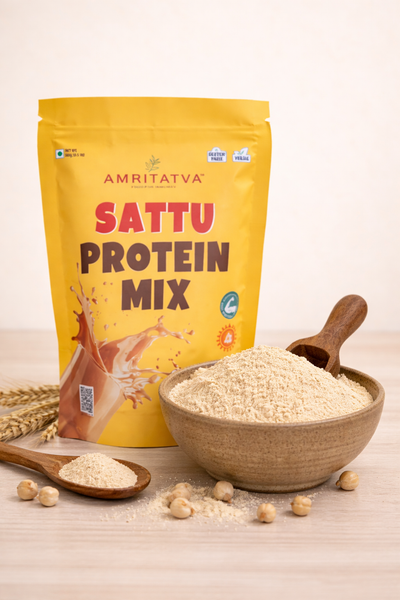
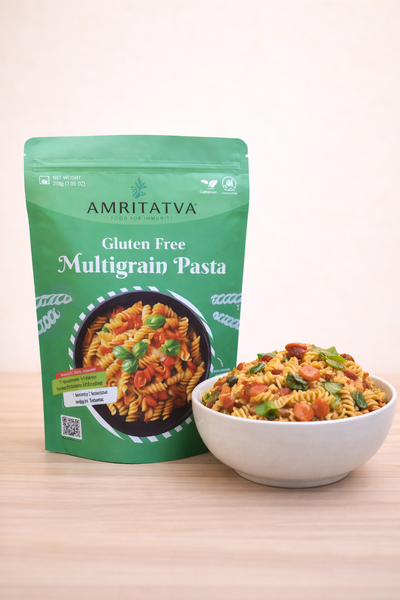
Our product range includes gluten-free pasta and noodles, alongside Sattu Protein Mix, mushroom products and seasonings.
The idea is not to suggest that traditional grains need to replace every other food.
Instead, we believe modern food can make room for Indian ingredients, dietary variety and practical everyday meals.
That could mean a millet roti with dal at home—or a millet-based pasta preparation when you want something different.
Frequently Asked Questions
Are millets healthier than rice and wheat?
There is no need to declare one grain universally healthier than another. Different grains provide different nutrients, and the overall diet matters. Millets can contribute dietary fibre, protein and minerals and are recognised by WHO as whole-grain carbohydrate options. The best choice depends on your dietary needs, preparation method, portion and what other foods are included in the meal.
Which millets are commonly eaten in India?
Commonly eaten Indian millets include bajra, jowar, ragi, foxtail millet, little millet, kodo millet, barnyard millet and proso millet. Their names and culinary uses vary across regions. Bajra is widely used for rotis, jowar for bhakri and ragi for preparations such as dosa and porridge. Choosing between them can simply come down to the dish you want to prepare.
Why are millets considered climate-resilient crops?
FAO highlights that millets can grow in high temperatures, require relatively little water and can tolerate poor soils and some difficult growing conditions. Their ability to produce grain under challenging conditions makes them relevant to discussions around climate resilience and food security. This does not mean every millet farming system has the same environmental impact, but the crop characteristics are significant.
Can I eat millet every day?
You can include millet regularly if you enjoy it and it fits your dietary needs, but there is no requirement to eat it every day. A varied diet is generally more useful than depending on one grain. Rotate millets with other whole grains, pulses, vegetables, fruits and other foods so that your meals remain diverse. WHO specifically emphasises diversity as one of the foundations of a healthy diet.
Are all millet products automatically healthy?
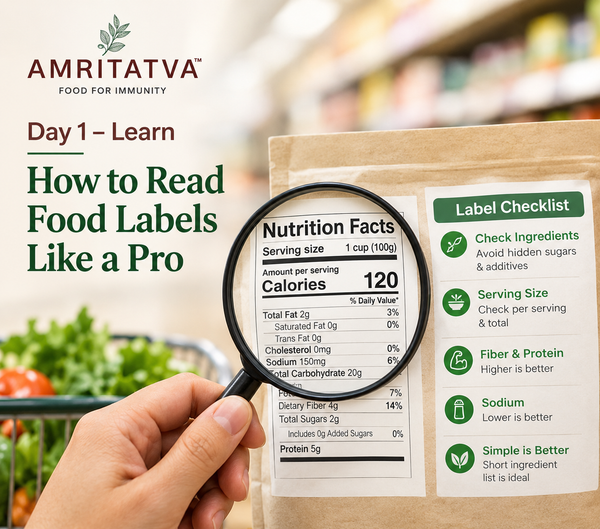
No. The word “millet” on a package does not automatically tell you everything about the finished product. Check the complete ingredient list, nutrition information, serving size and other ingredients. A millet snack containing substantial amounts of added sugar, salt or fat is still different from plain whole millet. The overall formulation and portion matter, not simply the presence of millet.
Are millets naturally gluten-free?
Yes, millet grains are naturally gluten-free. However, packaged products made with millet can potentially be exposed to gluten during processing or manufacturing. If you need to strictly avoid gluten, look for appropriate gluten-free labelling and information about the finished product rather than assuming that every product containing millet is gluten-free.
Bringing an old grain back to the Indian plate
The interesting thing about the millet comeback is that millets never really disappeared from Indian food culture.
They remained part of regional kitchens, farming communities and traditional recipes.
What is changing is their visibility.
Today, a grain once associated mainly with traditional rotis can also appear in pasta, noodles, breakfast recipes and contemporary packaged foods.
That is not about making an old ingredient fashionable.
It is about recognising that traditional food knowledge can still have a place in modern life.
At Amritatva, we believe the future of food does not always mean moving away from our roots.
Sometimes, it means looking back, learning from what already grows well here, and finding practical ways to bring it back to the table.
0 comments