

Noodles are one of those foods that can turn a busy day into a quick meal.
But when you are choosing between different noodle products, the most useful comparison is not simply “healthy versus unhealthy.”
It is what are the ingredients, what does the nutrition label say, and does the product fit your dietary needs?
Amritatva noodles and regular noodle products may differ in ingredients, grain choices, dietary positioning and formulation.
The best way to compare them is to read the label rather than assuming one category is automatically better.
What should you check first when buying noodles?
Start with the ingredient list.
Look for the main flour or grain used, followed by any other ingredients, seasonings or additives.
If you need gluten-free food, check whether the product is appropriately labelled for your requirement.
Then look at the nutrition information.
This gives you a better picture than front-of-pack language alone.
How are millet-based noodles different?
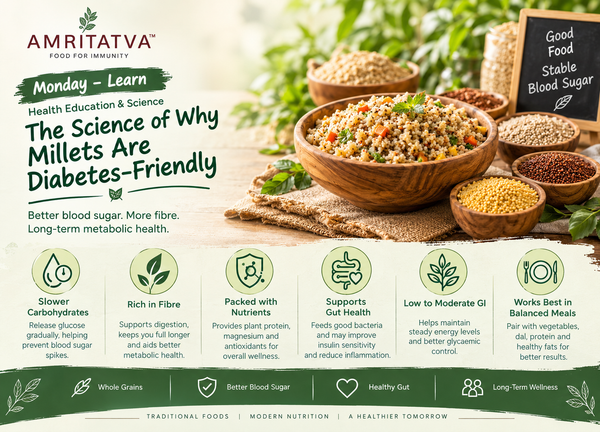
Millet-based noodles use millet as part of the grain base.
Millets such as bajra and jowar have a long place in Indian food culture, and they can also be used in modern formats such as noodles.
This gives consumers another option beyond traditional wheat-based noodles.
However, the exact nutritional profile still depends on the full product formulation.
Is “maida-free” enough to make a noodle product healthy?
No.
Avoiding refined wheat flour may be important to some consumers, but a single ingredient does not tell the full story.
Look at the complete ingredient list and nutrition panel.
Also consider how the noodles are prepared and what you serve with them.
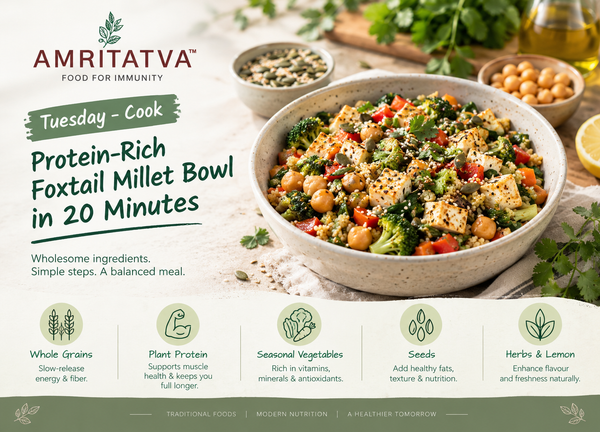
A noodle bowl with vegetables, mushrooms and a suitable protein source will be a different meal from noodles eaten alone.
What should you compare between Amritatva and regular noodles?
A fair comparison can focus on:
| What to check | Amritatva noodles | Other noodle products |
|---|---|---|
| Main grain/flour | Check the product label | Varies by product |
| Gluten status | Check product labelling | Varies by product |
| Nutrition | Read nutrition panel | Read nutrition panel |
| Ingredients | Review complete list | Review complete list |
| Preparation | Follow pack instructions | Follow pack instructions |
| Best fit | Depends on dietary preference | Depends on dietary preference |
The point is not to say that one product is universally better.
The point is to help you make an informed choice.
How can you make noodles part of a balanced Indian meal?
The noodles are only one part of the dish.
Add vegetables such as:
- Capsicum
- Carrot
- Broccoli
- Beans
- Mushrooms
- Peas
- Cabbage
Then consider a suitable protein source such as tofu, paneer, chana or another ingredient appropriate to your diet.
Use spices and seasonings you already enjoy.
This creates a noodle meal that feels familiar and more complete.
Can noodles fit into a gluten-free diet?
Some noodle products are gluten-free and some are not.
Never assume based only on the ingredient name.
If you need to avoid gluten strictly, check the label carefully and look for appropriate gluten-free information.
Cross-contact can also matter for people with medically necessary gluten avoidance.
Are regular noodles always unhealthy?
No.
“Regular noodles” is a broad category that includes many different products.
The nutritional profile can vary significantly from one product to another.
This is why comparing categories is less useful than comparing actual ingredient and nutrition information.
What makes a better everyday noodle choice?
For many consumers, the decision may come down to a combination of:
- Ingredients they recognise
- Grain preference
- Gluten requirements
- Nutrition information
- Taste
- Convenience
- How the noodles fit into their regular meals
There is no single checklist that works for everyone.
How does Amritatva approach noodles?
The focus is on creating a familiar food format with ingredients that align with the brand's broader interest in conscious, practical food choices.
The aim is not to tell people that comfort food needs to disappear.
It is to give people more choices within that comfort.
Frequently Asked Questions
Are millet noodles healthier than regular noodles?
Not automatically. Millet can be a useful whole-grain ingredient, but the overall nutritional value of a noodle product depends on the complete formulation. Check the ingredient list and nutrition panel before comparing products.
How do I know if noodles are gluten-free?
Look at the product's ingredient list and gluten-free labelling. This is particularly important for people who need strict gluten avoidance. Do not rely only on the appearance or grain name of the noodles.
Can I eat noodles as part of a balanced meal?
Yes. Add vegetables and an appropriate protein source to make the meal more varied. You can also pair noodles with mushrooms, tofu, chana or other ingredients that suit your dietary preferences.
Are noodles suitable for an Indian kitchen?
Absolutely. Noodles can be adapted with Indian spices, vegetables and ingredients. Try cumin, chilli, coriander, garlic, mushrooms or other flavours you already use at home.
Read the label. Build the bowl.
The most useful food comparison is not about declaring a winner.
It is about understanding what you are buying.
Look at the ingredients. Read the nutrition panel. Consider your dietary needs. Then build your meal around the food you choose.
At Amritatva, we believe better food choices begin with better information.
Read the label. Know your ingredients. Choose what fits your kitchen.
0 comments