

There is no single food that “destroys” immunity, and there is no single ingredient that can guarantee perfect health.
What matters more is the overall pattern of what we eat regularly.
Modern life makes highly processed snacks, sugary drinks, instant meals and fried foods easy to reach for. These foods can certainly fit into life occasionally, but when convenience becomes the foundation of everyday eating, the diet may become less varied and less balanced.
Here are five food habits worth rethinking.
Are sugary foods becoming an everyday habit?
Sweet foods are not automatically “bad.”
The bigger question is frequency and quantity.
Soft drinks, sweetened beverages, desserts and heavily sweetened packaged foods can add a lot of sugar without necessarily contributing much variety to a meal.
Instead of trying to eliminate every sweet food, look at your overall routine.
Could water replace one sugary drink?
Could fruit be added to breakfast?
Could sweetness be treated as an occasional part of the diet rather than the default flavour of every snack?
Small changes can make a daily food routine more balanced.
Are highly processed foods replacing real meals?
Convenience foods have a place in modern kitchens.
The problem is not that every packaged food is unhealthy. It is that highly processed convenience foods can gradually replace more varied meals based on vegetables, pulses, grains, fruits, nuts and seeds.
A simple way to rethink this habit is to ask:
What can I add rather than what must I remove?
Add a vegetable to your meal.
Add dal or another protein source.
Add fruit.
Add a whole grain or millet.
The goal is to build variety.
Are fried foods becoming a routine rather than an occasional choice?
Fried foods are part of many Indian food traditions and celebrations.
The issue again is frequency.
Regularly relying on deep-fried foods can make a diet heavier and less varied. You do not need to stop enjoying samosas, pakoras or other favourites forever.
Instead, balance them with simpler meals.
A lighter lunch after a richer meal can be one practical approach.
Home-cooked preparations can also give you more control over the amount of oil used.
Are sugary beverages replacing water?
A cold sweetened beverage can feel refreshing, especially in hot weather.
But water remains a simple everyday choice for hydration.
Try keeping a water bottle within reach during work, travel or exercise.
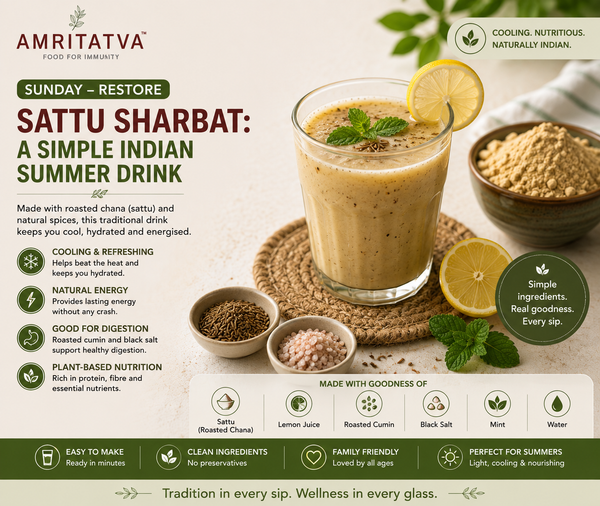
Traditional drinks such as sattu sharbat can also add variety to your beverage routine when prepared in a way that suits your dietary needs.
The goal is not to turn every drink into a wellness product.
It is simply to make water and practical beverages more visible choices.
Are instant meals replacing balanced meals too often?
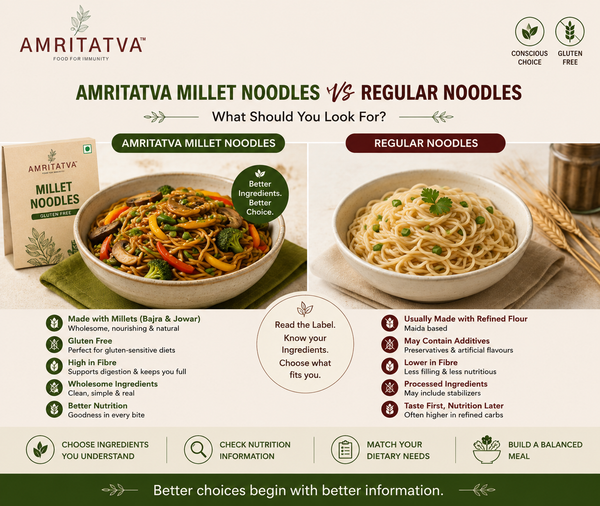
Instant noodles, packaged snacks and ready-to-eat meals can be useful when time is limited.
The better question is whether they are becoming the main structure of your diet.
An easy way to improve a convenience meal is to add real ingredients.
For example, noodles can be paired with mushrooms, vegetables and a suitable protein source.
A ready meal can be served with a fresh salad.
Instant food does not have to mean careless food.
What does a more balanced everyday plate look like?
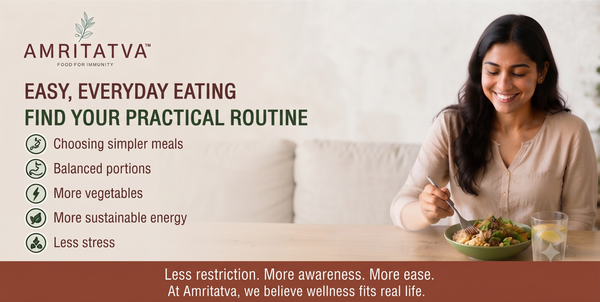
A practical Indian meal can be surprisingly simple.
Think:
Grain or millet + pulse or protein source + vegetables + suitable fats
For example:
- Dal + rice + seasonal vegetables
- Millet roti + sabzi + dal
- Khichdi + vegetables
- Sattu drink + fruit + nuts
- Millet noodles + mushrooms + vegetables
There is no need to make every meal perfect.
Can one “superfood” fix an unhealthy diet?
No.
Mushrooms, millets, sattu and other nutrient-rich ingredients can be useful parts of a varied diet, but no single ingredient can replace the overall quality of your eating pattern.
This is also why we prefer talking about food honestly rather than presenting one ingredient as a cure-all.
How can Amritatva fit into this approach?
Amritatva products are designed to fit into practical everyday meals.
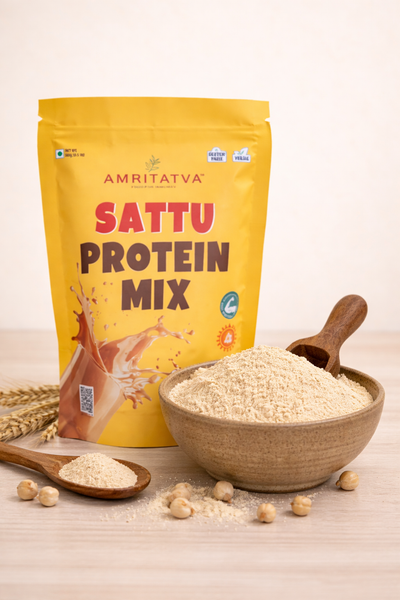
Sattu can be used in drinks and recipes.
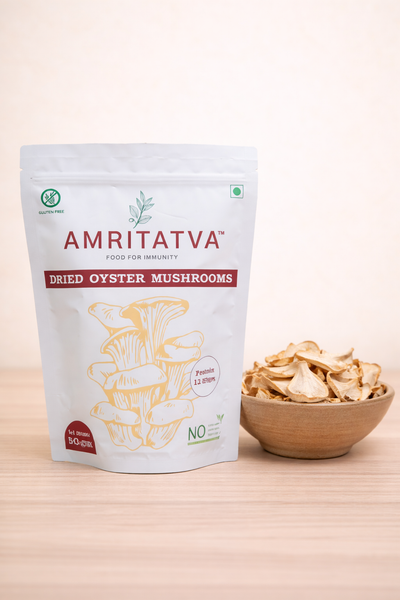
Mushroom powder can be added to soups, curries and other savoury dishes.
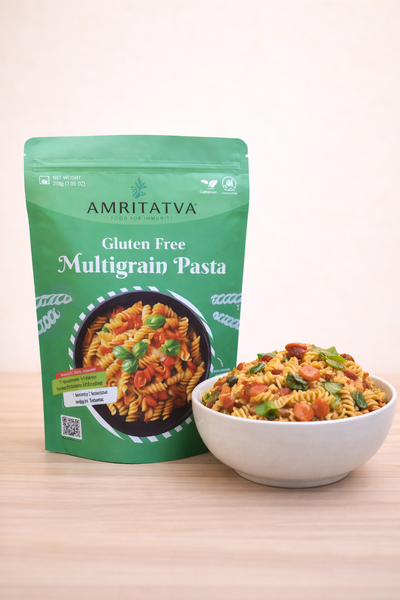
Millet noodles can be paired with vegetables and suitable protein sources.
The important part is how these foods fit into the wider meal.
Frequently Asked Questions
Should I stop eating processed foods completely?
No. Processed foods cover a very broad range, and some can fit into a balanced diet. The more useful approach is to avoid relying heavily on highly processed foods and include a wider variety of minimally processed and whole foods.
Are sweets completely unhealthy?
No. A balanced eating pattern can include sweets. Frequency, portion size and the rest of the diet matter more than treating one food as forbidden.
Are fried foods bad?
Not automatically. They can be enjoyed occasionally, but making fried foods the centre of everyday eating may reduce variety and make the overall diet heavier.
What is the easiest food habit to change first?
Choose one high-frequency habit. Replacing one sugary drink with water, adding vegetables to lunch or preparing one more home-cooked meal each week can be a practical starting point.
Better food habits are built gradually
Healthy eating does not need fear.
It does not need extreme rules.
It needs awareness, variety and consistency.
At Amritatva, we believe the strongest food habits are the ones that fit real life.
One better choice at a time.
0 comments