

Food choices are personal.
Sometimes a small change in an everyday ingredient makes you look more closely at what you are eating.
Millet pasta is one example.
Rather than presenting it as a universal solution for digestive problems, it is more useful to understand what millet pasta is, why someone may choose it and how it fits into a balanced meal.
What is millet pasta?
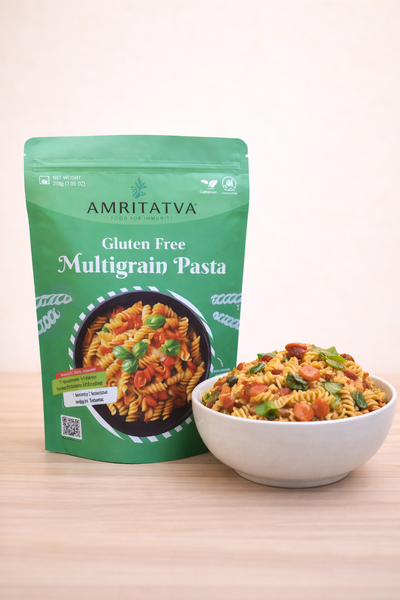
Millet pasta is pasta made partly or primarily from millet, depending on the formulation.
Millets are traditional grains that have been used in India for generations.
Modern food products can turn them into familiar formats such as pasta and noodles.
Why do people choose millet pasta?
There can be several reasons.
Some people want to explore different grains.
Some prefer millet-based foods.
Some need gluten-free options.
Others simply enjoy the taste and texture.
The right choice depends on the individual and the product.
Is millet pasta easier to digest?
There is no universal answer.
Digestive comfort varies from person to person and depends on the specific food, portion size and overall meal.
It would therefore be misleading to promise that millet pasta will improve digestion for everyone.
Can millet pasta be part of a balanced meal?
Absolutely.
Try pairing it with:
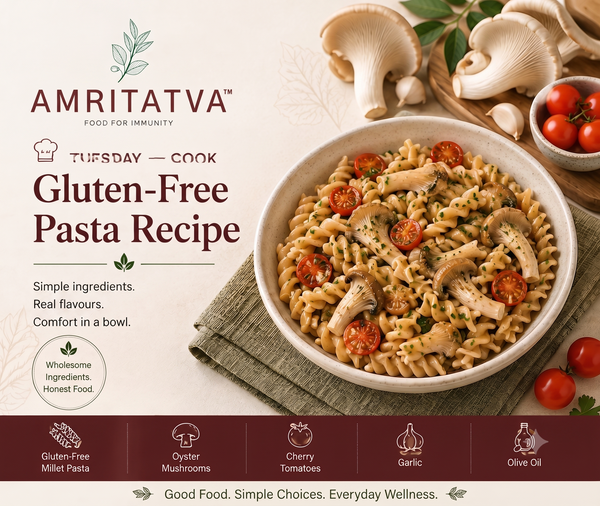
- Mushrooms
- Vegetables
- Lentils
- Chickpeas
- Tofu
- A suitable sauce
This gives the meal more variety and allows the pasta to be one component rather than the entire plate.
Is millet automatically healthier than wheat?
Not automatically.
Millets have useful nutritional qualities, but the exact nutritional profile depends on the millet variety, processing and the finished product.
A better comparison starts with the nutrition panel and ingredient list.
What should you check when buying pasta?
Look at:
Ingredients
What grain or flour is used?
Nutrition
How much protein, fibre, carbohydrate, fat and sodium does it provide?
Dietary information
Is it gluten-free if you need that?
Serving size
How much are you actually eating?
These details are more meaningful than a simple front-of-pack “healthy” message.
What if you experience regular bloating?
Do not assume that one pasta product is automatically the answer.
Digestive symptoms can have many causes.
If bloating is frequent or persistent, discuss it with a qualified healthcare professional.
How can Indian flavours work with millet pasta?
Very easily.
Try:
- Garlic
- Mushrooms
- Chilli
- Coriander
- Cumin
- Roasted vegetables
You can also make a tomato-based sauce or a simple stir-fry-style pasta.
How does Amritatva fit into the conversation?
At Amritatva, we are interested in making traditional grains accessible in familiar formats.
The goal is not to tell people that one product is perfect for everyone.
It is to give consumers another choice.
Frequently Asked Questions
Is millet pasta gluten-free?
It depends on the product formulation and manufacturing process. Always check the product label for gluten-free information.
Can millet pasta replace regular pasta?
Yes, if you enjoy it and it fits your dietary preferences. The choice is personal.
Does millet pasta automatically improve digestion?
No. Digestive responses vary between people and products.
What should I eat with millet pasta?
Vegetables, mushrooms and suitable protein sources can make the meal more varied and balanced.
A better food choice begins with a better question
Instead of asking, “Is this food perfect?”
ask:
“Does this food fit my needs, preferences and overall diet?”
That is a more sustainable way to make food decisions.
At Amritatva, we believe informed choices are more valuable than promises.
Understand your food. Build your meal. Choose what fits you.


0 comments