

How Much Protein Do You Really Need Daily? A Guide to Protein Requirements
Protein is an essential nutrient that your body needs every day for muscle maintenance, tissue repair and several important functions. For healthy adults, the Indian Council of Medical Research–National Institute of Nutrition (ICMR–NIN) recommends approximately 0.83 grams of protein per kilogram of body weight daily. For example, a person weighing 65 kg needs approximately 54 grams of protein per day. However, meeting your protein requirements is not just about eating more. The type of food, its nutritional quality and the variety in your everyday diet also matter. From dal and chana to sattu, soy and dairy, Indian kitchens offer several practical ways to include protein in daily meals without depending entirely on supplements.
Why Does Your Body Need Protein?
Protein is one of the three major macronutrients, alongside carbohydrates and fats. It is made up of amino acids, which help build and maintain different structures in the body.
Your body uses protein for several important functions:
-
Muscle maintenance: Supports the growth, maintenance and repair of muscle tissue.
-
Tissue repair: Helps maintain and renew body tissues.
-
Enzyme production: Provides amino acids needed to make enzymes involved in essential body processes.
-
Hormone production: Contributes to the production of several hormones.
-
Immune function: Supports the production of antibodies and other components of the immune system.
Protein is therefore important for people of different ages and activity levels, not just athletes and gym enthusiasts.
How Much Protein Do You Need Daily?
According to ICMR–NIN's Dietary Guidelines for Indians, 2024, the recommended dietary allowance (RDA) for healthy adults is approximately 0.83 grams of protein per kilogram of body weight per day.
Here is a simple reference table:
| Body Weight | Approximate Daily Protein |
|---|---|
| 45 kg | 37 g |
| 50 kg | 42 g |
| 55 kg | 46 g |
| 60 kg | 50 g |
| 65 kg | 54 g |
| 70 kg | 58 g |
| 75 kg | 62 g |
These values are calculated using the 0.83 g/kg recommendation and rounded to the nearest gram.
The ICMR–NIN guidelines also give an estimated average requirement (EAR) of 0.66 g/kg/day. The RDA is the higher reference intended to cover the needs of nearly all healthy people in the relevant population.
Individual requirements may differ during pregnancy, breastfeeding, childhood, illness and recovery. People with specific medical or athletic needs should seek individual dietary advice.
Does Your Daily Lifestyle Change Your Protein Requirements?
Protein is important whether you spend most of your day at a desk, manage a household, work outdoors or exercise regularly.
The ICMR–NIN 2024 adult RDA of 0.83 g/kg/day is stated regardless of gender or physical activity. This is a useful Indian reference for healthy adults, rather than a reason to automatically increase protein intake whenever you start exercising.
For people involved in intensive sports training, individual requirements may need professional assessment based on their training programme, energy intake and goals.
Older adults, pregnant women and people recovering from illness may also need specific dietary guidance.
The focus should be on meeting your nutritional needs rather than following a high-protein target simply because it is popular.
Which Indian Foods Are Good Sources of Protein?
You do not need expensive supplements to include protein in your daily diet. Several familiar Indian ingredients contribute protein and can be used in everyday cooking.
| Food category | Examples |
|---|---|
| Pulses | Moong dal, masoor dal, toor dal |
| Legumes | Chickpeas, kala chana, rajma |
| Soy foods | Soybeans, tofu, soya chunks |
| Dairy | Milk, paneer, curd |
| Nuts and seeds | Peanuts, almonds, sesame seeds |
| Traditional foods | Sattu, roasted chana |
| Non-vegetarian foods | Eggs, fish, chicken |
The protein contribution depends on the food, portion size and preparation method.
Including different food groups is more useful than relying on one ingredient every day.
Can You Get Enough Protein from a Plant-Based Diet?
Yes. A varied and well-planned plant-based diet can provide the protein your body needs.
However, protein quality also matters. Different plant foods contain different proportions of essential amino acids, which the body cannot produce on its own.
ICMR–NIN explains that cereals and pulses have complementary amino acid profiles. Cereals tend to be lower in lysine, while pulses tend to be lower in sulphur-containing amino acids.
The 2024 guidelines describe a cereal-to-pulse combination of approximately 3:1 by raw food weight as one way to improve the amino acid balance of a meal.
This is one reason traditional Indian combinations such as dal with rice, khichdi and roti with dal are useful components of a varied diet.
Soybeans, tofu, chickpeas, peanuts, nuts and seeds can provide additional plant-based protein.
You do not need to combine every protein source in the same meal. Overall dietary variety throughout the day is what matters.
How Can You Include Protein in Everyday Indian Cooking?
Protein-rich eating does not require a completely different menu. Small additions to familiar Indian meals can help improve their nutritional balance.
Here are some practical ideas:
For breakfast
-
Prepare moong dal chilla with curd.
-
Include sprouts with your regular breakfast.
-
Try sattu as a savoury drink with roasted cumin, lemon and water.
For lunch
-
Pair dal with rice or roti.
-
Prepare rajma or chana with seasonal vegetables.
-
Add curd or paneer according to your dietary preference.
For evening snacks
-
Choose roasted chana or peanuts.
-
Prepare a savoury sattu drink.
-
Enjoy a homemade chana-based snack instead of relying entirely on packaged options.
For dinner
-
Include dal, tofu or paneer.
-
Prepare vegetable khichdi with an appropriate pulse-to-grain combination.
-
Add soy-based ingredients to suitable vegetable preparations.
These are meal ideas rather than fixed portions. Your actual protein intake will depend on how much of each ingredient you use.
How Does AMRITATVA Fit into Everyday Nutrition?
At AMRITATVA, we believe healthy eating should be practical, transparent and connected to familiar Indian food habits.
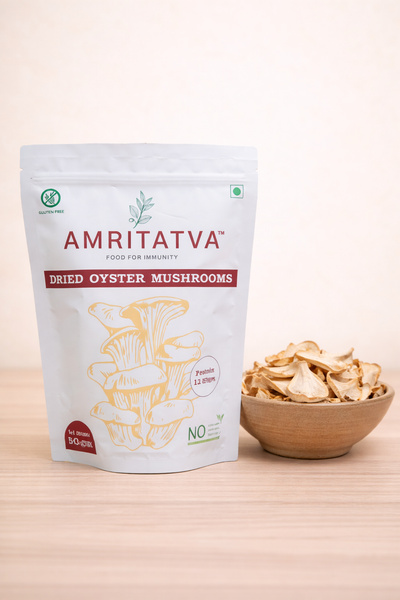
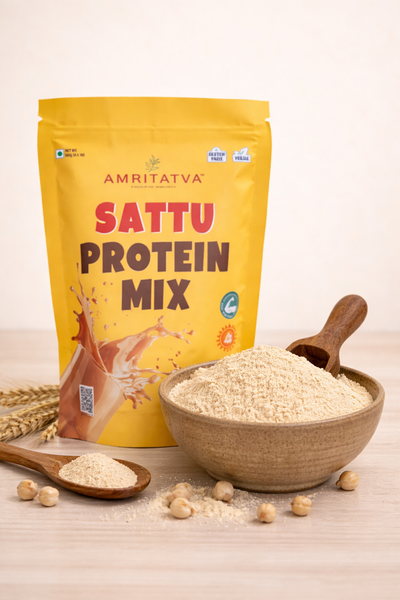
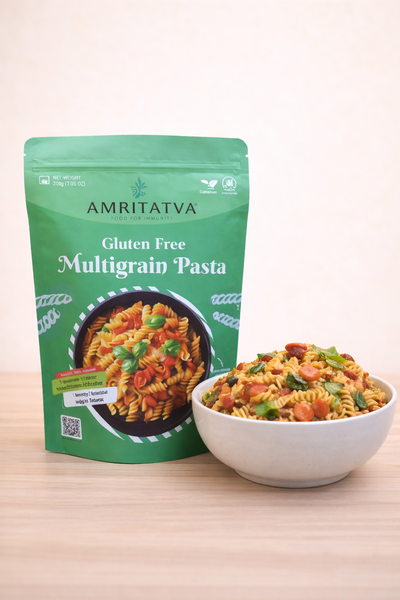
Our food range includes lab-tested Oyster Mushroom Powder, Gluten-Free Pasta, Gluten-Free Noodles, Sattu Protein Mix and seasonings. Our products are made in India, and each product is independently tested by a third-party laboratory. AMRITATVA is also a DPIIT-recognised startup with FSSAI-approved products.
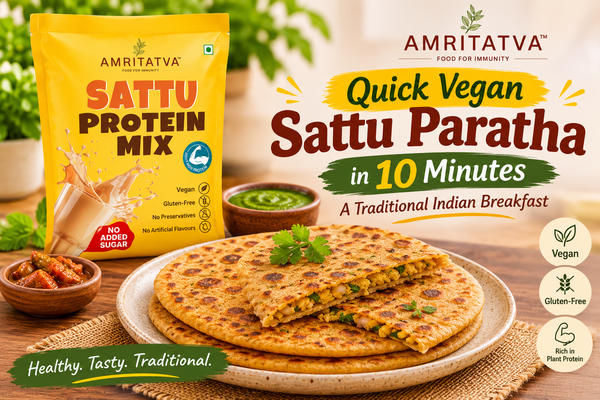
For people looking to include traditional ingredients in everyday meals, our Sattu Protein Mix offers an option to explore sattu in a convenient format.
Oyster Mushroom Powder can be used as a flavourful ingredient in soups, gravies and other preparations. Mushrooms also contain naturally occurring dietary fibre and beta-glucans, but should not be treated as a concentrated protein source.
Our Gluten-Free Pasta and Gluten-Free Noodles offer alternatives for people looking for gluten-free meal options. Their overall protein contribution depends on the product formulation and serving size, so check the nutritional information on the individual pack.
The aim is not to replace traditional foods but to make thoughtful food choices easier to incorporate into everyday cooking.
Explore the AMRITATVA food range at www.amritatva.com.
Frequently Asked Questions About Daily Protein Intake
1. How much protein should an adult eat every day?
ICMR–NIN's 2024 recommendation for healthy adults is approximately 0.83 grams of protein per kilogram of body weight daily. A person weighing 60 kg would therefore need approximately 50 grams. This is a general reference, and requirements can differ during pregnancy, breastfeeding, illness and other specific circumstances.
2. Which Indian vegetarian foods contain protein?
Common vegetarian protein sources include moong dal, masoor dal, chickpeas, rajma, soybeans, tofu, paneer, curd, peanuts and sattu. Including different sources across breakfast, lunch and dinner helps improve dietary variety. Portion sizes matter because the amount of protein you receive depends on how much of each food you consume.
3. Can a vegan diet provide enough protein?
Yes. A carefully planned vegan diet can provide adequate protein through lentils, chickpeas, kidney beans, soybeans, tofu, nuts and seeds. Combining cereals and pulses also improves the balance of essential amino acids. The important consideration is overall dietary variety and sufficient food intake rather than depending on a single plant-based ingredient.
4. Is sattu a good addition to a protein-rich diet?
Sattu, traditionally prepared from roasted gram, is a familiar Indian food ingredient that can contribute plant-based protein. It can be prepared as a savoury drink or included in traditional recipes. Its nutritional contribution depends on the quantity consumed and the product formulation. Check the nutrition panel when choosing a packaged sattu product.
5. Do I need protein powder if I exercise regularly?
Not necessarily. ICMR–NIN states that most athletes can obtain recommended protein through appropriate food choices. Everyday foods such as pulses, dairy, soy, eggs, nuts and seeds can contribute to daily requirements. Supplements may be relevant in particular situations, but they should not be used indiscriminately or as a replacement for a balanced diet.
6. Can I get protein from everyday Indian meals?
Yes. Traditional meals containing dal, rice, roti, chickpeas, curd and other pulses can contribute protein. Including a variety of foods throughout the day helps improve the overall amino acid balance. The actual protein intake depends on the ingredients and portion sizes, so meal composition matters as much as the name of the dish.
Better Nutrition Begins with Everyday Food Choices
Protein is essential, but a healthy diet is about more than one nutrient. Understanding your daily requirements, choosing a variety of protein sources and preparing balanced meals can make nutrition more practical and sustainable.
You do not have to follow every high-protein trend or depend entirely on supplements. Familiar foods such as dal, chana, sattu, soy and dairy can all have a place in a balanced Indian diet.
At AMRITATVA, we believe mindful eating begins with understanding ingredients and making informed food choices.
Live Kindly. Eat Better.
0 comments