

Healthy eating should not make you afraid of food.
Yet diet culture often turns food into a list of rules.
Eat this.
Never eat that.
Count everything.
Feel guilty when you do not follow the plan.
A more balanced approach looks different.
Rather than dividing food into perfect and forbidden categories, it focuses on overall eating patterns, variety and sustainable habits.
What is diet culture?
Diet culture is a broad term used to describe social beliefs and behaviours that place heavy emphasis on weight, appearance, restriction and food rules.
It can encourage people to chase quick results rather than build sustainable habits.
Social media can make this worse by presenting highly edited bodies and extreme diets as normal.
What is a more balanced approach to eating?
A balanced approach asks different questions.
Are meals varied?
Are you eating enough?
Are you including vegetables, grains, pulses and suitable protein sources?
Do you enjoy your food?
Can you maintain this routine over time?
These questions are more useful than chasing perfection.
Is “clean eating” always healthy?
Not automatically.
The phrase “clean eating” has no single universal definition.
It can be helpful when it simply means eating more whole or minimally processed foods.
But it can become unhelpful if it turns into fear of normal foods or rigid rules.
That is why we prefer talking about mindful, balanced eating rather than creating a long list of “clean” and “unclean” foods.
Why is food guilt unhelpful?
Food is part of daily life.
Celebrations, family meals, travel and social occasions naturally change what we eat.
Feeling guilty after every deviation from a diet can make food emotionally exhausting.
A sustainable approach leaves room for flexibility.
Can you enjoy comfort food and still eat well?
Yes.
A balanced diet does not require every meal to be identical.
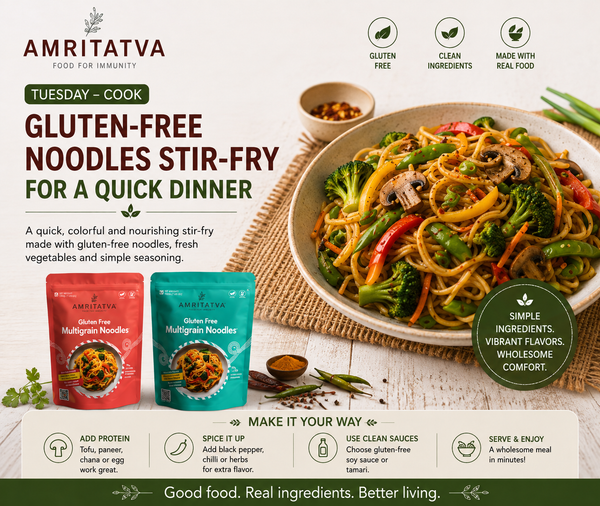
You can enjoy noodles.
You can enjoy dessert.
You can enjoy a festive meal.
The key is what the overall pattern looks like.
One meal does not define your health.
How can you build a healthier relationship with food?
Start with awareness.
Eat slowly when possible.
Notice hunger and fullness.
Read labels.
Choose variety.
Avoid unnecessary fear of individual foods.
And be careful with online nutrition advice that promises dramatic results.
What can Indian food traditions teach us?
Indian cuisine offers an enormous variety of grains, pulses, vegetables, spices, fermented foods and regional recipes.
This diversity makes it possible to create balanced meals without depending on restrictive food rules.
Dal, rice, roti, millet, vegetables, chana, curd, nuts and seeds can all play different roles in a varied eating pattern depending on individual needs.
Where does Amritatva fit?
At Amritatva, we want to make food choices easier to understand rather than turning them into another set of rules.
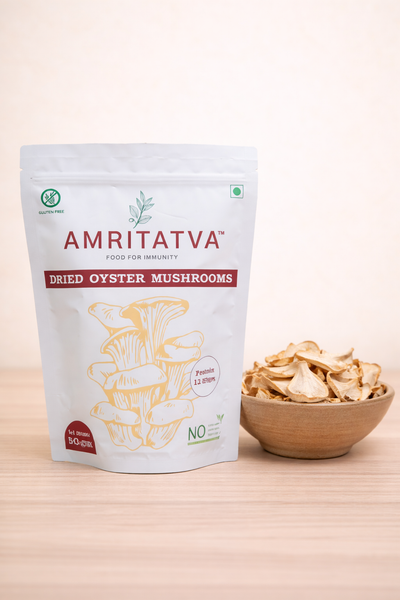
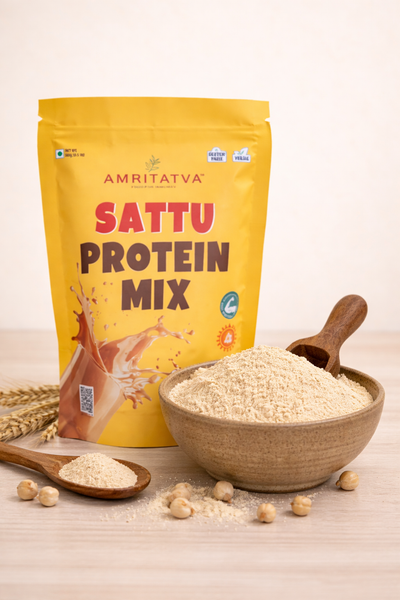
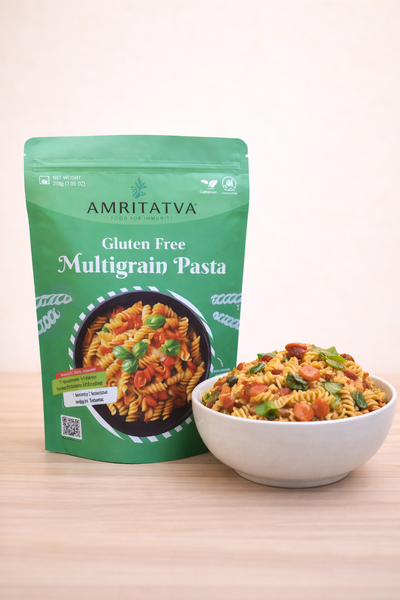
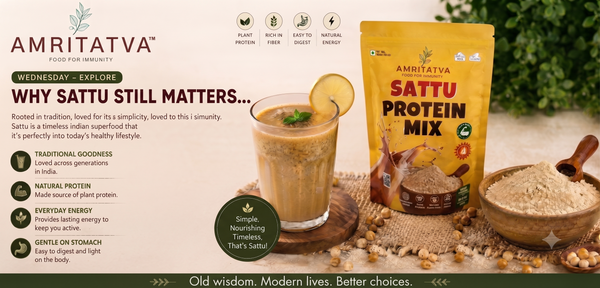
Whether you choose gluten-free foods, millet-based products, sattu or mushroom ingredients, the bigger picture still matters.
Frequently Asked Questions
Is clean eating the same as dieting?
No. Clean eating is often used to describe a focus on whole or minimally processed foods, while dieting may involve specific calorie, weight or food restrictions. The terms are not interchangeable.
Should I avoid all processed food?
No. Food processing exists on a spectrum. Some processed foods can fit into a balanced diet. The goal is to look at ingredients, nutrition and overall patterns rather than applying one rule to every packaged food.
Can I lose weight without restrictive dieting?
Weight management is influenced by many factors, including energy intake, activity, sleep and individual circumstances. People seeking weight-related support may benefit from guidance from a qualified professional rather than extreme diet rules.
How can I reduce food guilt?
Start by moving away from “good food/bad food” thinking. Focus more on your overall pattern, variety and how your choices fit your needs.
A healthier relationship with food
Food should provide nourishment, enjoyment and connection—not constant anxiety.
At Amritatva, we believe sustainable wellness is built through understanding, balance and realistic habits.
Less fear. More awareness. Better choices.
0 comments