

Healthy eating becomes easier when the hard part is done before the busy week begins.
Meal prep does not need to mean preparing seven identical boxes on Sunday.
A better approach for many households is simply preparing a few useful ingredients in advance.
That can make breakfast, lunch and dinner easier to assemble when time is short.
What is practical meal prep?
Practical meal prep means preparing food components that can be combined in different ways.
For example:
- Cooked millet or rice
- Chopped vegetables
- Roasted vegetables
- Boiled chana
- Washed fruit
- Homemade chutney
- Soup base
- Overnight oats
- Roasted nuts or seeds
This gives you flexibility without requiring a rigid weekly menu.
Which grains can you prepare in advance?
Rice, millet and quinoa can often be cooked ahead and stored properly.
You can then use them for:
- Lunch bowls
- Khichdi
- Stir-fries
- Quick dinners
- Grain salads
Choose the grains your family already eats.
Meal prep should reduce work, not introduce unfamiliar foods that nobody wants to eat.
How can vegetables make meal prep easier?
Wash, cut and store vegetables that you commonly use.
For example:
- Carrots
- Capsicum
- Broccoli
- Beans
- Cabbage
- Spinach
Some vegetables can also be roasted in advance.
This can save several small steps during the week.
What are easy breakfast prep ideas?
Breakfast is often where rushed mornings create rushed choices.
A few easy options:
Overnight oats
Prepare oats with milk or plant-based milk and add fruit or seeds.
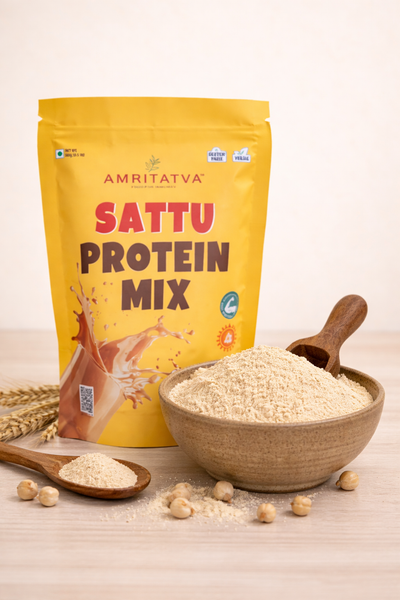
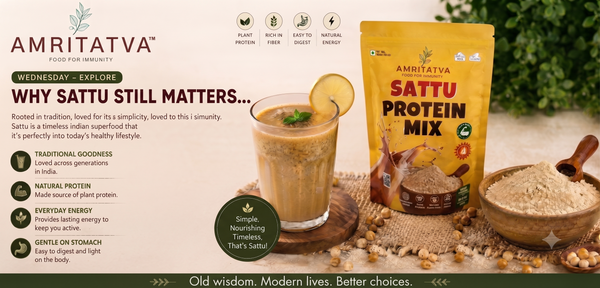
Sattu drink
Keep your sattu and dry seasonings ready so the drink can be mixed quickly.
Fruit + nuts
Wash fruit ahead and keep suitable nuts accessible.
The idea is not to make every morning identical.
It is to make at least one reliable option easy.
How can meal prep help with busy evenings?
Dinner becomes easier when at least one or two ingredients are already prepared.
Cooked grains + vegetables + a protein source can become a meal in minutes.
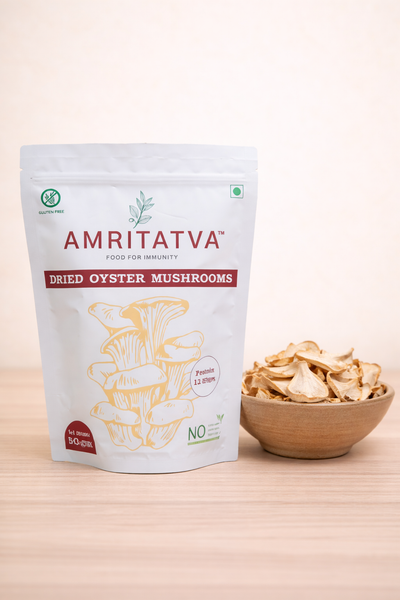
A prepared soup base can be turned into dinner with mushrooms or vegetables.
Cooked chana can become a salad, curry or snack.
This is the real value of meal prep: less decision-making when you are already tired.
Does meal prep mean eating the same food all week?
No.
You can prepare components rather than complete meals.
The same millet might become a lunch bowl one day and a stir-fry the next.
The same roasted vegetables can be used in wraps, salads or alongside dal.
This keeps the routine more interesting.
What about snacks?
Keep practical snacks visible and ready.
Examples include:
- Fruit
- Nuts
- Roasted chana
- Seeds
- Homemade snack mixes
The goal is not to eliminate every packaged snack.
It is simply to make another option easy to reach.
How does meal prep support healthier habits?
Meal prep does not guarantee better eating.
Its value is convenience.
When the healthier option requires very little effort, it becomes easier to choose.
But food safety and storage matter.
Prepared foods should be cooled, stored properly and consumed within appropriate time limits.
How can Amritatva fit into weekly meal prep?
Several Amritatva products can work as pantry ingredients.
Sattu can become a quick breakfast drink.
Mushroom powder can be added to savoury recipes.
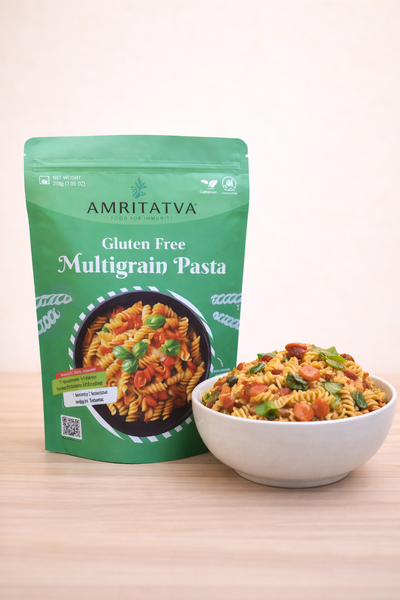
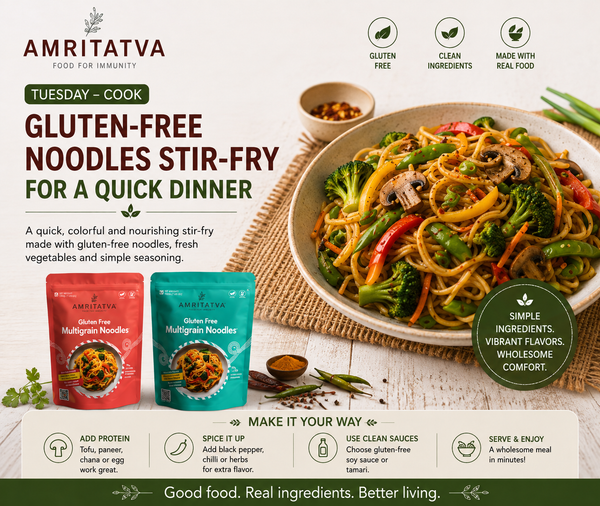
Millet noodles and pasta can be used for quick dinners.
The goal is not to stock every product.
It is to keep a small group of useful ingredients that fit the way your household cooks.
Frequently Asked Questions
How many meals should I prep at once?
There is no fixed number. Some households prep two or three components while others prepare complete meals. Start with the amount you can comfortably store, use and manage.
Can meal prep save time?
Yes. Preparing ingredients in advance can reduce chopping, cooking and decision-making during busy days.
Is meal-prepped food healthy automatically?
No. Meal prep is a method, not a nutritional guarantee. The quality of the meals still depends on the ingredients and overall dietary balance.
What is the easiest meal-prep habit to start with?
Prepare one flexible ingredient, such as cooked grain, chopped vegetables or boiled chana. Use it in different meals during the week.
Prepare a little. Make the week easier.
Meal prep is not about perfection.
It is about making tomorrow easier.
A few prepared ingredients in the refrigerator can save time, reduce last-minute decisions and create more space for balanced meals.
At Amritatva, we believe sustainable food habits are often built through small systems rather than big promises.
Prepare today. Make tomorrow a little easier.
0 comments