

Can an organized pantry really help you eat better?
A pantry cannot make food choices for you, but the way your kitchen is arranged can make some choices easier than others. When everyday ingredients are visible, easy to find and properly stored, cooking can become less stressful and more predictable.
A useful pantry does not need expensive containers or a perfectly styled kitchen. Start with the basics: remove expired food, group similar ingredients, keep frequently used items accessible, label opened products when useful and follow a simple first-in, first-out system.
For an Indian kitchen, this could mean keeping dals together, grains together, spices organised and everyday ingredients such as sattu, millet products, nuts and seeds easy to locate.
The goal is not a “perfect pantry.”
The goal is a kitchen that supports the way you actually want to eat.
Why does pantry organization matter for healthy eating?
Think about what happens when you come home hungry and your kitchen is disorganised.
You may have ingredients—but not know where they are.
You may have bought healthy foods—but they remain unused at the back of a shelf.
You may have several half-open packets—but no idea which one should be used first.
This is where organization becomes useful.
Research on food environments suggests that the availability, accessibility and convenience of foods can influence food choices. That does not mean moving a packet of snacks will automatically change your diet. It simply means the environment around us can make certain behaviours easier or harder.
A well-organized pantry therefore works as a practical system:
See it → remember it → use it → restock it.
Where should you start when organizing your pantry?
Start with a simple clean-out rather than buying storage containers.
Take everything out of one shelf or section at a time.
Check:
- Expiry or best-before dates
- Opened packets
- Damaged packaging
- Ingredients you no longer use
- Duplicate products
- Foods that have been sitting unused for a long time
Do not throw away perfectly usable food simply because it is not considered a “health food.”
The objective is better organization and less waste, not creating a pantry based on food labels such as “good” and “bad.”
Once the shelf is cleared, clean the surface and return only the items you actually need.
How should you divide an Indian pantry into categories?
You do not need dozens of categories.
A simple system might look like this:
| Category | Examples |
|---|---|
| Grains & staples | Rice, millet, oats, poha |
| Pulses & dals | Moong, chana, masoor, rajma |
| Flours | Atta, besan, sattu, millet flours |
| Spices | Cumin, turmeric, coriander, chilli |
| Seeds & nuts | Flax, chia, sesame, almonds |
| Cooking essentials | Oil, vinegar, basic ingredients |
| Breakfast & quick meals | Sattu, poha, ready mixes |
| Snacks | Roasted chana, makhana, nuts |
| Baking ingredients | Cocoa, baking ingredients, etc. |
The categories should reflect your household's actual cooking habits.
If you rarely bake, you do not need a large baking section.
If your family eats dal and roti regularly, those ingredients deserve the easiest access.
Should healthy foods be kept at eye level?
Visibility can be useful, but there is no need to turn this into a strict rule.
Keep the foods you want to use regularly easy to see and reach.
For example:
- Sattu
- Nuts and seeds
- Roasted chana
- Millet products
- Frequently used dals
- Everyday spices
- Tea or herbal ingredients
This reduces the chance that useful ingredients disappear behind rarely used products.
At the same time, you do not need to completely hide biscuits, sweets or other occasional foods.
A realistic pantry can contain foods for everyday meals and foods enjoyed occasionally.
The objective is to create an environment that supports your preferences—not one that makes your kitchen feel restrictive.
What should you do with opened packets?
Opened packets are often where pantry clutter begins.
Once a packet is opened, make it easier to identify and use.
Depending on the ingredient, you can:
- Transfer it to an appropriate airtight container.
- Keep the original packaging or label nearby for ingredient information.
- Mark the opening date when useful.
- Store it according to the manufacturer's instructions.
- Keep similar ingredients together.
- Use older opened products before opening another packet of the same ingredient.
For packaged foods, do not throw away the original label information if you may need to check ingredients, allergens, nutrition information or storage instructions.
This is especially useful for people managing specific dietary requirements.
Are transparent containers necessary?
No.
Transparent containers are convenient because you can see what is inside, but they are not essential.
The important things are:
Clean storage + appropriate container + clear identification + correct storage conditions.
If you use opaque containers, simply label them.
For example:
Sattu
Moong Dal
Bajra Flour
Roasted Chana
Chia Seeds
A handwritten label can work perfectly well.
Pantry organization should make life easier—not create another shopping list of things you “need” to buy.
How can pantry organization reduce food waste?
An organized pantry makes it easier to see what you already own.
This can help prevent situations such as:
“I thought we had no dal, so I bought another packet.”
Then you discover two unopened packets behind the flour.
A simple first-in, first-out approach can help.
When you buy a new packet, move the older one towards the front and place the newer one behind it, where practical.
This works particularly well for:
- Dals
- Flours
- Packaged grains
- Sattu
- Seeds
- Nuts
- Ready-to-use ingredients
Always follow the product's storage instructions and use food safely.
How can you organize spices without making cooking harder?
Indian cooking can involve many spices, so spices deserve their own simple system.
You can arrange them according to frequency of use.
Everyday spices
Keep commonly used ingredients such as cumin, turmeric, coriander powder and chilli powder within easy reach.
Less frequently used spices
Keep whole spices and occasional-use ingredients together but slightly further back.
Spice blends
Keep ready-made blends separately so they do not get confused with individual spices.
You can also group spices by cooking purpose—for example, everyday tadka ingredients together.
The best arrangement is the one that allows you to find what you need without opening five containers while the tadka is already heating.
How can your pantry support weekly meal planning?
You do not need to plan every meal seven days in advance.
A simpler method is to identify a few versatile ingredients before grocery shopping.
For example:
Dal + rice + vegetables
Sattu + roti + salad
Millet + dal + seasonal sabzi
Poha + vegetables + peanuts
Gluten-free pasta + vegetables + seasoning
When your pantry contains ingredients that can be combined in several ways, meal preparation becomes more flexible.
Before shopping, take five minutes to check:
- What do I already have?
- What needs to be used soon?
- What staples are running low?
- What vegetables or fresh foods need to be purchased?
- What meals can I make from what is already available?
This can help turn grocery shopping into a plan rather than an impulse.
How can you organize a pantry for an Indian family?
Different members of a household may have different eating preferences.
Instead of creating separate “healthy” and “unhealthy” sections, consider organizing according to how food is actually used.
For example:
Daily cooking zone
Rice, atta or millet flour, dals and everyday spices.
Quick breakfast zone
Poha, oats, sattu and other frequently used breakfast ingredients.
Snack zone
Nuts, seeds, roasted chana and other household snack options.
Special-use zone
Baking ingredients, festive foods and occasional-use products.
Dietary-specific zone
If someone in the household follows a medically necessary or allergy-related diet, keeping appropriate foods clearly separated and identified can be particularly useful.
For strict gluten-free households, preventing cross-contact is more important than simply putting gluten-free products on a separate shelf.
How can you make healthy cooking easier with pantry organization?
The most useful pantry is not the prettiest one.
It is the one that answers three questions quickly:
What do I have?
Where is it?
What can I make with it?
For example, if you see sattu, millet flour, dal, spices and roasted chana easily, you may naturally think of several Indian meal options.
If everything is buried under unused packets, even a well-stocked pantry can feel empty.
That is why organization is really about reducing friction.
The less effort required to find and use everyday ingredients, the easier it can be to cook at home consistently.
How can Amritatva products fit into an organized pantry?
At Amritatva, we focus on practical food products that can fit into everyday Indian kitchens.
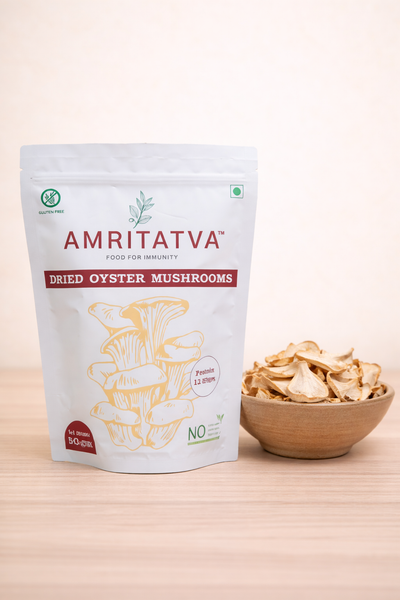
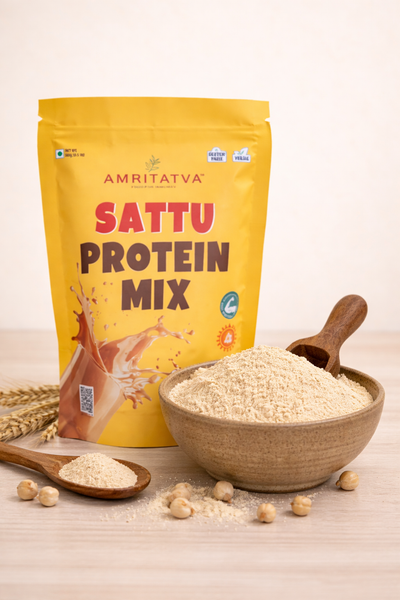
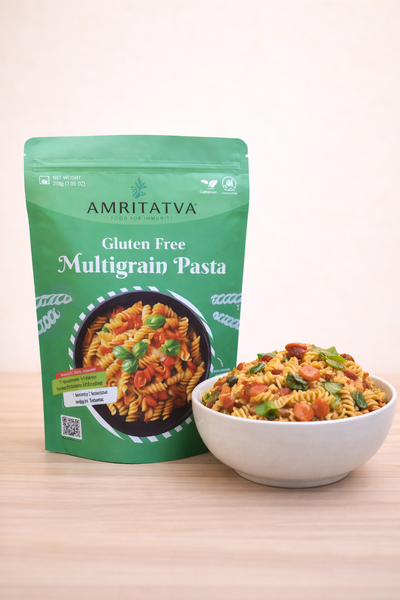
Our range includes Sattu Protein Mix, oyster mushroom products, gluten-free pasta and noodles, and seasonings.
For pantry organization, the principle is simple:
Keep frequently used products visible, store them according to their instructions, and group them with the ingredients you naturally use alongside them.
For example, Sattu Protein Mix can sit alongside other breakfast and quick-meal ingredients rather than being forgotten at the back of a cupboard.
Gluten-free pasta and noodles can be stored with other quick meal staples.
The aim is not to fill your pantry with “health products.”
It is to make the ingredients you have easier to see, remember and use.
How can you use an organized pantry for Indian cooking?
Once your pantry is organized, look for combinations rather than complicated recipes.
For breakfast
Keep poha, sattu, millet flour, nuts and seeds accessible for quick options.
For lunch
Pair your available dal or millet with seasonal vegetables.
For tiffin
Use pantry staples to prepare simple roti, paratha, cheela or other familiar foods.
For chai-time
Keep options such as roasted chana, nuts or homemade snacks visible instead of having to search through multiple shelves.
For quick dinner
Keep pasta, noodles, seasonings and other frequently used ingredients together so that a simple meal can come together without searching the entire kitchen.
The pantry should support your cooking style, not force you into a particular diet.
What is the simplest weekly pantry routine?
You can create a small routine instead of waiting for the pantry to become completely chaotic.
Once a week
Check:
What is running low?
Rotate:
What should be used first?
Clean:
Is anything spilled or improperly stored?
Plan:
What meals can you make from what you already have?
Restock:
Buy only what is actually needed.
This takes less effort than doing a complete pantry makeover every few months.
And that is the larger lesson.
Good organization is not about one big cleaning session. It is about a system that is easy to repeat.
Frequently Asked Questions
Does an organized pantry help with healthy eating?
It can make healthier choices more convenient, but it cannot guarantee them. A pantry mainly changes how easily you can see, access and use the foods you already have. Keeping useful ingredients visible and meal staples organized can reduce some of the friction involved in cooking. Your overall eating pattern, preferences, budget and circumstances still determine what you eat.
How often should I clean and organize my pantry?
There is no universal schedule. A quick weekly check can help you identify ingredients that need to be used, while a more thorough cleaning can be done when necessary. The important part is regular maintenance. Check packaging, storage conditions and dates, and follow the manufacturer's storage instructions rather than relying on a fixed calendar.
Should I remove all processed foods from my pantry?
Not necessarily. Pantry organization should not become a rigid food rule. Packaged and processed foods can be part of many people's diets. Instead, focus on knowing what you have, checking labels, storing foods correctly and keeping a variety of ingredients available. The goal is to create a kitchen that supports balanced and practical meals rather than one built around unnecessary restrictions.
Are glass containers better for pantry storage?
Glass containers can be useful, but they are not automatically better for every ingredient or household. Appropriate food-safe containers should protect ingredients from moisture, pests and contamination while being practical for your kitchen. If you use containers, retain important product information such as ingredient and allergen details when needed. Always follow the storage instructions provided for the food.
How can pantry organization reduce food waste?
An organized pantry makes it easier to see what you already own and what needs to be used. Grouping similar ingredients and following a first-in, first-out approach can help prevent older products from being forgotten behind newer purchases. Regularly checking your shelves before grocery shopping can also reduce duplicate buying and help you plan meals around ingredients you already have.
How should I organize a pantry for gluten-free cooking?
For a household requiring strict gluten-free food, organization needs to go beyond a separate shelf. Preventing cross-contact from shared utensils, containers, surfaces and crumbs can be important. Packaged products should be checked for appropriate gluten-free labelling and handling information. If someone has a medical requirement for strict gluten avoidance, follow guidance from a qualified healthcare professional or dietitian.
A healthier kitchen starts with a useful system
You do not need a perfectly arranged pantry to eat well.
You need a kitchen where you can find what you bought, use what you have and prepare food without unnecessary friction.
Start with one shelf.
Remove expired items.
Group similar ingredients.
Label what needs identifying.
Keep frequently used foods accessible.
Check your pantry before shopping.
Then repeat.
Small systems are often easier to maintain than ambitious kitchen makeovers.
At Amritatva, we believe wellness is not created by one perfect meal or one perfect day. It is built through practical choices that can become part of everyday life.
Organize your kitchen.
Simplify your choices.
Cook what you have.
Make the healthy habit easier to repeat.


0 comments